






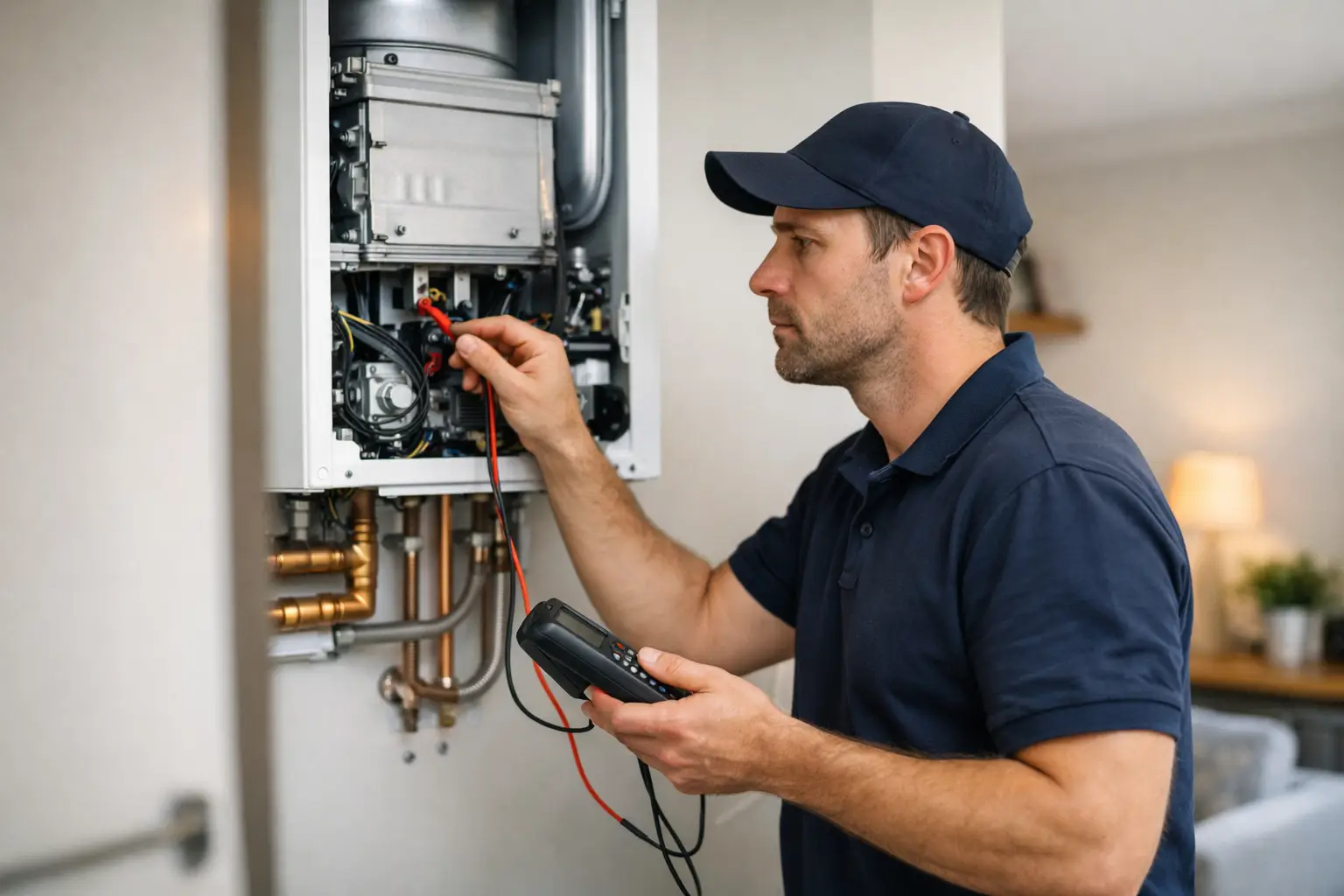
A Baxi boiler E1 fault commonly relates to an ignition or flame-detection problem, although the meaning can vary by boiler range. If it is recurring on an older boiler, replacement may be a more predictable long-term choice than further repair. Get a fixed boiler quote online.
The code itself does not automatically mean you need a new boiler. A one-off lockout can have a straightforward cause, while a boiler that repeatedly loses ignition, has a history of faults or is nearing the end of its useful life needs a broader cost decision. The boiler model, its age, its condition and the likely cost of putting the underlying issue right all matter.
Quick answer: what a Baxi boiler E1 fault means
On many Baxi boilers, an E1 display is associated with the boiler failing to light or failing to confirm a stable flame. It is not a diagnosis on its own. The precise meaning and reset procedure should always be checked against the manual for the exact Baxi model, as fault-code displays differ between ranges and controls.
If your heating or hot water has stopped, avoid repeatedly resetting the boiler. One reset, only if the manufacturer instructions permit it, may be reasonable. If the fault returns, arrange for the appliance to be assessed by a suitably qualified Gas Safe registered engineer. Do not remove the boiler casing or attempt to work on gas components yourself.
If you smell gas, suspect a gas leak or feel unwell with symptoms that could indicate carbon monoxide, leave the property if necessary, call the National Gas Emergency Service on 0800 111 999 and seek urgent advice. Do not use electrical switches or naked flames.
When a Baxi boiler E1 fault points towards replacement
A fault is often frustrating because the immediate question is simple: can the boiler be made to work again? The more useful question is whether spending money on an older appliance is sensible for your home or rental property.
Replacement deserves serious consideration when the E1 fault is part of a pattern. Perhaps the boiler has needed several call-outs, replacement parts are becoming difficult to source, hot water is unreliable, or the repair estimate is substantial compared with a new installation. An older boiler may also have a short or expired manufacturer warranty, leaving you exposed to further costs.
There is no universal age at which every boiler should be changed. A relatively young boiler with its first issue may be worth repairing, depending on the diagnosis and warranty position. Conversely, a boiler in its later years that has already had expensive components replaced can make a new boiler easier to justify, even if the immediate fault can be resolved.
For landlords, reliability and tenant disruption are part of the calculation. For homeowners, it may be the opportunity to choose a boiler that better suits changed hot-water demand, such as an extra bathroom or a growing household.
Questions that help make the decision
Consider the age of the boiler, whether the E1 code has appeared more than once, the quoted repair cost, and whether other faults or performance issues have occurred recently. Check whether any manufacturer warranty remains and whether its terms have been met. Then compare that position with a fully installed replacement quote, including the work required to make the system suitable for the new boiler.
A repair estimate and a replacement quote are different things. A repair price deals with the known fault, while a fixed installation quote should set out the boiler, installation scope and any agreed extras. It gives you a clearer basis for deciding rather than simply reacting to the latest breakdown.
Choosing the right replacement boiler
A Baxi replacement is not automatically the right answer simply because your current boiler is a Baxi. Brand familiarity can be useful, but boiler type, output and suitability should come first. A proper recommendation considers how your home uses hot water, the number of bathrooms, existing pipework, cylinder arrangements and available installation space.
Combi boilers
A combi boiler provides heating and hot water directly from the mains, without a separate hot-water cylinder. It is often a practical option for flats and smaller to medium-sized homes with one bathroom, particularly where space is limited.
The trade-off is that hot-water flow depends on the incoming mains supply and demand. A larger household with two showers running at once may find a combi less suitable than a system boiler with stored hot water.
System boilers
A system boiler works with a hot-water cylinder. It can be a strong choice for properties with higher hot-water demand, more than one bathroom or a household that regularly uses water at the same time. It needs space for the cylinder, so it is not always the simplest option where cupboard space is tight.
Regular boilers
A regular, or heat-only, boiler is generally suited to homes that already have a conventional heating and hot-water arrangement, often including a cylinder and tanks in the loft. Keeping the same system type can sometimes reduce disruption, though the right approach depends on the condition and layout of the existing system.
Changing from a regular boiler to a combi can free up space, but it may require significant alterations to pipework, water supplies and the heating system. It is not automatically cheaper than a like-for-like replacement.
What a new boiler replacement may cost
For many UK homes, a straightforward replacement boiler installation can cost roughly £2,200 to £4,000 or more, depending on the boiler selected and the scope of work. This is an estimate, not a confirmed price.
A simple combi-to-combi swap in the same position is usually less involved than a conversion, relocation or back-boiler replacement. A higher-output boiler, system boiler and cylinder work, difficult flue routes, upgraded controls, alterations to gas or condensate pipework, and access constraints can all affect the final cost.
A clear quotation should explain what is included. This may cover the selected boiler, standard installation materials, flue components, controls, commissioning, certification and removal of the old boiler where agreed. It should also identify potential additional work before you accept the quote, rather than leaving vague allowances that can become unexpected costs later.
At Smart Adapt, homeowners and landlords can enter their property details online to receive a fixed boiler quote where the installation scope can be confirmed. Postcode coverage, engineer availability and property suitability are checked before an installation is accepted across selected areas of South Wales, the South West and London with nearby areas.
Installation time and disruption
A straightforward like-for-like boiler replacement can often be completed in a day. More involved work may take longer, particularly when converting boiler types, moving the boiler, replacing a back boiler or carrying out agreed system alterations.
Before installation, the engineer needs safe access to the boiler location, flue route, controls and relevant pipework. Clearing the cupboard around the boiler and making any parking or access arrangements can help the day run smoothly. Your installer should explain the planned timescale and any expected water or heating interruption before work begins.
The new appliance should be commissioned correctly, with the controls explained and the required documents provided. Keep these records safely, as they may be needed for the manufacturer warranty and future property paperwork. Warranty length and conditions depend on the exact boiler model and current manufacturer terms, including any registration requirements.
Can finance help with boiler replacement?
Spreading the cost can be useful when an E1 fault has forced an earlier-than-planned replacement. Available finance options should be considered alongside the total amount payable, deposit requirements and the length of the agreement. Finance is subject to status, eligibility, affordability checks and lender approval.
It is sensible to choose the boiler and installation scope first, then decide whether paying upfront or using finance suits your budget. A lower monthly payment may mean a longer agreement, so review the full terms carefully.
Frequently asked questions
Can I reset a Baxi boiler showing E1?
Follow the instructions for your exact model. If a permitted reset does not clear the issue or the code returns, do not keep resetting it. The boiler needs professional assessment.
Does E1 always mean the boiler needs replacing?
No. It can be a repairable fault. Replacement becomes more worth considering when the boiler is older, unreliable, out of warranty or facing a costly repair.
Can I replace my Baxi with a different boiler brand?
Yes. The best replacement depends on your property, hot-water demand, system type, budget and the warranty terms available on the chosen model.
Will a new combi boiler work in a home with two bathrooms?
It depends on your mains water flow and whether showers or taps are used at the same time. A system boiler and cylinder may be more suitable for higher simultaneous demand.
How long does a replacement take after an E1 fault?
A like-for-like swap may take one day once an installation date is arranged. Conversions, relocations and more complex work can take longer.
What information is needed for an accurate online quote?
You will usually need details of the current boiler, property type, number of bathrooms, heating system, boiler location and any planned changes. Clear information helps identify suitability and likely extras early.
Is a fixed quote always final?
A fixed quote relies on the property details and agreed scope being accurate. If a survey or technical assessment identifies work that was not visible or disclosed, the installer should explain the options and any cost change before proceeding.
A recurring fault code is a useful prompt to make a calm, informed decision rather than waiting for the next breakdown. Get a fixed boiler quote online.