






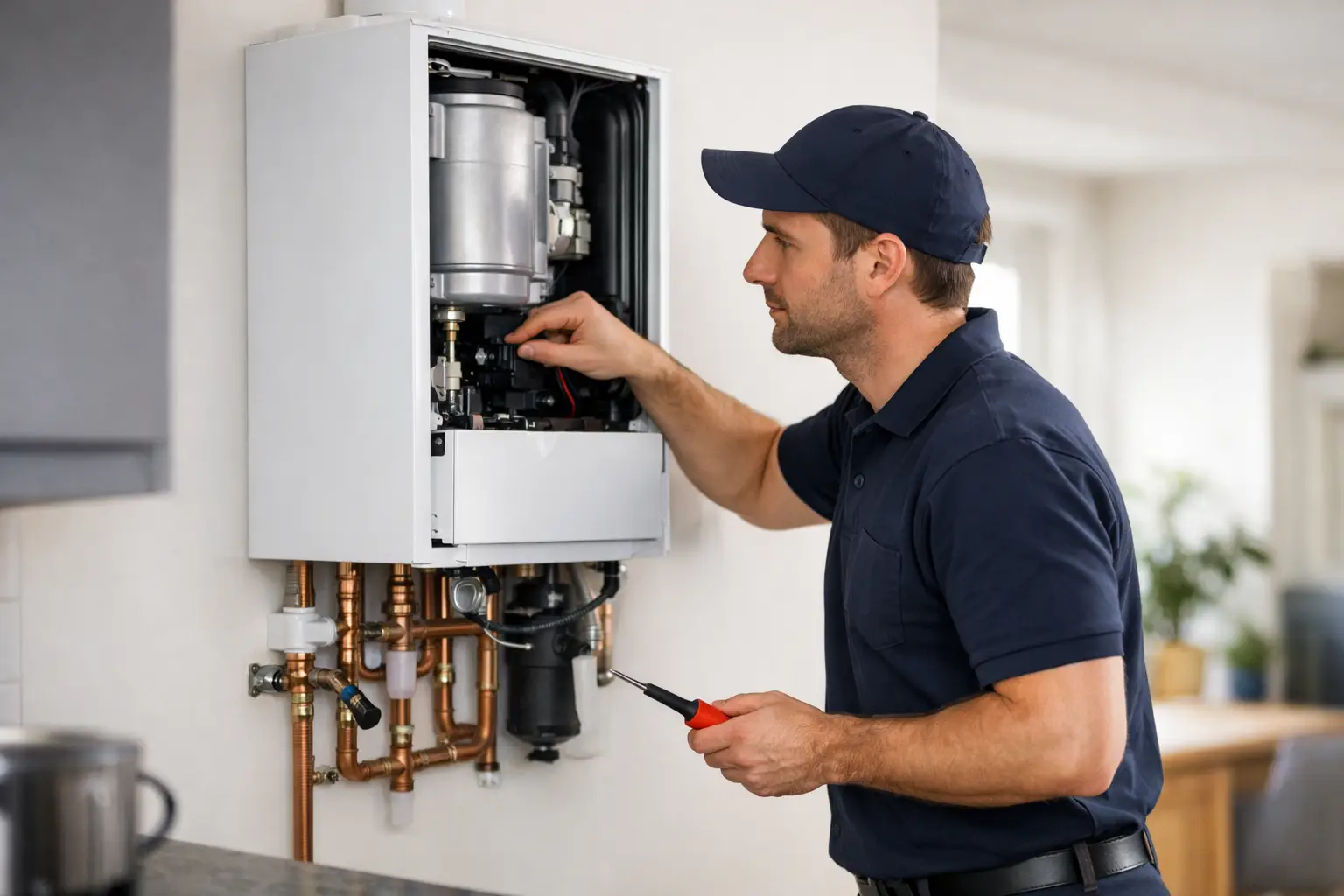
A regular boiler can be replaced with another regular boiler, a system boiler or, in some homes, a combi. The right choice depends on your hot-water demand, existing pipework, available space and budget – not simply the boiler you already have. Get a fixed boiler quote online.
Quick answer: keeping a regular boiler is often the most straightforward route where a hot-water cylinder is working well and several people use hot water at once. A system boiler suits similar higher-demand homes, while converting to a combi can free up space but may require more alteration and is not right for every property.
What replacing a regular boiler involves
A regular boiler, sometimes called a conventional or heat-only boiler, works with a separate hot-water cylinder and usually cold-water storage tanks in the loft. It heats water for radiators and sends heat to the cylinder, where hot water is stored for baths, showers and taps.
When replacing a regular boiler, the installation may be a like-for-like swap in the same position. This can retain the cylinder, tanks and much of the existing system layout. It is often the least disruptive option, provided the wider system is suitable and the new boiler can be correctly sized.
It is also a chance to review whether the current setup still fits the household. A family that regularly runs two showers while someone fills a bath has different needs from a couple in a compact flat. The boiler type should be selected around those real demands.
Should you keep a regular boiler or change type?
There is no automatic reason to convert. A newer regular boiler can be a sensible replacement in larger homes with a cylinder, multiple bathrooms and substantial hot-water use. Stored hot water can supply more than one outlet at a time, subject to the cylinder and system design.
Replacing it with another regular boiler
This is usually worth considering if your home already has a suitable cylinder and loft tanks, and you are happy with the way hot water is delivered. A like-for-like replacement can reduce the amount of alteration needed, although the boiler may still need updated controls, pipework changes or a different flue arrangement to meet current requirements.
Regular boilers are also useful where water pressure or flow makes a combi less attractive. Your installer should assess the existing heating system rather than assume a direct swap is possible.
Changing from regular to system boiler
A system boiler also works with a hot-water cylinder, but major system components are built into the boiler. It normally does not require a cold-water feed tank in the loft, although the exact work depends on the property and cylinder arrangement.
This route can be appropriate for homes that want to retain stored hot water but simplify parts of the old setup. Removing redundant tanks may create loft space, but it adds labour and needs careful assessment of water supply, pipework and the chosen cylinder.
Converting a regular boiler to a combi
A combi heats hot water directly when you turn on a tap, so it does not need a separate cylinder or loft tanks. The potential space saving is attractive, particularly in smaller homes. However, a combi’s hot-water performance depends heavily on the incoming mains-water flow and pressure.
For a one-bathroom home with modest simultaneous demand, a combi can be an excellent fit. In a home with two or more busy bathrooms, a cylinder-based system may be more practical. Converting from regular to combi can involve removing tanks and a cylinder, altering pipework, changing the heating layout and making good the previous boiler area. That is why it generally costs more than a like-for-like replacement.
How much does replacing a regular boiler cost?
A confirmed price needs accurate property information and, where required, a survey or technical assessment. As a broad guide, a straightforward regular boiler replacement in the existing location commonly falls around £2,500 to £4,500 supplied and installed. The final figure varies with the boiler model, output, flue route, controls and the condition of the existing installation.
A conversion to a system boiler or combi often costs more because it can include additional pipework, alterations to the hot-water arrangement and removal of old components. Complex conversions, relocations and back-boiler replacements can run beyond this range. Treat online price ranges as estimates until the installation details and terms have been confirmed.
A clear quotation should explain what is included. This commonly covers the selected boiler, standard installation labour, a suitable flue arrangement, required safety work, controls and commissioning. It should also identify possible additional costs before work is accepted, rather than leaving them as an unwelcome surprise on installation day.
Common reasons a price may change include:
- moving the boiler to a new room or wall
- a longer or more complex flue route
- upgrades to gas, condensate or heating pipework
- cylinder, tank or system alterations during a conversion
- access issues, asbestos concerns or work needed to make the installation safe and compliant
Choosing the right boiler size
Boiler output is measured in kilowatts (kW), but bigger is not automatically better. For a regular or system boiler, the heating requirement is based on the home’s heat loss, radiator demand and hot-water setup. The cylinder coil and recovery requirement can matter too.
For a combi, hot-water flow is a major part of the decision. A higher-output combi may deliver better hot-water flow, but it cannot overcome a poor incoming mains supply. Giving accurate details about bathrooms, showers, radiators, property size and current system layout helps produce a more relevant recommendation.
Established manufacturers offer regular, system and combi ranges at different price points. The appropriate model comes down to suitability, controls, warranty terms and budget. Warranty length is not the only measure of value: it depends on the exact boiler, manufacturer conditions and correct registration after installation.
What happens during installation?
A straightforward replacement in the same location is often completed within a day. A conversion or relocation may take two to three days, sometimes longer where substantial changes are needed. The installer should set realistic expectations before the date is agreed, particularly if hot water storage, tanks or the flue route are changing.
Before installation, provide clear information and photos where requested. The quotation journey should confirm the property details, proposed boiler type and any assumptions. Smart Adapt supplies and installs replacement boilers through Gas Safe registered engineers in its confirmed service areas, with postcode availability checked before a quotation or installation is accepted.
On the day, the engineer will isolate and remove the old boiler, complete the agreed installation work, test the system and commission the new boiler. You should be shown the controls and provided with the relevant installation and warranty information. Keep these records, as manufacturer warranties can have conditions on registration and use.
When is replacement more sensible than another repair?
A single, economical repair can still be reasonable on a younger boiler. Replacement becomes more persuasive when an older boiler has recurring problems, costly parts are needed, reliability matters to your household or the existing layout no longer works for the property. Landlords may also prefer the predictability of a planned replacement rather than repeated disruption for tenants.
The decision is not solely about age. Consider the expected repair cost, the boiler’s condition, availability of suitable parts and whether a replacement would solve practical issues such as poor hot-water capacity or the need for a different boiler location.
Payment, finance and fixed quotes
Paying upfront is not the only option for every customer. Available finance can spread the cost, but it is subject to status, eligibility, lender terms and approval. Check the total amount payable, representative example and agreement conditions before deciding.
A fixed quote is most useful when it is based on complete, accurate details. If something hidden or materially different is discovered, such as an unsafe flue route or an unreported installation change, the work should be discussed and agreed before additional costs are incurred.
Frequently asked questions
Can I replace a regular boiler with a combi?
Yes, where the property and mains-water supply are suitable. It can save space, but the conversion usually involves more work than a like-for-like replacement and may not suit high simultaneous hot-water demand.
Do I need to replace my hot-water cylinder?
Not always. If you are retaining a regular or system boiler, an existing cylinder may be suitable. Its condition, capacity and compatibility should be assessed as part of the quotation.
Will I need new radiators?
Usually not for a straightforward boiler replacement. Radiators and the heating system should still be assessed to ensure they are suitable for the proposed boiler and controls.
How long will I be without heating and hot water?
For a standard replacement, interruption is commonly limited to the installation day. Conversions and more involved work can take longer, so ask for a clear expected schedule before booking.
Can a regular boiler be moved?
Yes, but relocation can increase the price because of extra pipework, flue work, condensate drainage and access requirements. The proposed location must also be safe and suitable.
What about replacing a back boiler?
Replacing a back boiler normally requires a new modern boiler in a different location and can involve significant alteration. A property-specific assessment is essential, and the cost is often higher than a standard boiler swap.
How do I get an accurate quote?
Share the property type, number of bathrooms and radiators, existing boiler location, cylinder and tank details, plus clear photos where requested. This helps identify suitable options and any likely additional work early.
Get a fixed boiler quote online. A well-chosen replacement should give you a boiler type, hot-water setup and installation plan that make sense for the way your home is actually used.