






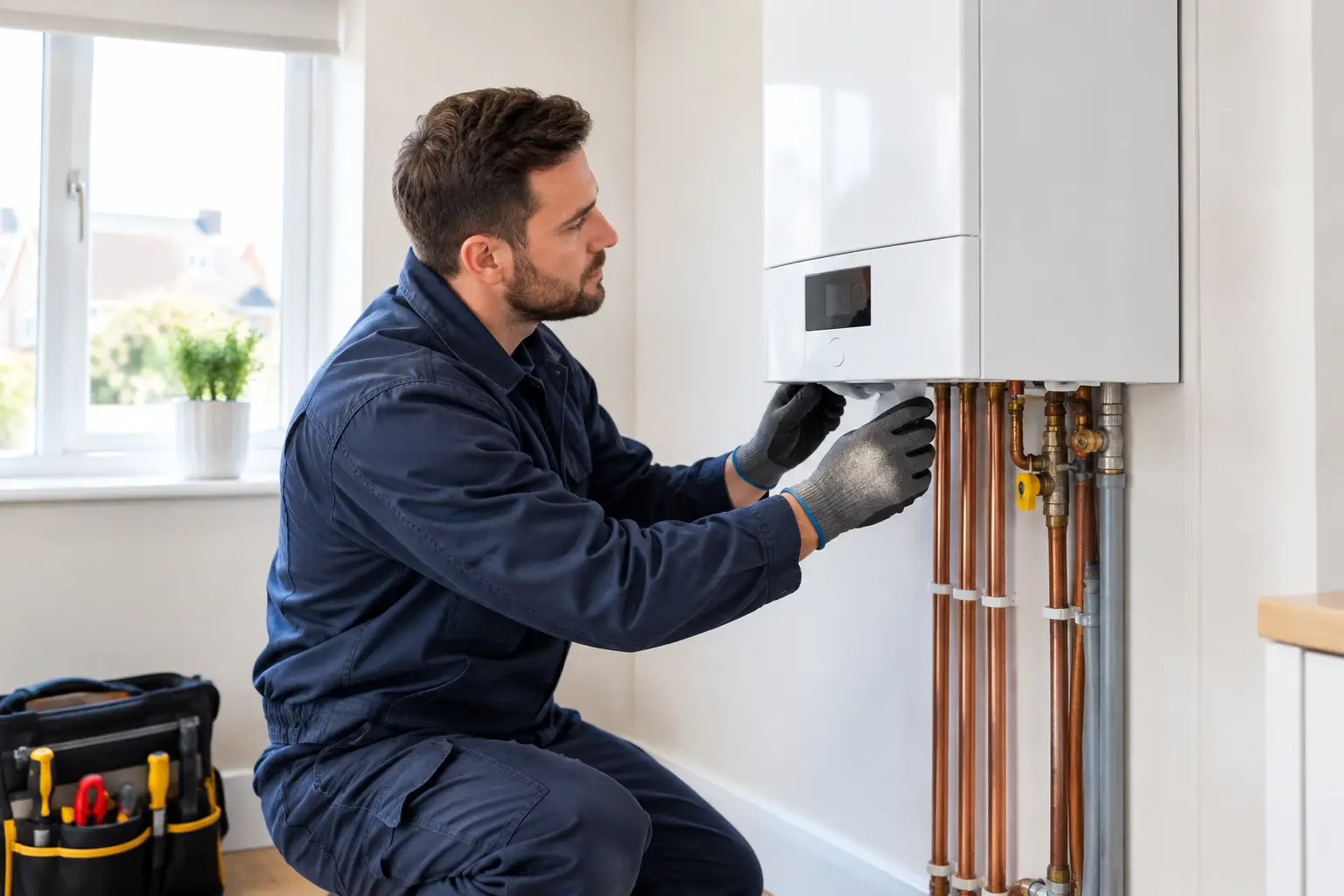
Will boiler replacement cut bills? Often, yes – particularly if an old boiler is inefficient, unreliable or poorly matched to the home. However, the saving is not guaranteed: your gas use, insulation, heating controls, hot-water demand and the boiler you choose all make a difference.
Quick answer: a modern condensing boiler can use less gas to deliver the same heating and hot water than an older model. The largest bill reductions tend to come from replacing an older, inefficient boiler with the right-sized replacement and suitable controls, rather than simply choosing the highest-output model.
Get a fixed boiler quote online.
Will boiler replacement cut bills in every home?
A replacement boiler can reduce bills, but it is not a fixed percentage or a promise that applies to every property. If your existing boiler is already relatively modern, working efficiently and correctly sized, the difference in gas consumption may be modest. If it is old, regularly losing pressure, inefficient or unable to control heat effectively, the change can be more noticeable.
Modern gas boilers are condensing boilers. They recover extra heat from the flue gases that older non-condensing designs would waste. In practice, they perform best when the heating system is designed and set up to let them condense for longer. That includes correct boiler sizing, sensible flow temperatures and controls that prevent the boiler from firing harder than necessary.
Your bill is also affected by the price of gas, how warm you keep the house, how many people use hot water, the condition of radiators and the building’s insulation. A new boiler cannot make up for substantial heat loss through an uninsulated property, but it can stop the boiler itself becoming the weak point.
Where the savings usually come from
The most meaningful improvement is often the difference between an older boiler and a properly specified modern condensing boiler. An old appliance may waste more fuel during operation, struggle to modulate its output, or cycle on and off too frequently. A new boiler is designed to adjust its output more closely to demand.
Controls matter as much as the boiler. A programmable thermostat lets you heat the home when needed, while compatible load or weather compensation controls can help some boilers run more efficiently by adjusting the heating temperature. The best option depends on the boiler and heating system, so it should form part of the recommendation rather than being added as an afterthought.
Correct sizing is another factor. A boiler that is too small may struggle during cold weather or when several people need hot water. One that is far larger than the property needs may cycle more often and cost more to buy. Boiler output is not simply a measure of quality. It must suit the number of bathrooms, radiators and the way the household uses hot water.
Choose the boiler type before judging the running cost
The right boiler type has more influence on day-to-day comfort than many homeowners expect.
Combi boilers
A combi boiler provides heating and hot water from one compact unit, without a separate hot-water cylinder. It is often a practical choice for flats and smaller to medium-sized homes with one bathroom, especially where cupboard or loft space is limited.
Its key limitation is hot-water flow. A larger combi can provide a stronger shower flow, but it still supplies hot water as it is needed. In a home where two showers are regularly used at the same time, a combi may not be the best fit regardless of its advertised output.
System boilers
A system boiler works with a hot-water cylinder. It can be a strong option for larger homes, properties with more than one bathroom, or households that need to run multiple outlets at once. The cylinder stores hot water, so there is a finite amount available before it needs time to reheat.
A system boiler installation may cost more than a straightforward combi replacement where a cylinder is already in place, but it can be the more suitable long-term choice for higher demand. Suitability matters more than selecting the lowest initial price.
Regular boilers
Regular, or heat-only, boilers are usually found in older systems with tanks in the loft and a hot-water cylinder. Replacing like for like can be the least disruptive route where the existing system suits the household.
Changing from a regular boiler to a combi can free up space, but it is a conversion rather than a simple replacement. Removing tanks, altering pipework and adapting the hot-water system can increase the installation cost. The potential benefit is convenience and reclaimed space, not an automatic guarantee of lower bills.
What does a replacement boiler cost?
For a straightforward replacement in the same location, a typical installed new boiler price may be around £2,500 to £4,500. This is an estimate, not a confirmed fixed quote. The final figure depends on the boiler model, output, warranty level, controls, flue arrangement and the work required at the property.
More complex installations can cost more. That may include a boiler relocation, a combi conversion, replacing a back boiler, changing from a regular system, installing a new cylinder, difficult access or significant alterations to gas, heating and condensate pipework.
A clear quote should explain what is included. For a standard replacement, this commonly covers the boiler, installation labour, flue components, agreed controls, removal of the old boiler and commissioning by a Gas Safe registered engineer. It should also identify work that may be additional if it cannot be confirmed from the initial property information or requires a survey.
Smart Adapt’s online journey is designed to use accurate property details to recommend suitable boiler options and provide a fixed quote where the installation scope can be confirmed. Postcode coverage, property suitability, engineer availability and any technical assessment are confirmed before an installation is accepted.
Do not base the decision on projected savings alone
A lower gas bill is a good reason to consider replacement, but it should not be the only one. If an older boiler has become unreliable, parts are difficult to obtain, or it no longer meets your household’s hot-water needs, replacement can provide predictability as well as improved efficiency.
For landlords, a suitable new boiler may also reduce disruption for tenants and provide a manufacturer warranty, subject to the selected model, installation requirements, registration and the manufacturer’s current terms. Warranty length should be compared carefully. A longer warranty can be valuable, but only if the boiler is appropriate for the property and the terms are understood.
If the boiler is relatively new and the issue is limited, replacement may not be the most economical decision. Where it is older and a major repair would only postpone a likely replacement, comparing the repair cost with a fully installed new boiler can be more useful than focusing on either figure in isolation.
How to improve the chance of lower bills after replacement
The installation needs to be planned around the home, not just the appliance. Before requesting quotes, count bathrooms and radiators, consider how many people use hot water at busy times, and decide whether you want to retain or remove a hot-water cylinder.
Then compare like for like. A lower quote may include a different boiler output, shorter warranty, fewer controls or less alteration work. Ask what will happen to existing pipework, where the flue will terminate, whether any access issues are anticipated and whether a survey is needed.
Once installed, use the controls rather than leaving the heating on at one fixed setting. Your installer can explain the boiler controls and the basic handover. If your home has thermostatic radiator valves, use them to avoid overheating rooms that are rarely used, while keeping the main thermostat in a suitable reference room.
FAQs
How much could I save with a new boiler?
There is no reliable single figure for every home. Savings depend on the age and efficiency of the current boiler, household heating habits, gas prices, controls and heat loss from the property. A quote should not promise a specific saving without proper evidence.
Is a combi boiler always cheaper to run?
Not necessarily. A combi can be efficient and space-saving, but it may not suit a larger home with simultaneous hot-water demand. A system boiler with a cylinder can be the better practical choice for that household.
Will a bigger boiler reduce my bills?
No. A bigger boiler is not automatically more efficient for your home. The correct output should be based on heating demand and hot-water requirements.
How long does boiler replacement take?
A straightforward same-location replacement is often completed in a day. Conversions, relocations, back-boiler replacements and installations requiring wider system changes can take longer. The timescale should be confirmed with the quotation.
Can I spread the cost of a new boiler?
Finance options may be available for eligible customers, subject to status, lender approval and the lender’s terms. Check the total amount payable, interest rate and repayment period before choosing finance.
What information is needed for an accurate quote?
You will usually need to provide the current boiler type and location, number of bedrooms and bathrooms, radiator count, hot-water use and any planned changes such as a boiler move or conversion. Clear photos can also help establish the likely scope.
Does a new boiler come with a warranty?
Most new boilers include a manufacturer warranty, but the duration and conditions vary by model. Registration, approved installation requirements and other manufacturer terms may apply, so confirm the exact warranty offered with your selected boiler.
A replacement boiler should make heating more dependable and may reduce gas use, but the strongest result comes from choosing a system that matches your property rather than chasing a headline saving. Get a fixed boiler quote online.