






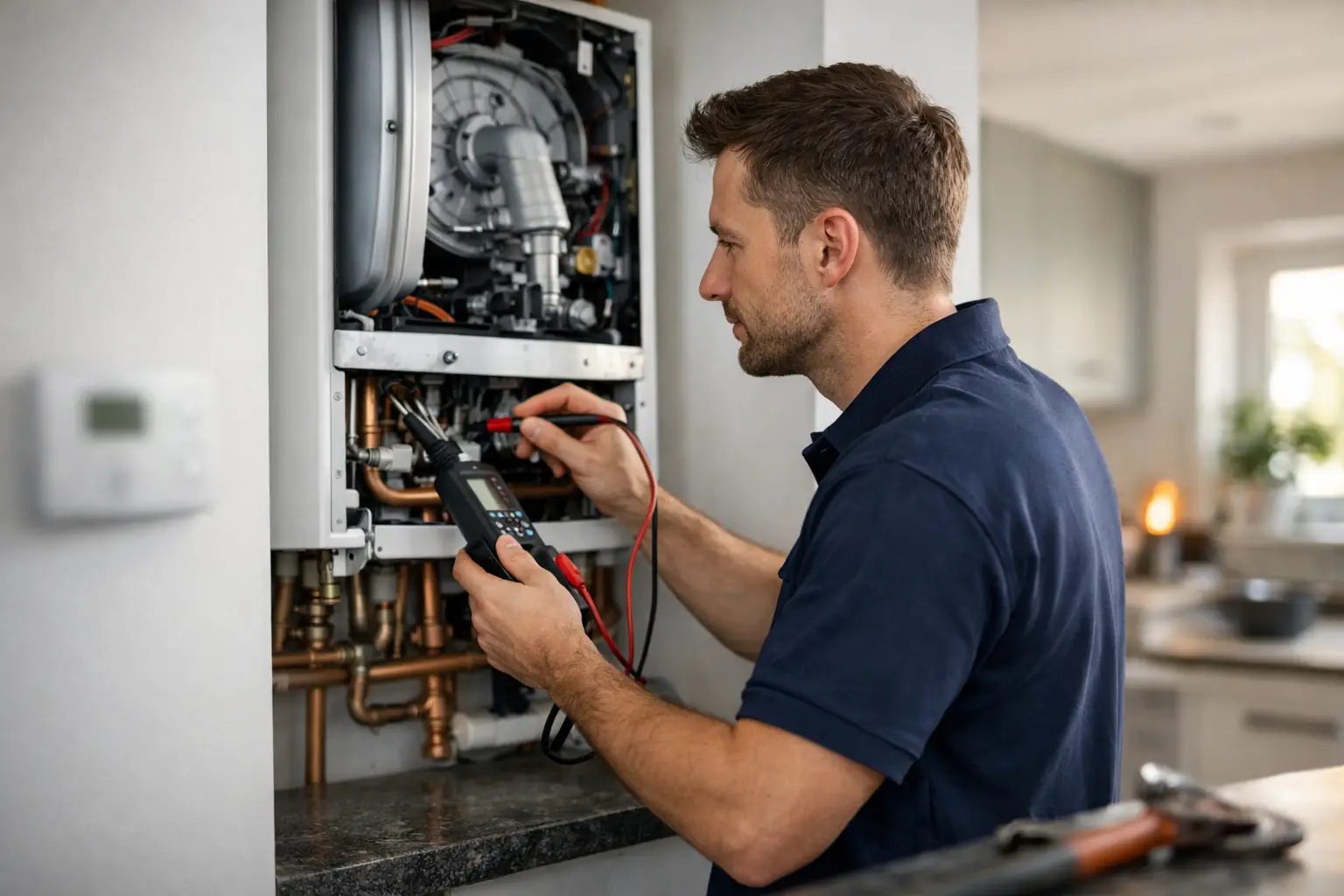
A Vaillant fault code tells you why the boiler has stopped or is protecting itself. Some codes relate to simple pressure or ignition issues, but repeated Vaillant boiler fault codes can also be a sensible point to consider replacement, particularly on an older boiler with a history of breakdowns.
Quick answer: check the code in the manual for your exact Vaillant model, carry out only the safe user checks described there, and avoid repeatedly resetting the boiler. If the problem returns, or the boiler is old and unreliable, compare the cost of continued call-outs with a new, warranty-backed installation.
Get a fixed boiler quote online.
What Vaillant boiler fault codes can tell you
Vaillant boilers display a letter and number code when they detect a problem that could affect safe or reliable operation. The meaning is not always identical across every model, so the boiler’s instruction manual remains the right reference point. A code is a starting point, not a full diagnosis.
Codes commonly searched by homeowners include F.22, usually associated with low system water pressure; F.28, which can indicate unsuccessful ignition during start-up; F.29, relating to a flame going out during operation; and F.75, which can concern pressure changes when the pump starts. These may stem from one-off conditions, but they can also point to worn components or wider system issues.
A boiler that displays one code once is different from one that loses heating and hot water several times each winter. The latter can make replacement worth serious consideration, especially where parts are becoming difficult to source or a repair estimate is high compared with the boiler’s remaining value.
Safe checks before deciding what to do
First, look at the pressure gauge or display if your model has one. Many sealed central-heating systems operate around 1 to 1.5 bar when cold, but follow the range stated in your Vaillant manual. If pressure is low, only repressurise the system if you understand the manufacturer’s instructions and can do so safely. Do not continue adding pressure if it regularly drops.
Check that the electrical supply to the boiler is on and that there is credit on a prepayment meter, if relevant. A single reset may be permitted by the manual. Repeated resets are not a solution and can hide a fault that needs professional assessment.
Never remove the boiler casing or attempt to work on gas components. If you smell gas, suspect a gas escape or a carbon monoxide alarm sounds, turn off the gas at the emergency control valve only if it is safe to do so, open windows and doors, leave the property, and call the National Gas Emergency Service on 0800 111 999. In an immediate emergency, call 999.
When a fault code points towards boiler replacement
A fault code alone does not mean you need a new boiler. A relatively new boiler with a first-time, straightforward issue may be better assessed under its manufacturer warranty or by a suitably qualified professional. Warranty cover, exclusions and registration requirements depend on the exact model and the manufacturer’s current terms.
Replacement becomes more compelling when faults are recurring, the boiler is beyond its warranty period, or you are facing a significant repair cost with no certainty that another ageing part will not fail soon afterwards. It can also be the right moment if the existing boiler no longer suits the household – for example, a growing family has poor hot-water flow, or a landlord needs a more dependable long-term solution between tenancies.
Consider the full picture rather than just the latest fault. Think about the boiler’s age, its breakdown pattern, the proposed repair cost, hot-water performance and whether the current system type still works for the property. A replacement can provide a fresh manufacturer warranty and an opportunity to correct an unsuitable boiler size or outdated layout.
Choosing the right replacement after recurring faults
The best replacement is not automatically the highest-output model. Boiler choice should reflect the home’s heating demand, number of bathrooms, hot-water habits, available space and existing pipework.
Combi boilers
A combi boiler supplies heating and hot water from one compact unit, without a separate hot-water cylinder. It is often a practical choice for flats and smaller to medium-sized homes with one bathroom, particularly where space is limited. Its main trade-off is that hot-water flow can reduce when more than one outlet is used at the same time.
System boilers
A system boiler works with a hot-water cylinder. It can be better suited to larger homes, households with two or more bathrooms, or properties where several people may need showers around the same time. It needs space for the cylinder, but can offer stronger stored hot-water capacity.
Regular heat-only boilers
A regular boiler is commonly used where a property has a traditional open-vented heating system and tanks in the loft. Keeping this arrangement can sometimes reduce disruption, although a conversion may be worthwhile where space, hot-water requirements or the condition of the existing system make another option more suitable.
A proper quotation should not simply replace like for like without asking questions. For example, changing from a regular boiler to a combi can free up cylinder space, but it may involve alterations to pipework, controls and the water supply. Whether it is worthwhile depends on the home.
What a replacement boiler may cost
As a broad UK guide, a straightforward replacement combi boiler installation often falls around £2,000 to £3,500. System boiler replacements and more involved work can cost more, while conversions, boiler relocations, back-boiler replacements or upgrades to the heating system can take the overall price beyond this range.
These are estimates, not confirmed fixed prices. The final cost depends on the selected boiler, its output, warranty level, flue route, system condition, access, controls and the work required to meet current installation standards.
A clear quote should explain what is included. This commonly covers the boiler, standard flue components, installation labour, system cleansing where required, controls, commissioning and registration of the installation. Possible additional costs can include moving the boiler, changing the flue route, upgrading gas pipework, replacing unsuitable controls, making good after access work, or dealing with older system components that cannot safely be retained.
At Smart Adapt, customers provide property details online so suitable boiler options and installation requirements can be considered before a fixed quote is offered. Availability is confirmed by postcode and installation is carried out by Gas Safe registered engineers in covered areas, subject to property suitability and any required technical assessment.
Do not let the display code choose the boiler
If an F.28 or F.29 code has left you without hot water, it is understandable to want the fastest possible answer. However, rushing into the first available boiler can create a different problem: paying for a model that is too small for the household or spending more than necessary on capacity you will not use.
For a like-for-like swap, installation may often be completed in a day. More complex projects, such as relocating a boiler, replacing a back boiler or converting from a conventional system to a combi, can take longer. The installer should set out the likely timescale once the property details are known, rather than promise an unconfirmed date.
If you are considering monthly payments, finance may be available on selected installations. It is subject to status, eligibility and lender approval, so it should be assessed alongside the total cost and repayment terms, not treated as an automatic option.
Frequently asked questions
Can I reset a Vaillant boiler after a fault code?
Only follow the reset guidance in the manual for your exact model. One reset may be appropriate in some situations, but repeated resets can delay proper assessment and should not be used to keep an unreliable boiler running.
Does F.22 always mean I need a new boiler?
No. F.22 is commonly linked with low water pressure, and the cause may be straightforward. If pressure repeatedly falls or the boiler has other ongoing faults, it is reasonable to compare replacement options.
Are all Vaillant fault codes the same across every boiler?
No. Code meanings and reset instructions can differ by model and generation. Check the instructions supplied with your boiler rather than relying solely on a general code list.
Is it better to repair or replace an old Vaillant boiler?
It depends on the fault, repair cost, boiler age, warranty position and how reliable the boiler has been. Replacement is often easier to justify when costly faults recur and the existing boiler no longer meets the household’s hot-water needs.
Can I replace a regular boiler with a combi?
Often, yes, but suitability depends on the property’s water supply, bathroom demand, existing heating layout and the scale of alteration required. A combi is not always the right choice for homes with high simultaneous hot-water use.
Will a new boiler come with a warranty?
Most new boilers include a manufacturer warranty, but length and conditions vary by boiler model. Registration, approved installation requirements and ongoing conditions may apply, so check the exact terms before choosing.
How do I get an accurate replacement price?
Provide accurate details about your existing boiler, property, bathrooms, hot-water use and any planned changes. This allows the proposed boiler and installation work to be assessed properly rather than relying on a headline price.
A recurring fault display is frustrating, but it can also be the moment to choose heating that better suits your home rather than funding another uncertain fix. Get a fixed boiler quote online.