






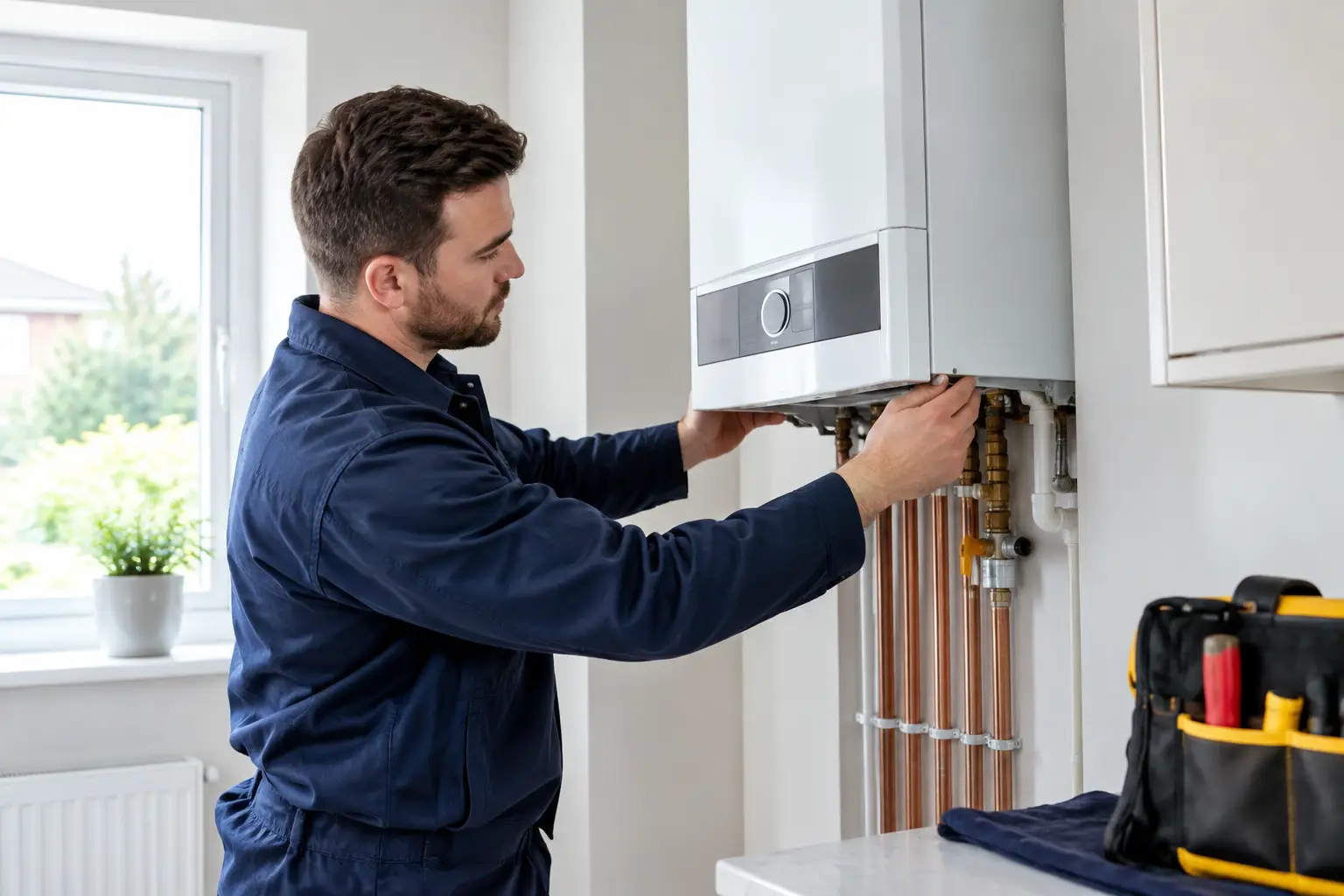
A new boiler commonly costs around £2,000 to £4,500 supplied and installed in the UK, although more involved work can cost more. New boiler costs and prices depend less on the badge on the case than the boiler type, output, existing pipework and changes needed in your home.
Get a fixed boiler quote online.
Quick answer: a straightforward combi-for-combi replacement is usually the simplest and lower-cost route. A system or regular boiler may be the better fit where a home has high hot-water demand. Moving a boiler, changing boiler type or removing a back boiler adds work and should be allowed for before an installation date is agreed.
Typical new boiler costs and prices
The figures below are useful planning estimates, not confirmed quotations. A fixed price needs accurate information about the property, the current heating system and the installation required.
A like-for-like combi boiler replacement often falls around £2,000 to £3,500. Replacing a system or regular heat-only boiler can commonly be £2,500 to £4,500, particularly where a cylinder or tanks are part of the existing set-up. Larger homes, premium models, difficult access and system alterations can take the total beyond these ranges.
Conversions tend to cost more because they involve more than replacing one appliance. Changing from a regular boiler to a combi, for example, may require alterations to pipework, removal of tanks and cylinder work, plus checks that the incoming water supply can support the new arrangement. Budgeting roughly £3,500 to £5,500 or more is sensible until the property has been assessed.
Back-boiler replacements are also specialist projects. The old unit, fire surround and flue arrangement can create additional building and making-good requirements, so costs are often higher than a standard replacement. A survey or detailed review is particularly valuable here.
What should be included in a boiler installation price?
A clear quotation should explain the scope rather than present one unexplained total. For a straightforward replacement, the price will normally cover the selected boiler, standard flue components, controls agreed in the quote, installation labour, commissioning and the paperwork required on completion.
It should also confirm whether system treatment, a magnetic filter, condensate pipework and removal of the old boiler are included. These details matter. A quality installation is not only about fitting the boiler itself – the heating system must be left suitable for the new appliance and its manufacturer requirements.
Smart Adapt’s online journey is designed to collect the property details needed to provide a fixed quote under confirmed terms. If photos, access details or the answers provided show that extra work is needed, this should be explained before installation is accepted, not left as a surprise on the day.
Costs that can increase the final price
Four common issues can change the price from an initial estimate:
- Boiler relocation: Moving the boiler to a loft, airing cupboard, kitchen or garage can mean new gas, water, heating, electrical and flue routes.
- A change of boiler type: A conversion from regular or system boiler to combi can involve removing tanks or a cylinder and modifying pipework.
- Flue and condensate work: Modern condensing boilers need a suitable flue route and condensate discharge. Long runs or awkward external routes may need additional materials and labour.
- The condition of the heating system: Older systems can need cleaning, protection or pipework changes before a new boiler is commissioned safely and correctly.
Access can matter too. Restricted parking, loft access, concealed flues, listed-building considerations and an old back boiler all need identifying early. They do not automatically prevent replacement, but they can affect the method, time and price.
Choosing a combi, system or regular boiler
The lowest installed price is not always the right choice. Start with how your household uses hot water and how the property is arranged.
Combi boilers
A combi boiler provides central heating and hot water from one compact unit, without a separate hot-water cylinder. It is often well suited to flats, smaller homes and households with one bathroom, particularly where space is limited.
The trade-off is that hot-water flow is linked to the boiler’s output and incoming mains pressure. A larger combi can improve performance, but it cannot create water pressure that is not available at the property. Homes where people regularly use two showers at once may be better served by a stored-hot-water system.
System boilers
A system boiler works with a hot-water cylinder. It can be a practical choice for larger households, homes with more than one bathroom and properties where several outlets may be used at the same time. The cylinder takes space, but stored hot water can provide a more comfortable experience at busy times.
Cylinder size, recovery time and the household’s usage pattern all affect suitability. Selecting a system boiler is therefore about the whole hot-water set-up, not the boiler output alone.
Regular heat-only boilers
A regular boiler is usually found in older, conventional systems that use a cylinder and often tanks in the loft. Keeping this arrangement can be the most sensible option when the existing system is suitable and there is no strong reason to convert.
It may not be the most space-saving option, but avoiding unnecessary alterations can reduce disruption. The right recommendation depends on the property, not on pushing every household towards a combi.
Boiler size: output is not the same as property size
Boiler output is measured in kilowatts (kW). For combi boilers, hot-water demand often drives the required output more than the number of radiators. A one-bathroom home may need a different combi specification from a similar-sized home with two showers used at the same time.
For system and regular boilers, the heating load, radiator requirement, insulation and cylinder arrangement are key. Oversizing can add unnecessary upfront cost and may not improve comfort. Undersizing can leave heating or hot-water performance disappointing in colder weather.
An accurate quote should ask about bedrooms, bathrooms, radiators, current boiler type, hot-water habits and the property’s water supply. This is why a quick online process still needs careful answers.
Brands, models and warranties
Boiler model comparisons should focus on practical differences: output options, physical dimensions, controls compatibility, warranty length and what is needed to maintain the warranty. The best model for a compact flat will not necessarily suit a family home with multiple bathrooms.
Manufacturer warranties vary by boiler and can depend on the product being registered within the stated period, installed to the manufacturer’s requirements and subject to the manufacturer’s terms. Do not rely on a headline warranty length alone. Check exactly what the selected model includes and keep the completion documents in a safe place.
A boiler should be installed by a Gas Safe registered engineer. On completion, you should receive an explanation of the controls and the relevant installation and building-regulations documentation.
How long does a replacement take?
A straightforward replacement in the same location can often be completed in one day. A conversion, relocation or back-boiler replacement may take longer because of the extra pipework, removal work and commissioning involved.
The most useful question is not simply, “Can it be done tomorrow?” It is, “What work is included and what needs to happen before the boiler is switched on?” A realistic installation plan protects both the finished result and your household routine.
Paying for a new boiler
Some customers prefer to pay in full, while others consider finance to spread the cost. Available finance options are subject to status, eligibility, lender approval and the terms offered at the time of application. Check the total amount repayable, the term and any interest before deciding.
For landlords, reliability, tenant disruption and clear paperwork are often just as important as the upfront price. For homeowners, a planned replacement can provide more choice than waiting until an old boiler fails completely. If repair costs are mounting, parts are difficult to obtain or the boiler is becoming unreliable, comparing replacement options may be the more practical next step.
Frequently asked questions
What is the cheapest type of boiler to install?
A like-for-like combi replacement is often the lowest-cost installation because it usually avoids major changes. It is only good value if a combi meets the home’s hot-water demand.
Does a new boiler quote include the radiators?
Not necessarily. A boiler replacement quote should state whether radiators, valves or other heating-system alterations are included. Never assume they are part of the price.
Can I move my boiler to a different room?
Usually, yes, provided there is a suitable route for the flue, condensate pipe and services. Relocation costs more than keeping the boiler in place and may require a technical assessment.
Is converting to a combi boiler worth it?
It can be worthwhile where space is limited and hot-water demand is modest. A system boiler may be more suitable for homes with multiple bathrooms or frequent simultaneous use.
Will I know the final price before work starts?
A fixed quote should set out the agreed work and any stated assumptions. If information is missing or site conditions differ from those confirmed, the installer should discuss the implications before proceeding.
How quickly can a new boiler be installed?
Availability depends on postcode coverage, engineer availability, boiler stock and the complexity of the work. Enter your postcode first so Smart Adapt can confirm whether installation is available in your area.
A boiler is a long-term household purchase, so give the same attention to the installation scope as the model and price. Get a fixed boiler quote online, then choose the option that suits your home, hot-water routine and budget with the facts in front of you.