






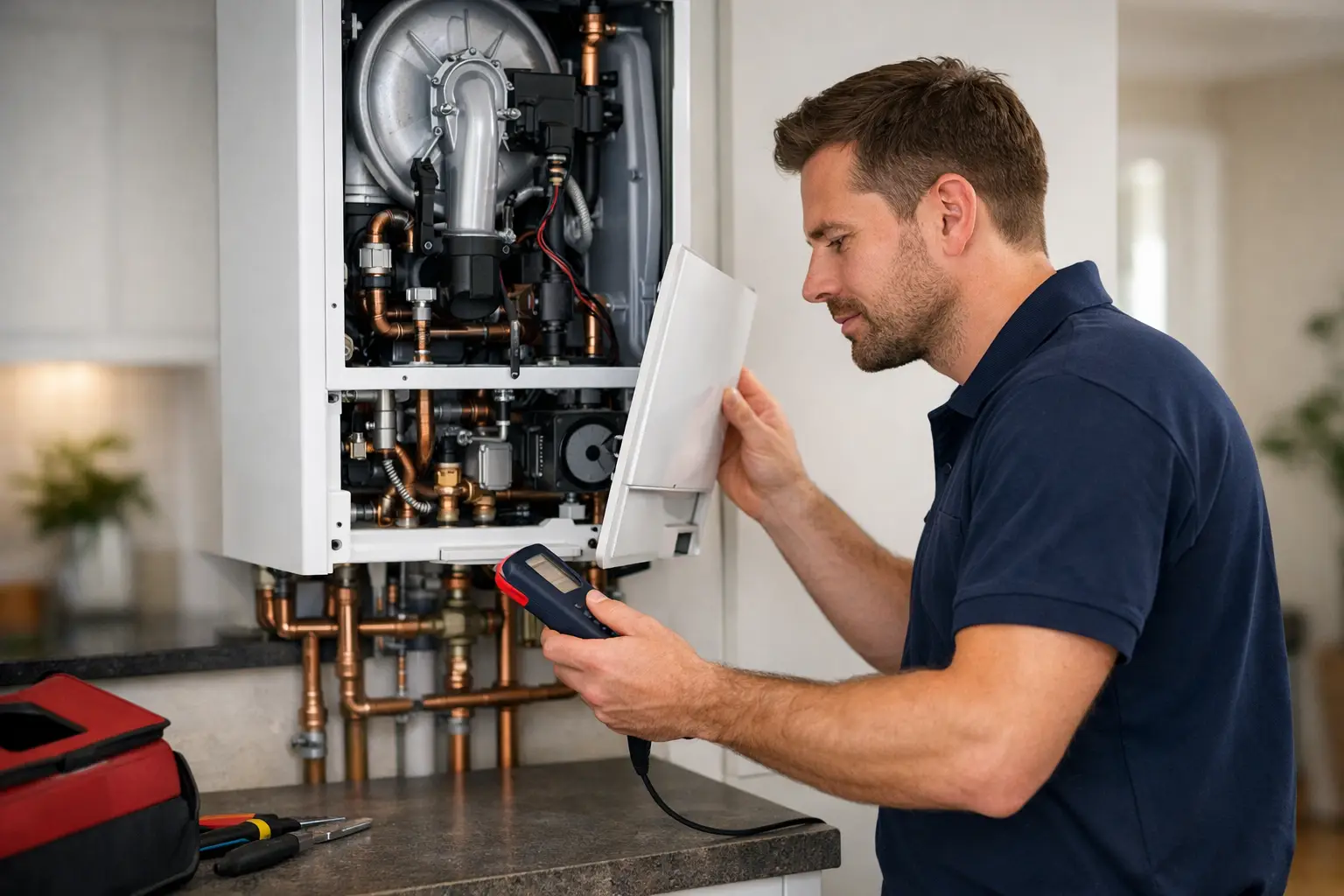
A new boiler typically costs around £1,800 to £3,500 for a straightforward like-for-like replacement, with more complex work costing more. The right choice depends on your home’s hot-water demand, existing system and installation requirements – not simply the boiler with the highest output.
Quick answer: a combi boiler suits many flats and smaller homes with one bathroom. A system boiler is often better for homes with higher simultaneous hot-water demand, while a regular boiler can be the practical option where a traditional tank-and-cylinder system is already in place.
Get a fixed boiler quote online.
What does a new boiler cost in the UK?
The final price of a new boiler includes more than the boiler itself. It should account for the selected model, installation labour, required controls, flue components, commissioning, registration and removal of the old appliance where applicable.
As a broad guide, a straightforward replacement in the same location may fall between £1,800 and £3,500. A system or regular boiler installation can be higher where the cylinder, system layout or controls need attention. Converting from a regular boiler to a combi, replacing a back boiler, or moving the boiler to a different part of the property can often take the overall cost beyond £3,000 and sometimes considerably more.
These are planning estimates, not confirmed fixed prices. A proper quotation needs accurate details about the property, current heating system, number of bathrooms, flue route and any work needed to bring the installation in line with current requirements.
What can increase the installation price?
Complexity is usually the deciding factor. Moving a boiler may require new pipework, a longer flue route, boxing, condensate drainage and electrical work associated with boiler controls. Replacing a back boiler can involve removing the old unit and making good the fireplace area, as well as installing a new boiler in a suitable location.
Other possible costs include upgrading controls, altering gas pipework, fitting a magnetic filter, installing a condensate pump where gravity drainage is not possible, or resolving access issues around the flue terminal. These should be identified clearly before installation wherever possible, rather than appearing as vague allowances.
Choosing between combi, system and regular boilers
The best new boiler is the one that supplies heating and hot water reliably for the way your household actually uses them. A larger boiler is not automatically better. Oversizing can add unnecessary cost, while undersizing may leave you with poor hot-water performance at busy times.
Combi boilers
A combi boiler provides heating and hot water directly from the mains. It does not normally need a separate hot-water cylinder or cold-water storage tank, which makes it a popular choice where space is limited.
It can work well for a flat, smaller house or property with one bathroom, especially where there is good incoming mains-water pressure. The key limitation is that a combi supplies hot water on demand. If two showers are likely to run at the same time, flow can be divided and performance may not meet expectations.
System boilers
A system boiler heats radiators and stores hot water in a separate cylinder. This allows the home to hold a useful volume of hot water ready for use and can suit larger households, homes with more than one bathroom or families with frequent simultaneous demand.
The trade-off is space. You need room for a hot-water cylinder, and the stored water must be heated before heavy use. For many homes, however, that is a sensible compromise for stronger bathroom performance at peak times.
Regular boilers
Regular, or heat-only, boilers are generally paired with a cylinder and often a cold-water tank in the loft. They remain suitable for homes with an existing traditional system, particularly where changing the whole arrangement would add cost or disruption.
A regular boiler is not automatically an outdated choice. It may be the most practical replacement when the existing system is suitable and the property benefits from stored hot water. Your quotation should consider whether retaining that layout, changing to a system boiler or converting to a combi offers the best balance.
How boiler size is worked out
Boiler size is measured in kilowatts, but that figure is not a direct measure of how warm your home will feel. For combi boilers, the hot-water output is often the main reason for choosing a particular size. A home with one bathroom may have different needs from a similar-sized home with an ensuite and frequent shower use.
For system and regular boilers, the heating load of the property and the cylinder arrangement matter more. The number and size of radiators, insulation, property layout and heat loss all affect suitability.
An online quotation can narrow the options quickly using details such as your property type, bathroom count, current boiler type and preferred location. If the answers indicate a more complex installation, a survey or technical assessment may be needed before the price and specification are confirmed.
What should be included with a boiler replacement?
A clear quote should explain exactly what you are buying. For a standard replacement, this commonly includes the boiler, suitable controls, flue components, installation by a Gas Safe registered engineer, system cleaning or protection where specified, commissioning and required notification or registration.
Do not assume every quote includes the same items. Ask whether the price covers removal of the old boiler, a magnetic filter, thermostat or smart controls, flue extensions, condensate alterations and any making-good work. If something cannot be confirmed from the initial information, it should be described as a possible extra with the reason it may be needed.
Smart Adapt’s online journey is designed to collect the property details needed for a clear fixed quote, then confirm availability by postcode before an installation is accepted. Work is carried out by Gas Safe registered engineers, with the agreed scope confirmed before the installation date.
How long does a new boiler installation take?
A like-for-like boiler replacement in the same position is often completed in one day. That assumes safe access, a straightforward flue route and no unexpected changes to pipework or system requirements.
A conversion from a regular boiler to a combi may take two to three days, while a back-boiler replacement, major relocation or more involved system alteration can take longer. The installer should explain the expected duration before work starts, including when heating and hot water may be unavailable.
If the boiler is being moved, think beyond appearance. A cupboard can be convenient, but it needs sufficient access for safe installation and future maintenance, a practical flue route and suitable condensate drainage. The shortest pipe run is not always the best answer if it creates access or compliance issues later.
Boiler brands, models and warranties
Brand matters, but model suitability matters more. A comparison should look at the correct boiler type, output, controls compatibility, available warranty length and the manufacturer’s current terms. Some warranties require the appliance to be registered within a set period and may have conditions about installation, system protection or annual maintenance.
Never choose solely on the headline warranty. Check what is covered, how long the selected model is covered for and what must be done to keep the warranty valid. Warranty terms can differ between models from the same manufacturer.
Should you replace an old boiler or keep repairing it?
Replacement is worth considering when a boiler is unreliable, parts are becoming difficult to obtain, repair costs are mounting or the appliance no longer meets the household’s needs. It can also be a sensible time to change boiler type if you are short of hot water, need more space or have altered how the property is used.
A single issue does not always mean replacement is the right option. However, when the boiler is older and several factors are adding up, a planned installation can give you more choice over model, timing and budget than an emergency decision.
Paying for your boiler installation
Some customers prefer to pay upfront, while others may consider monthly payments. Finance can make the cost easier to spread, but it is not right for every household. Finance is subject to status, eligibility, affordability checks and lender terms, and acceptance is not guaranteed.
Before choosing a payment option, compare the total amount repayable, the term length and whether the monthly commitment remains comfortable alongside other household costs. A quote should make the installation scope clear whichever payment method you choose.
FAQs about a new boiler
Can I replace a regular boiler with a combi boiler?
Yes, in many properties. It is a conversion rather than a simple swap, so costs and installation time are usually higher. Mains-water flow, bathroom demand and the removal or retention of tanks and cylinders all need assessing first.
Is a combi boiler suitable for two bathrooms?
It depends on whether hot water will be used at the same time and on the property’s mains-water supply. A system boiler with a cylinder may be a better fit for frequent simultaneous showers.
Will the installer remove my old boiler?
This should be confirmed in the quote. Old-boiler removal is commonly included in replacement work, but you should check the scope, especially for a back boiler or a boiler in a difficult location.
Can a boiler be fitted in a loft or cupboard?
Potentially, provided there is safe access, sufficient working space, a suitable flue route, drainage and a practical route for installation. Each location needs to be assessed on its own merits.
Do I need a survey before receiving a fixed price?
Not always. Accurate online information can be enough for straightforward replacements. A survey or further technical review may be needed for conversions, relocations, back-boiler replacements or unusual property layouts.
How quickly can a replacement boiler be installed?
Availability depends on your postcode, engineer capacity, chosen boiler and the complexity of the work. A fixed date should only be confirmed once the installation scope has been checked.
Can landlords arrange a new boiler installation?
Yes. Landlords should ensure the boiler choice is suitable for the property and that the installation is planned around tenant access. The required paperwork and installation details should be retained for the property records.
A boiler replacement should leave you clear on the price, the model, the work included and what happens on installation day. Get a fixed boiler quote online. Provide accurate property details and you can compare suitable options without being pushed into a boiler that does not fit your home.