






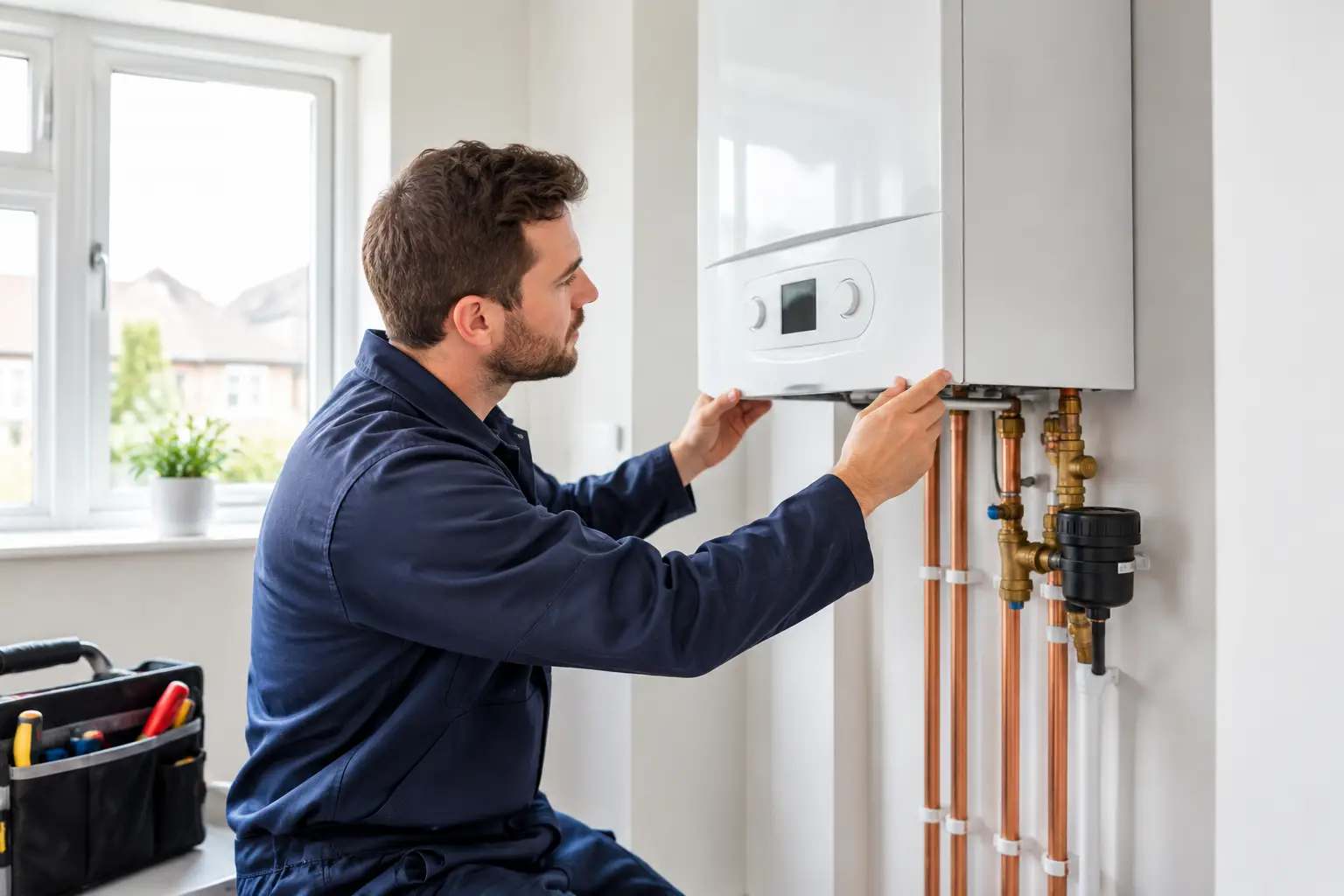
A Gas Safe boiler installation means your replacement boiler is fitted, tested and commissioned by an engineer registered to work safely on gas appliances. It is the essential standard for protecting your household, validating manufacturer warranty requirements and ensuring the installation is properly notified where required.
Quick answer: a straightforward like-for-like boiler replacement may take one day, while a conversion, relocation or back-boiler replacement can take longer and cost more. The right boiler depends on your home’s heat loss, bathrooms, hot-water demand and existing system – not simply the size of the old boiler.
Get a fixed boiler quote online. By entering accurate property details, you can see suitable options and understand what is included before deciding whether to proceed.
What does Gas Safe boiler installation involve?
A boiler should be installed by a Gas Safe registered engineer with the correct qualifications for the work being undertaken. Gas Safe registration is not just a badge on a van. It allows you to check that the engineer is registered and qualified for the relevant category of gas work.
A professional installation is more than hanging a new boiler on the wall. The engineer needs to assess the existing heating system, confirm the boiler location and flue route are suitable, make safe gas and electrical connections, and check that the condensate drain is correctly arranged. They should also commission the appliance in line with the manufacturer’s instructions.
At the end of the work, you should receive clear handover information. This normally includes an explanation of the controls, the boiler’s benchmark commissioning record, warranty registration requirements and the Building Regulations compliance certificate where applicable. Keep these documents with your property paperwork.
Choosing the right boiler before installation
The most suitable boiler is based on how your household uses hot water as well as the property itself. A larger output is not automatically better. An oversized boiler can be a poor match for a smaller home, while an undersized model may struggle when demand is high.
Combi boilers
A combi boiler provides central heating and hot water directly from the mains, without a separate hot-water cylinder. It is often a practical choice for flats, smaller houses and homes with one bathroom, particularly where space is limited.
The key consideration is hot-water flow. A combi can supply strong hot water to one shower or tap at a time, depending on the incoming mains supply and the model selected. If two showers regularly run together, a standard combi may not be the best fit.
System boilers
A system boiler works with an unvented or vented hot-water cylinder. It can be a better option for larger homes, multiple bathrooms or households that need stored hot water available at busy times. It does require space for the cylinder, so the layout matters.
Regular boilers
Regular, or heat-only, boilers are usually found in properties with a traditional heating and hot-water system, often with tanks in the loft and a cylinder in an airing cupboard. Replacing like for like can be sensible where the existing arrangement suits the home. Converting to another boiler type is possible in many cases, but it should be priced around the actual alterations required.
How much does a Gas Safe boiler installation cost?
A confirmed fixed quote requires accurate information about the property and proposed work. As a broad guide, a straightforward replacement combi boiler installation often falls around £2,000 to £3,500. System or regular boiler replacements, particularly where a cylinder is involved, can commonly range from about £2,500 to £4,500 or more.
These are estimates, not fixed prices. A boiler conversion, a new location, extensive system alterations or replacing a back boiler can take the total higher. The selected boiler brand, model, output and warranty length also affect the price.
A clear quotation should set out the boiler supplied, standard installation labour, controls, flue components, commissioning and the paperwork included. It should also identify items that may need a survey or further confirmation rather than hiding them in vague wording.
Possible additional costs can include:
- Moving the boiler to a different room or floor
- Extending or altering the flue route
- Replacing unsuitable pipework or upgrading the gas supply pipe
- Changes to the condensate drainage arrangement
- A system clean, magnetic filter or heating controls where needed
- Making good beyond the normal installation work, such as boxing-in or decorative finishes
Not every installation needs these items. The point of an accurate online journey and, where necessary, a survey is to identify them before an installation date is agreed.
What happens on installation day?
For a straightforward replacement in the same location, the existing boiler is isolated and removed before the new appliance is fitted. The engineer connects the gas, water, heating pipework, flue and condensate pipe, then fills, tests and commissions the system.
There will usually be a period without heating and hot water while the work is underway. A like-for-like installation can often be completed in a day, although this depends on access, the condition of the existing system and whether anything unexpected is found. A boiler relocation, combi conversion or back-boiler replacement is more likely to take two or more days.
Before work begins, make sure the engineer can access the boiler, meter, radiators and relevant cupboards or loft spaces. Move valuables from the immediate work area and tell the installer about parking restrictions, pets or access arrangements. These small details can prevent delays.
Safety checks and commissioning matter
Once connected, the boiler must be commissioned rather than simply switched on. This includes checks on gas tightness, gas rate or combustion where applicable, correct flue operation, system pressure and safe operation of heating controls. The engineer should also ensure the boiler’s safety devices and condensate arrangement are functioning as intended.
The installer should explain how to use the controls, top up system pressure if your system requires it, and what normal operation looks like. Ask questions at handover. Knowing where the filling loop is, how to alter the temperature settings and where to find the warranty information makes the first few weeks easier.
Manufacturer warranties vary by boiler and may depend on the exact model, installation conditions and registration within the stated period. A longer warranty can be valuable, but it should be considered alongside boiler suitability, available parts and the terms that apply – not treated as the only reason to choose a model.
Fixed online quotes, surveys and finance
An online quote is useful when it reflects genuine property information rather than a headline price designed to change later. Smart Adapt’s process is designed to help homeowners and landlords compare appropriate combi, system and regular boiler options, with installation managed by Gas Safe registered engineers in confirmed service areas.
Provide details such as your current boiler type, number of bathrooms, cylinder or loft tanks, preferred location and any planned move. If the information indicates a more complex job, further technical checks may be needed before the price is confirmed. Enter your postcode first so service availability can be checked.
If you are considering monthly payments, finance may be available on selected options, subject to status, eligibility and lender approval. Compare the total amount payable as well as the monthly figure, and only choose a payment plan that is affordable for your circumstances.
Frequently asked questions
Is every boiler installer Gas Safe registered?
No. Always ask to see the engineer’s Gas Safe ID card and check that their registration covers the work being carried out. This is particularly important when comparing low initial prices.
Can I replace a regular boiler with a combi?
Often, yes. Removing tanks and a cylinder can free up space, but the conversion needs a suitable mains water supply, altered pipework and a properly designed installation. It is usually more involved than a like-for-like replacement.
Does a new boiler need a filter?
A magnetic filter is commonly recommended to capture circulating debris and help protect the new boiler and heating system. Whether it is included should be shown clearly in the quotation.
How long will I be without heating and hot water?
For a simple same-location replacement, it is often limited to the installation day. More complex work can take longer, and your installer should set realistic expectations before work starts.
Can a boiler be moved to a loft, garage or cupboard?
It may be possible, but access for future maintenance, flue positioning, condensate drainage, pipe runs and frost protection all need consideration. A cheaper-looking location is not always the most practical one.
Should I replace an old boiler rather than keep repairing it?
It depends on the age, reliability, repair cost and whether replacement parts remain readily available. If faults are recurring or a major repair is approaching, comparing replacement options can give you a clearer long-term decision.
A safe boiler installation starts with choosing equipment that suits the home, then confirming the work required before anyone arrives. Get a fixed boiler quote online. A clear quote, the right boiler type and a Gas Safe registered installer will give you far more confidence than a low headline price alone.