






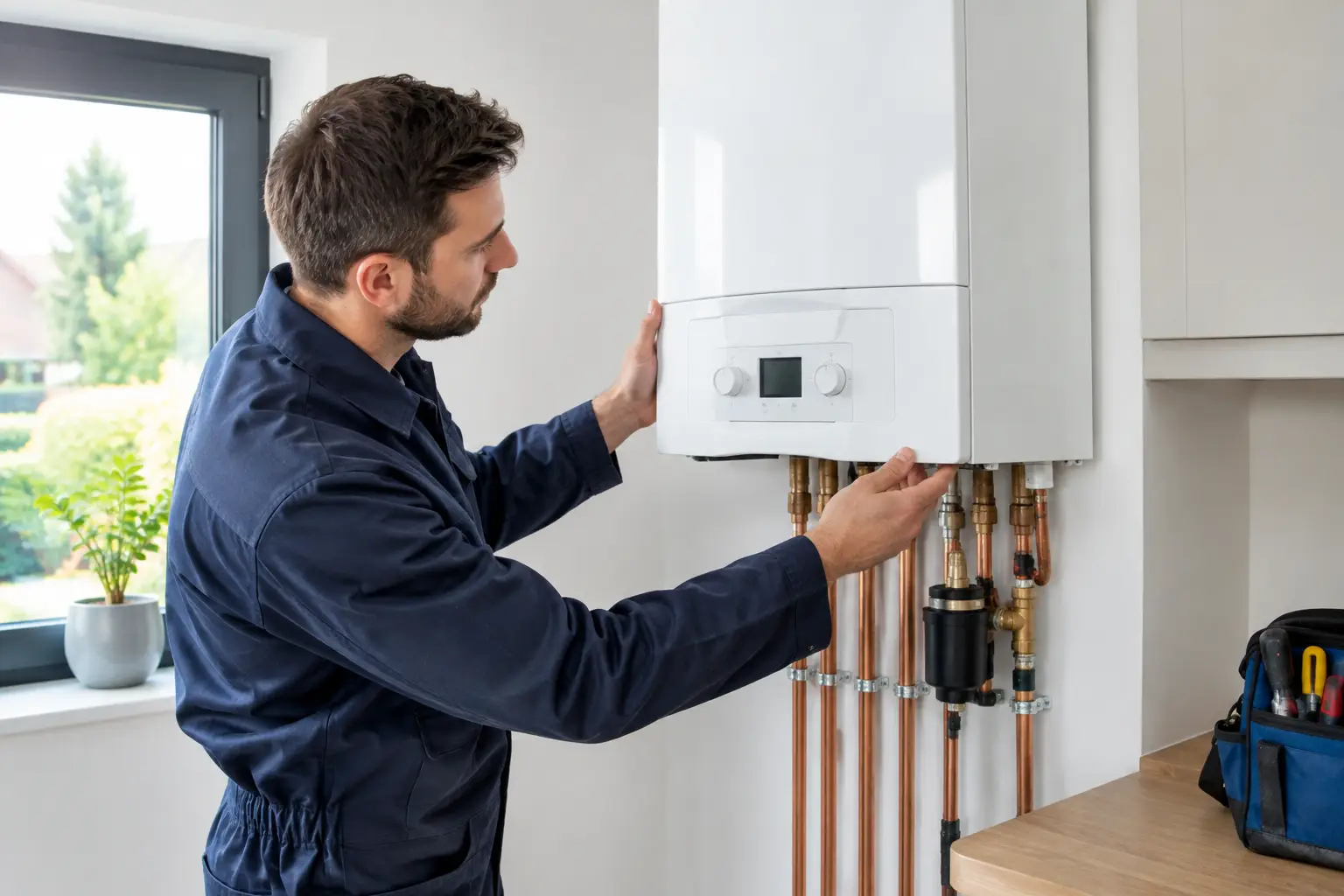
A new gas boiler should match your home’s heat loss, hot-water demand and existing system – not simply replace the old boiler with the same output. This gas boiler guide explains the practical choices, likely costs and installation considerations. Get a fixed boiler quote online.
Quick answer: combi boilers suit many smaller homes with one bathroom; system boilers are often better where several people may use hot water at once; regular boilers can be the sensible replacement for homes with a traditional tank-and-cylinder system. The right option depends on the property, pipework, water pressure and how you use hot water.
What type of gas boiler is right for your home?
The three main domestic boiler types all provide central heating, but they store and deliver hot water differently. Choosing between them is usually the biggest decision in a replacement project.
Combi boilers
A combi, short for combination boiler, produces hot water directly from the mains when you open a tap. It does not normally need a separate hot-water cylinder or cold-water tank, which can free up cupboard or loft space.
For a flat, terrace or smaller family home with one bathroom, a combi can be an efficient and straightforward option. It provides hot water on demand, but its performance is limited by the incoming mains-water flow rate. A powerful combi cannot create high flow where the mains supply is weak.
Combis can also be suitable for some larger homes, particularly where there is one main bathroom and a good incoming water supply. If two showers regularly run at the same time, however, a stored-hot-water system may offer a more comfortable experience.
System boilers
A system boiler heats radiators and works with an unvented or vented hot-water cylinder. The cylinder stores a quantity of hot water ready for use, making this arrangement well suited to homes with more than one bathroom or higher demand in the morning and evening.
A system boiler still needs space for the cylinder, often in an airing cupboard. In return, it can supply more than one outlet at a time, subject to the cylinder size and water pressure. It is often a strong choice for growing families, larger properties and landlords replacing like-for-like systems.
Regular boilers
Regular boilers, sometimes called heat-only or conventional boilers, work with a hot-water cylinder and usually a cold-water storage tank in the loft. They are common in older properties.
Replacing a regular boiler with another regular boiler can reduce disruption where the existing system is sound and the property benefits from stored hot water. It is not automatically the cheapest route, but retaining the established layout may avoid the wider alteration needed for a conversion.
Boiler size means output, not physical dimensions
Boiler output is measured in kilowatts, or kW. For heating, the right output depends on the property’s heat loss: its size, insulation, windows, layout and radiator requirements. For combi boilers, hot-water performance also matters, often more than the central-heating figure.
It is tempting to choose the largest model available. That is not always helpful. An oversized boiler may cycle on and off more often than necessary, while an undersized one may struggle during colder weather or deliver disappointing hot water.
As a broad starting point, many one-bathroom homes consider a combi in the mid-20s to low-30s kW range. Larger homes or properties with multiple bathrooms may need a different approach, often a system boiler and correctly sized cylinder. These are not specifications for every home. A quotation should consider the existing system, radiator circuit, water flow and your household’s actual demand.
How much does a new gas boiler cost?
For a straightforward replacement in the same position, a supplied-and-installed gas boiler commonly costs around £2,000 to £4,500. The final price can sit below or above that range depending on the boiler selected, location, access and the work required.
A simple like-for-like combi replacement is generally less involved than moving a boiler, changing boiler type or replacing a back boiler. A system conversion, for example, may involve a new cylinder, altered pipework and changes to the hot-water controls. Back-boiler replacement can involve removal work, making good and a completely new boiler location.
A clear quotation should set out the boiler model, standard installation work, controls, filter where included, flue arrangement and commissioning. It should also explain work that may cost extra if it is needed. Possible extras include a new condensate route, flue extensions, upgrading gas pipework, alterations to the heating system, relocating the boiler, difficult access or remedial work identified during assessment.
An online price is useful only when it is based on accurate property information and clear assumptions. Smart Adapt’s process is designed to turn those details into a fixed quote where the installation is suitable and terms are confirmed, rather than presenting an unrealistically low headline figure.
Choosing a boiler model and warranty
The boiler brand and model should suit the installation, budget and warranty requirements, rather than being chosen on badge recognition alone. Two boilers with a similar output can differ in dimensions, controls compatibility, hot-water performance and the manufacturer warranty available for that exact product.
Warranty periods vary by manufacturer and model. They can also depend on product registration, installation requirements and the manufacturer’s current terms. Always check the warranty offered with the specific boiler in your quote rather than relying on a general advertised maximum.
A good comparison looks beyond the warranty length. Consider whether the boiler fits the available space, whether its output suits the home, what controls are included and what the installation scope covers. For landlords, reliable hot-water provision and a clear record of the installation are often as important as the product specification.
What happens during boiler installation?
Many straightforward boiler swaps can be completed in one day. More complex work may take two or more days, especially when changing from a regular boiler to a combi, moving the boiler, fitting a new cylinder or replacing a back boiler. An installation date should be confirmed only after the work has been assessed and engineer availability checked.
The work normally includes safely removing the existing boiler, fitting the new appliance, connecting it to suitable services, installing the flue, testing the system and commissioning the boiler. The installer should explain the controls and provide the relevant completion information. Gas work must be carried out by an appropriately registered Gas Safe engineer.
Before work starts, clear access around the boiler, airing cupboard and radiators helps the day run more smoothly. If the boiler is moving, ask where the condensate pipe and flue will run. These details can affect both appearance and cost.
Should you replace or keep repairing an old boiler?
Replacement becomes worth considering when an older boiler is unreliable, parts are hard to obtain, repair costs are mounting or it no longer meets the household’s needs. A single minor issue does not automatically mean replacement is the right answer. The age of the boiler, its repair history and the likely cost of keeping it running all matter.
If you are already planning significant work – such as replacing a back boiler, changing from a cylinder system or moving the appliance – a new boiler installation can be an opportunity to choose a layout that works better for the home. The priority is a properly assessed installation, not a rushed decision based on a headline price.
Payment and quote considerations
Paying upfront is one option, but finance may be available for eligible customers who prefer to spread the cost. Finance is subject to status, eligibility, lender approval and the applicable terms. It should be considered alongside the total amount payable, not only the monthly figure.
For homes in Smart Adapt’s confirmed service areas across South Wales, the South West and selected London and surrounding locations, enter your postcode to check coverage before proceeding. The enquiry is managed by Smart Adapt, and installation is arranged with qualified Gas Safe registered engineers once the property and work scope have been confirmed.
Frequently asked questions
Is a combi boiler always the cheapest choice?
Not necessarily. A combi may reduce equipment and installation work where it replaces an existing combi, but a conversion can be more involved. It may also be the wrong choice for a home with high simultaneous hot-water demand.
Can I change from a regular boiler to a combi?
Yes, in many properties, but it is a conversion rather than a basic replacement. The cylinder and tanks may be removed, pipework can require alteration, and the incoming mains-water supply needs checking.
How long will I be without heating and hot water?
For a straightforward swap, disruption is often limited to the installation day. Complex installations can take longer. Your installer should explain the expected timetable before work is booked.
Does a new boiler include a thermostat?
Controls may be included, but the exact thermostat or smart control depends on the quote and selected boiler package. Check this before accepting the quotation.
Can a boiler be moved to a different room?
Often, yes. The new position must allow for a compliant flue route, condensate drainage, suitable pipework and safe access. These requirements can make relocation more expensive than a same-position replacement.
What information do I need for an online boiler quote?
Provide the current boiler type and location, number of bedrooms and bathrooms, details of any cylinder or tanks, your hot-water needs, and photographs where requested. Accurate answers help produce a more reliable fixed price.
A boiler is a long-term part of the home, so the right choice is the one that meets daily demand without creating unnecessary installation cost or disruption. Get a fixed boiler quote online.