






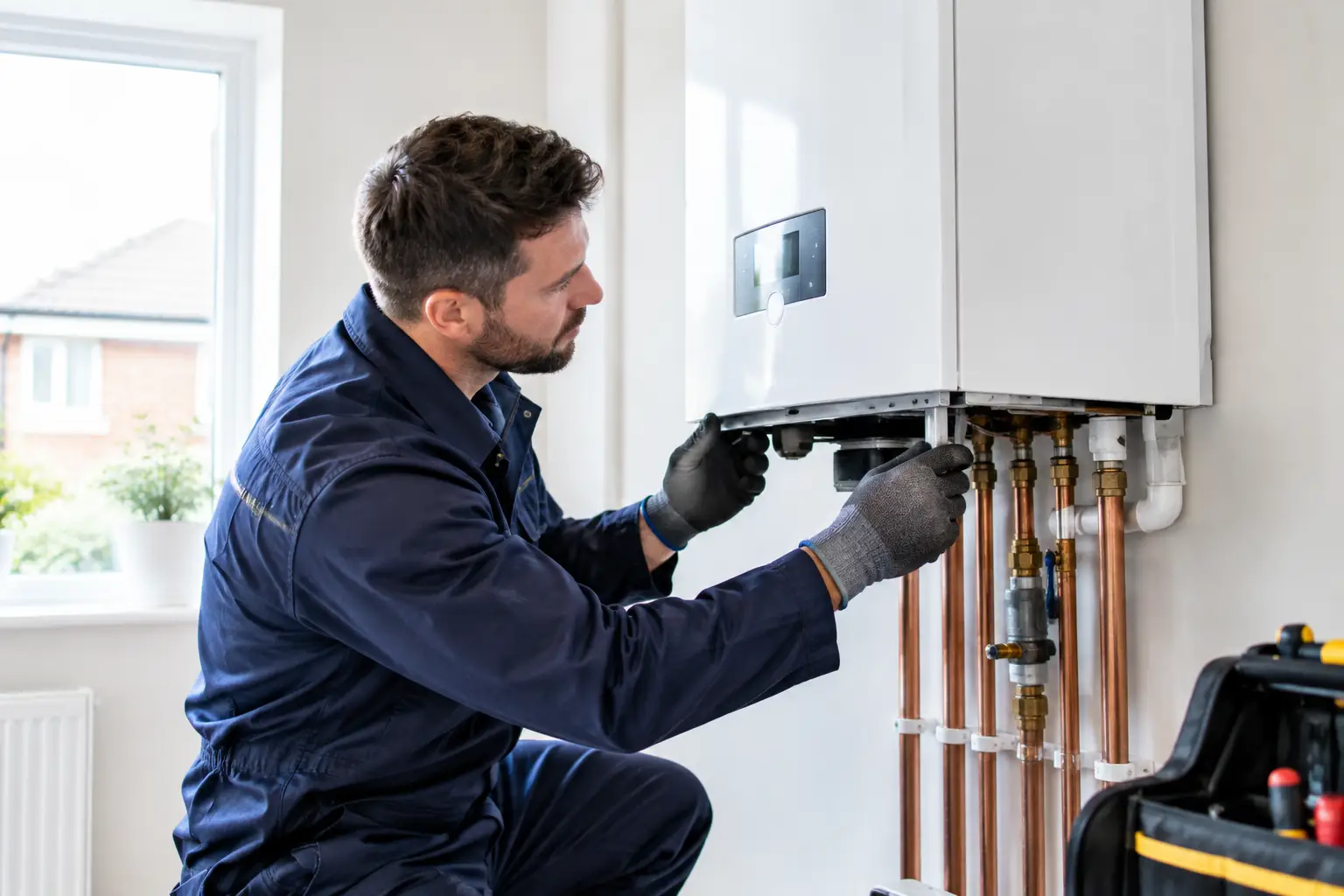
A straightforward boiler replacement can often be completed in one day, while a conversion, relocation or back-boiler replacement usually takes longer. This boiler installation timeline guide explains what happens from quote to handover, so you can plan around the work with fewer surprises.
Get a fixed boiler quote online.
Quick answer: how long does a boiler installation take?
For a like-for-like replacement, such as changing an existing combi boiler for a new combi in the same position, allow one working day in many homes. A new system boiler, a change from regular to combi, or moving the boiler to another room may take two to three days. More involved work, including replacing a back boiler, can take longer depending on the property and what needs changing.
The installation date itself also depends on postcode coverage, engineer availability, the boiler selected and whether the property needs a technical survey. A fixed quote should be based on accurate property details and confirmed installation terms, rather than an assumed one-day job.
Before you book: the quotation and assessment stage
The quickest installations start with the right information. An online quote journey will normally ask about your current boiler, its location, the number of bathrooms, radiators and occupants, and whether you have a hot-water cylinder. Photos of the existing boiler, flue and surrounding space can help identify issues before installation day.
This is the point to decide which boiler type suits the home. A combi boiler provides heating and hot water directly from the boiler and is often suitable for homes with one bathroom and reasonable mains-water pressure. A system boiler works with a separate hot-water cylinder, which can better suit higher simultaneous hot-water demand. A regular heat-only boiler is normally considered where an existing traditional system and tanks make it the sensible option.
Some properties need a survey or further technical assessment before the work can be confirmed. That is not unnecessary delay. It can be essential where the boiler is being moved, a different boiler type is planned, access is restricted, or the existing flue route needs changing.
Smart Adapt manages the quotation and booking process, with installation arranged through Gas Safe registered engineers. Entering your postcode allows service availability to be checked before a quote or installation is accepted.
What can affect the time before installation?
There is no honest universal waiting time. A planned replacement may be booked around your availability, while an urgent need can depend on local engineer capacity and the specification required. Choosing a common, suitable boiler model may make booking simpler, but availability should always be confirmed rather than assumed.
A few decisions can also extend the pre-installation stage. These include checking whether a cylinder is needed, agreeing a new boiler location, arranging access in a tenanted property, or confirming that the selected boiler output meets the home’s heating and hot-water demand.
For landlords, it is worth organising tenant access and confirming who can approve any agreed additional work before the appointment. This avoids a lost day if the engineer cannot get into the property or an important decision cannot be made.
Boiler installation timeline on the day
A one-day like-for-like boiler replacement
Where the new boiler is going in the same location and the existing system is suitable, the engineer will usually begin by protecting the work area and safely isolating the existing appliance. The old boiler is removed, the new boiler and flue components are fitted, and the heating system is connected.
The system may need cleaning or flushing before the new boiler is commissioned. The precise work depends on the condition and design of the existing heating system, so it should be included in the agreed scope rather than treated as automatic on every job.
Once installed, the engineer checks the appliance operates safely, commissions it in line with the manufacturer’s instructions and demonstrates the controls. You should be shown how to adjust heating and hot-water settings, how to repressurise the system if applicable, and where to find the key documents.
A two to three-day conversion or relocation
A change in boiler type involves more than swapping the appliance. Converting from a regular boiler to a combi, for example, can involve removing or altering parts of the old system and changing pipework. A move from a kitchen to a utility room, loft or airing cupboard may require new pipe routes, a new flue position and suitable condensate drainage.
The boiler itself may be fitted on the first day, but completing pipework changes, system preparation, controls and final commissioning can extend the programme. It depends on access, the fabric of the building and the agreed specification.
Back-boiler replacement
Replacing a back boiler is usually a more involved project. The old appliance is commonly behind a fireplace, and removing it safely can require additional work around the opening, pipework and new boiler location. The new boiler is generally installed elsewhere in the home.
Allow more time for this type of replacement and ask exactly what the quotation includes for making good. Decorative work, such as fireplace finishes, is not automatically part of a boiler installation unless it is specifically agreed. If any material needs specialist assessment or removal, that should be dealt with before or alongside the installation plan.
What may add time or cost to a boiler installation?
A clear quote should separate the core installation from foreseeable extras. The final price can change where site conditions differ from the details provided, or where additional work is needed for a safe, compliant installation.
Common examples include:
- Moving the boiler or changing the flue route
- Converting between combi, system and regular boiler arrangements
- Replacing unsuitable or inaccessible pipework
- Installing or upgrading heating controls
- Changes needed to condensate drainage
- Difficult access, loft work or extensive system cleaning
- Work associated with a back-boiler removal and making good
As a broad planning estimate, a straightforward supplied-and-installed replacement often costs around £2,000 to £3,500. A conversion, relocation or more complex replacement can be around £3,000 to £5,500 or more. These are estimates, not a confirmed offer. Boiler make and model, output, warranty package, system condition and the installation scope all affect the final price.
The handover: what should happen after fitting?
Do not treat commissioning as a minor final step. It confirms that the boiler has been installed and set up correctly, and it is when you should ask any questions about everyday use.
You should receive the boiler’s documentation and understand what has been registered or submitted following the installation. Gas work must be carried out by an appropriately registered Gas Safe engineer. For domestic boiler replacements, the relevant Building Regulations notification process is normally handled through the installer’s route, with compliance documentation issued afterwards.
Warranty length depends on the exact boiler and manufacturer terms. Registration deadlines, eligible installers, system treatment requirements and the model chosen can all matter. Check the written warranty terms for your selected boiler rather than relying on a headline number alone.
If you are considering finance, make the payment choice before the installation is booked where possible. Finance is subject to status, eligibility and lender approval, and the available options should be confirmed as part of your quotation.
How to keep your installation on schedule
You can reduce delays by providing clear photos and accurate information at the quote stage. Mention planned changes, such as moving the boiler or removing a cylinder, even if they seem straightforward. Confirm access, parking arrangements where relevant, and whether someone can be present for the handover.
Clear the immediate work area before the engineer arrives, but do not attempt to disconnect or alter gas appliances yourself. If the installer identifies an issue not visible from the original information, ask how it affects the programme, safety requirements and price before additional work begins.
Frequently asked questions
Can a new boiler be installed in one day?
Yes, often when it is a like-for-like replacement in the same location and the existing system needs no significant alterations. More complex work takes longer.
Will I be without heating and hot water?
Usually, yes, for at least part of installation day while the old boiler is removed and the new one is connected and commissioned. Your installer can explain the expected interruption for your specific job.
Does moving a boiler take longer?
Usually. A new location may require additional pipework, a new flue route and condensate drainage, so allow at least two days in many cases.
How long does a combi conversion take?
Many regular-to-combi conversions take two to three days, but the time depends on the existing system, pipework, cylinder removal and the selected boiler position.
Can I choose any boiler size?
No. Boiler output should be chosen around the property’s heating requirement and hot-water demand. A larger output is not automatically better, particularly if it is not suited to the system or household use.
What happens if extra work is found?
The installer should explain what has been found, why it matters and the impact on cost or timing. A properly detailed quote reduces this risk, but hidden site conditions can only become clear once work starts.
A boiler replacement is easier to live with when the scope is clear before the engineer arrives. Share accurate property details, choose a boiler around your actual demand and leave enough time for a proper handover. Get a fixed boiler quote online.