






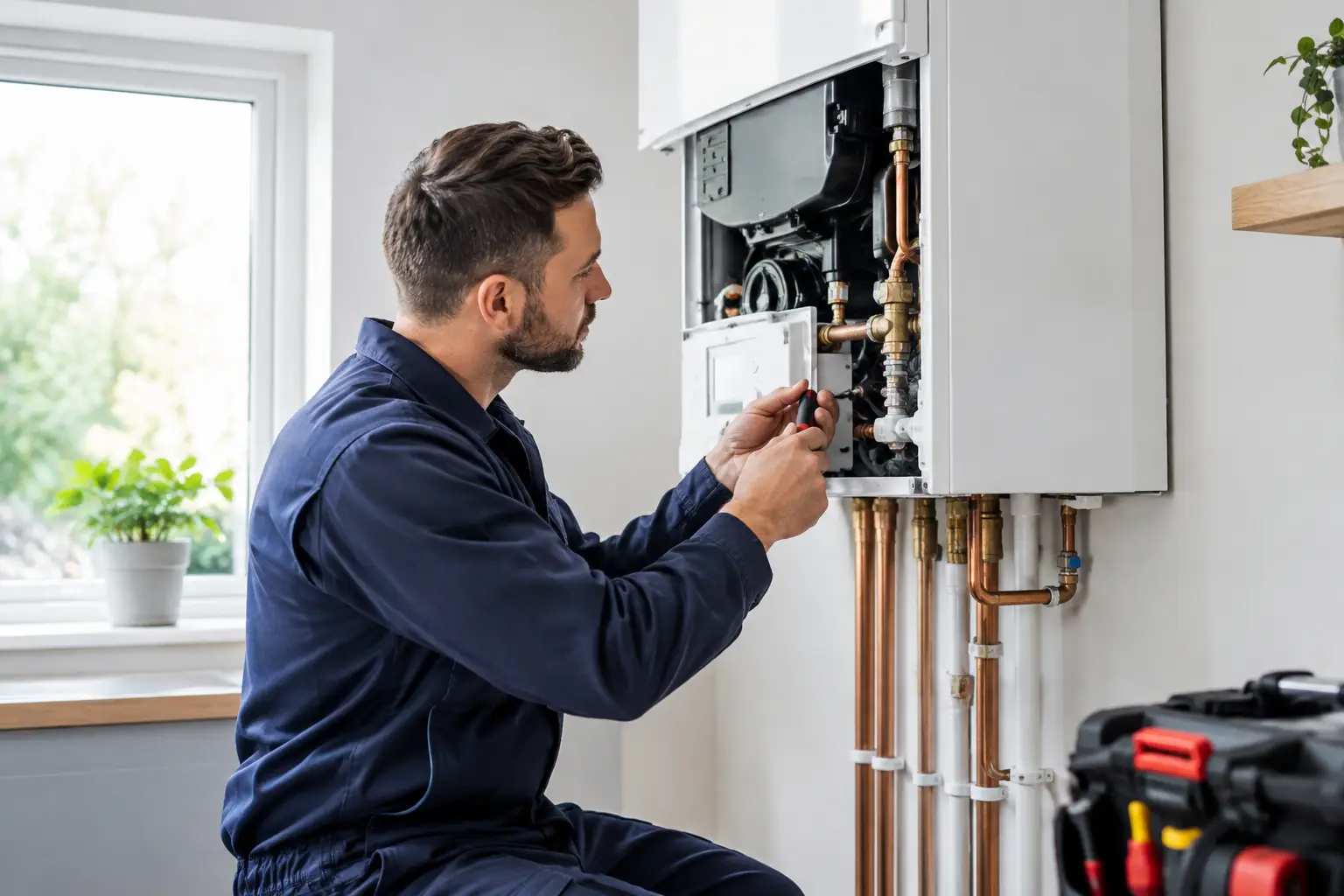
A replacement boiler quote is not just the price of the boiler itself. Boiler installation extras can apply when your existing pipework, flue route, controls or boiler location need changing. A clear quote should show these costs before work is agreed, not leave them as a surprise on installation day.
Quick answer: a straightforward like-for-like boiler replacement usually has fewer additional costs than a conversion, relocation or back-boiler replacement. The right boiler and installation scope depend on your home, hot-water demand and the condition of the existing system.
Get a fixed boiler quote online.
What is normally included with a new boiler?
In a typical boiler replacement, the quoted price should cover the selected boiler, standard installation materials, fitting, commissioning and the required notification process. It should also make clear whether a magnetic filter, system treatment, thermostat or smart controls are included.
For a straightforward replacement in the same position, a broad UK guide price is often around £2,000 to £3,500 including VAT. This is an estimate, not a confirmed price. The boiler brand and model, its output, warranty terms, access and local installation requirements all affect the final cost.
Smart Adapt’s online quotation journey is designed to establish the important details early, including the current boiler type, property layout and proposed new boiler. The installation is arranged with Gas Safe registered engineers. If information provided online indicates that more work may be needed, this should be explained before an installation is accepted.
Boiler installation extras that can change the price
Extras are not automatically a bad sign. Some are necessary to make the installation safe, compliant and suitable for the new boiler. Others are optional improvements that can make the heating easier to control or protect the system over time.
Moving the boiler to a new location
Keeping a boiler in its existing position is generally the simplest option. Relocating it to a kitchen cupboard, utility area, loft or airing cupboard can require new gas pipework, heating pipework, a new condensate route and a suitable flue route.
The final cost depends on distance, access and what is behind the walls and floors. A move within the same room may be relatively modest; moving a boiler across a property or onto another floor is more involved. The proposed location also has to meet manufacturer instructions and current installation requirements.
Flue changes and building work
Modern condensing boilers produce waste gases through a flue. Where the existing flue cannot be reused, the new route may need to pass through an external wall, roof or another suitable exit point.
A vertical flue, extended flue sections or flue components needed to meet clearances can add to the installation price. In some homes, access equipment or making good around the new flue opening may also be required. An engineer will assess whether the route is safe and practical rather than choosing a route simply because it looks neater.
Condensate pipe upgrades
A condensing boiler produces acidic condensate, which needs a suitable drain route. If an internal connection is not practical, an external pipe may need protection against freezing. This can involve insulation, a larger pipe size or a different route.
This work is often overlooked when comparing low headline prices. It matters because an unsuitable condensate arrangement can cause avoidable disruption in cold weather. The appropriate solution depends on the property and the available drainage connection.
Controls, filters and system protection
Some quotes include basic heating controls, while others price upgraded controls separately. A programmable thermostat or smart control can make it easier to set heating times and temperatures around your household routine, but the right choice depends on how you use the home.
A magnetic filter helps collect circulating debris before it reaches key boiler components. It is commonly recommended with a new boiler, particularly where the existing heating system is older. Cleaning and treating the system water may also be needed before commissioning. These measures can support the new boiler’s operation, but exact requirements vary by boiler and manufacturer warranty terms.
Pipework upgrades and alterations
Older pipework may not be ideally sized or arranged for a new boiler, especially during a system change. A combi conversion, for example, may require removal or alteration of tanks, cylinders and associated pipework.
Gas pipe sizing is another important consideration. A boiler must receive the correct gas supply, so sections of the gas pipe may need upgrading. This is a technical and safety-led decision made during assessment, not an optional cosmetic extra.
Access, difficult locations and removal work
A boiler in a loft, tight cupboard or high-level position can take longer to replace safely. Restricted access, parking limitations, difficult flue access and the need to remove an old hot-water cylinder or feed tanks can all change the scope.
Back-boiler replacement is usually more complex than a standard swap because the old appliance is located behind a fireplace. It can involve removing the back boiler, adapting pipework and fitting a new boiler in a suitable modern location. The fireplace area may also need separate making-good work, which should be discussed clearly before the installation begins.
When a boiler conversion creates extra work
Changing boiler type can be worthwhile, but it is not always the lowest-cost route. A combi boiler provides heating and hot water directly from the boiler, without a hot-water cylinder. It can suit smaller homes with one bathroom and limited storage, provided the incoming mains water flow is adequate.
A system boiler works with a hot-water cylinder and can be a better fit for larger homes or households that need hot water at more than one outlet at the same time. A regular boiler also uses stored hot water and may suit properties with an existing traditional system where retaining that layout is practical.
Converting from a regular or system boiler to a combi can involve removing tanks and a cylinder, rerouting pipework and checking mains water performance. Converting the other way may require space for a cylinder and additional system components. The most suitable option is the one that meets real demand without creating unnecessary work.
How to compare quotes for boiler installation extras
The cheapest-looking quote may not cover the same work as a more detailed one. Before comparing prices, check whether each quote identifies the boiler model, output and warranty basis, as well as the controls, filter, flue arrangement and any system treatment.
Ask whether the price assumes a like-for-like replacement in the same location. If you are considering a move, conversion or back-boiler replacement, make sure that scope is specifically included. It is also sensible to ask what would happen if an on-site technical assessment identifies a condition that could not reasonably be seen from the information supplied.
A fixed quote is most useful when it is based on accurate property details and confirmed terms. It should distinguish between included work, known extras and any work that may need further assessment. That clarity makes it easier to budget and avoids comparing unlike-for-like installations.
Can finance cover installation extras?
Available finance options may help spread the cost of a new boiler installation, including agreed installation work. Finance is subject to status, eligibility, lender terms and approval. It is not suitable for every customer, so always consider the total amount repayable and the monthly commitment before applying.
Whether paying upfront or exploring finance, confirm the full installation scope first. Adding substantial work after an agreement has been arranged may require the quote and payment arrangement to be reviewed.
Frequently asked questions about boiler installation extras
Are boiler installation extras always necessary?
No. A straightforward replacement in the same location may need few or no additional items beyond the standard installation. Extras are more likely where the boiler is moving, the flue needs changing, the system is being converted or existing pipework needs upgrading.
Will I know about extra costs before installation?
You should be told about known additional work before proceeding. Accurate answers during an online quotation and any required survey or technical assessment help identify potential costs early.
Is a magnetic filter worth adding to a new boiler?
It can be a sensible addition, particularly on an older heating system, because it helps capture magnetic debris in circulating water. Check what is included with your chosen boiler package and what the manufacturer requires for warranty eligibility.
Does relocating a boiler always take longer?
Usually, yes. A relocation often involves extending pipework, creating a new flue route and arranging a suitable condensate connection. The exact time depends on the distance, access and installation complexity.
Can I replace a back boiler with a combi boiler?
Often, yes, but it is a more involved project than replacing a modern wall-hung boiler. The property needs a suitable new boiler location, and the mains water supply should be assessed if a combi is being considered.
How long does a replacement boiler installation take?
Many like-for-like replacements can be completed in one day. Conversions, relocations and back-boiler replacements can take longer because they involve more alterations. The installation timeframe should be confirmed for your property before work is booked.
Do extras affect the boiler warranty?
They can. Manufacturers set their own warranty periods and conditions, which may include correct installation, registration and system protection requirements. Check the warranty for the exact boiler model rather than relying on a general headline period.
The best way to keep boiler installation extras under control is to describe your property accurately and choose the boiler around how you actually use heating and hot water. Get a fixed boiler quote online and check postcode availability before taking the next step.