






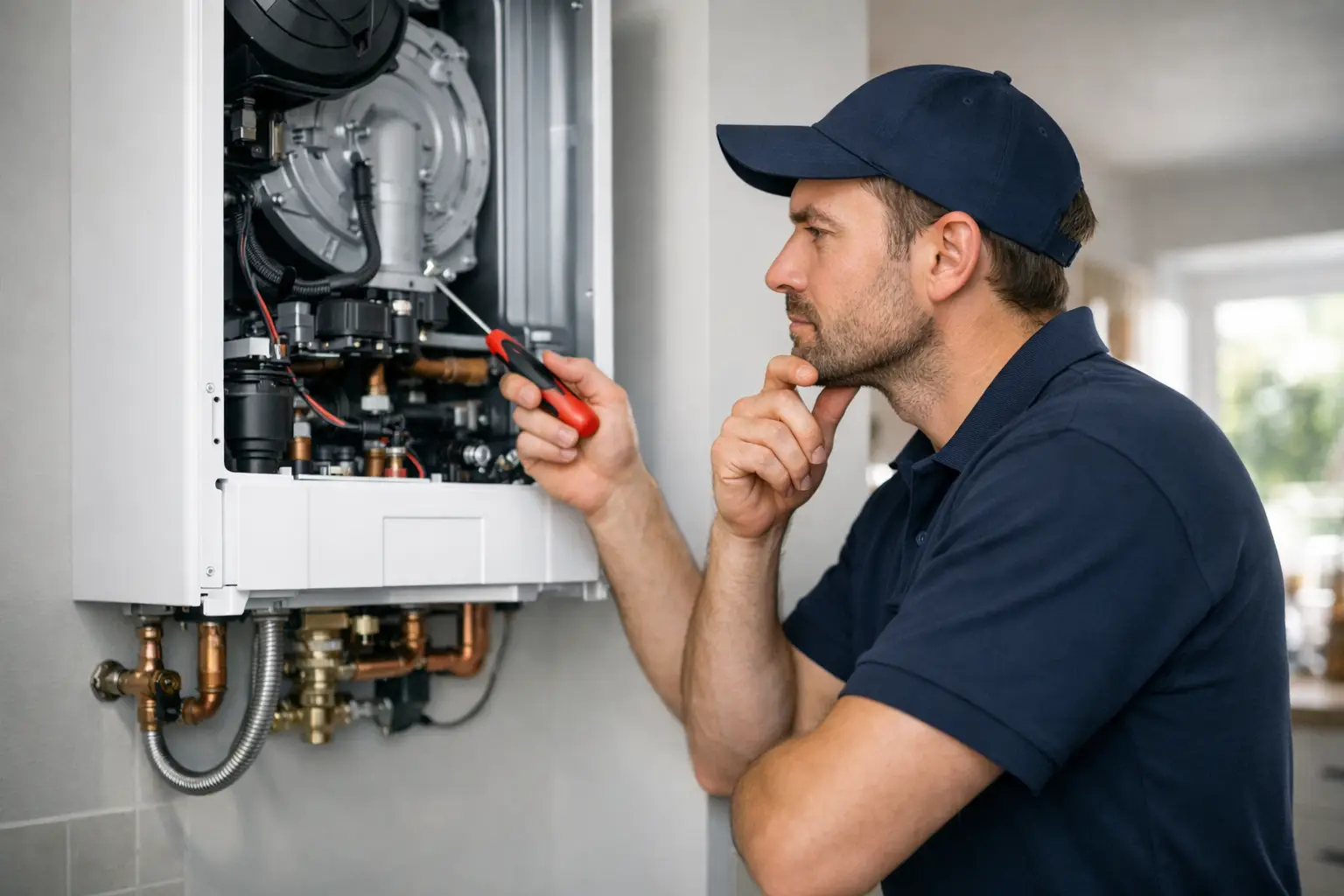
A fault code does not automatically mean you need a new boiler. However, recurring boiler faults and fault codes on an older appliance can be a sensible point to consider replacement – particularly if heating or hot water is unreliable, parts are difficult to obtain or repair costs are mounting.
Quick answer: check the code in your boiler manual, arrange a Gas Safe assessment where needed, and compare the likely repair cost with the age, reliability and warranty of a replacement. A like-for-like boiler replacement commonly costs around £2,000 to £4,500, while conversions, relocations and more involved work can cost more.
Get a fixed boiler quote online.
What boiler fault codes are telling you
Most modern boilers use a display code to identify the part of the heating system or appliance that needs attention. The meaning is specific to the manufacturer and model. The same-looking code on two different boilers may not indicate the same issue, so avoid relying on generic code lists found online.
Some codes may relate to low system pressure, a lack of ignition, overheating protection, a fan issue or poor water circulation. In some cases, the fault may clear after a simple user check described in the manufacturer instructions. In others, the boiler may lock out to protect the appliance and household.
Do not remove the boiler casing or attempt work on gas components yourself. If you can smell gas, suspect carbon monoxide, or a carbon monoxide alarm sounds, follow the emergency guidance from your gas network immediately. Leave the property if necessary, avoid using electrical switches or naked flames, and call the National Gas emergency number on 0800 111 999.
For non-emergency faults, an engineer can establish whether the issue is isolated or part of a wider pattern. That distinction matters when deciding whether to keep an old boiler going or invest in a replacement.
When a boiler fault is a sign to replace
A single fault on a relatively recent boiler is not usually enough reason to replace it. If the appliance is within a useful working life, parts are available and the issue is straightforward, repair may be the proportionate choice.
Replacement becomes more compelling when faults return, the boiler is old, or a costly component is required. There is no fixed age at which every boiler must be changed, but boilers approaching or beyond 10 to 15 years old may have shorter remaining parts availability and fewer warranty options than current models.
Consider a new boiler quotation if any of the following applies:
- The boiler repeatedly loses heating or hot water, despite previous work.
- A major part has failed and the cost is substantial compared with a new installation.
- Replacement parts are obsolete, unavailable or subject to lengthy delays.
- The current boiler is poorly matched to your household’s hot-water demand.
- You are planning wider changes, such as removing a back boiler, changing boiler type or moving the boiler position.
- You want the reassurance of a new manufacturer warranty, subject to the selected product’s terms and registration requirements.
Landlords may also need to weigh disruption to tenants and the risk of further call-outs against the cost of planned replacement. A reliable new boiler can be easier to budget for than repeated unexpected faults, although the right decision still depends on the appliance and the property.
Boiler faults and fault codes: repair cost versus replacement value
The useful comparison is not simply the price of the next repair. It is the likely cost of keeping the existing boiler reliable over the next few years, set against the installed price and warranty of a suitable new model.
For example, a modest repair on a five-year-old boiler may be reasonable if the unit has otherwise been dependable. The same repair bill on a much older boiler that has already had several faults may be harder to justify. There is also the practical issue of being without hot water or heating while parts are sourced.
A replacement can also solve suitability problems that a repair cannot. A small combi boiler may struggle when a growing household needs two showers running close together. An older regular boiler with tanks may no longer suit the available space or renovation plans. In these situations, the decision is about the whole heating and hot-water setup, not just the displayed fault code.
Choosing the right replacement boiler
The best replacement is based on the property, radiator system and hot-water use rather than the boiler you happen to have now. Smart Adapt can help homeowners and landlords compare suitable options through an online quotation journey, with postcode coverage and property details confirmed before an installation is accepted.
Combi boilers for homes with limited space
A combi boiler provides central heating and hot water from one compact appliance, usually without a separate hot-water cylinder. It is often a practical choice for flats and smaller homes with one bathroom, where saving space is a priority.
The trade-off is hot-water flow. A combi can provide excellent hot water at one outlet, but performance depends on the incoming mains water supply and the model’s output. Larger households that regularly use more than one shower or bath may need a higher-output combi or a different system type.
System boilers for higher hot-water demand
A system boiler works with an unvented hot-water cylinder. The cylinder stores hot water, which can make it a better fit for homes with multiple bathrooms or simultaneous demand at several outlets.
This option needs space for the cylinder, and the existing system must be suitable or adapted accordingly. It can cost more than a straightforward combi swap, but it may provide a more comfortable result in a busy family home.
Regular boilers where an existing tank system remains suitable
Regular, or heat-only, boilers work with a cylinder and usually tanks in the loft. Keeping this arrangement can be appropriate where the existing system suits the home, particularly in larger or older properties.
Changing from a regular boiler to a combi can free up space, but it is not automatically the best option. Pipework alterations, removal of tanks, water pressure and the household’s hot-water habits all need to be considered before choosing a conversion.
What affects the price of a replacement boiler?
An online estimate is a helpful starting point, but a confirmed fixed quote should reflect the actual property and scope of work. A standard, like-for-like replacement in the same position is generally simpler than a conversion, relocation or back-boiler replacement.
The final price may be affected by the boiler brand and model, output, flue route, controls, condensate pipework, filter requirements, access, existing system condition and any upgrades needed to meet current installation standards. Moving a boiler can involve extending gas, water, heating and electrical connections, as well as making good the previous location where agreed.
As a broad planning guide, many straightforward replacement boiler installations fall between £2,000 and £4,500. More complex work, including a boiler relocation, system conversion or back-boiler removal, can exceed this range. These are estimates, not promised prices. The most useful quote sets out what is included, what assumptions have been made and which items may need further assessment.
What happens when you request a quote?
Start by entering accurate details about your property, current boiler, bathrooms, radiators and hot-water use. This allows suitable combi, system or regular boiler options to be identified without sales pressure.
Your quote should explain the proposed boiler, key installation work, warranty information and potential additional costs. Manufacturer warranties vary by model and may depend on registration and the manufacturer’s conditions. If finance is available, it is subject to status, eligibility and lender approval.
Once the installation is agreed, the work is carried out by Gas Safe registered engineers. A straightforward boiler swap can often be completed in a day, while relocations, conversions and back-boiler replacements may take longer. The installation date depends on engineer availability, the confirmed scope and any survey or technical requirements.
Frequently asked questions
Can I find the meaning of my boiler code online?
You can use the manufacturer manual to understand the code, but treat online lists with care. Codes vary by model. If the boiler has locked out or the code returns, a qualified assessment is the safer route.
Is a low-pressure code a reason to replace my boiler?
Not on its own. Low pressure can have several causes. Replacement may be worth considering if the issue keeps returning on an older boiler alongside other faults or poor reliability.
Should I replace a boiler that still works sometimes?
It depends on its age, fault history, likely repair cost and how disruptive the unreliability has become. Intermittent heating or hot water is often a reason to obtain a replacement quote before the boiler fails completely.
Can I replace an old back boiler with a combi boiler?
Often, yes, but it is usually more involved than a standard swap. The old appliance, flue arrangement, new boiler location and necessary pipework all affect cost and installation time.
Will a larger boiler give me better hot water?
Not necessarily. Boiler output should match your heating load and hot-water demand. For combis, incoming mains water flow is also critical. A system boiler and cylinder may be more suitable for multiple bathrooms.
How long is a new boiler warranty?
Warranty length depends on the exact manufacturer and model, as well as the applicable registration and installation conditions. Check the terms included with your selected boiler rather than assuming every model has the same cover.
Can landlords request a boiler replacement quote?
Yes. Accurate property details, tenant access arrangements and the existing boiler setup will help establish whether a like-for-like replacement or a more involved installation is needed.
Get a fixed boiler quote online.
If a fault code has made you question your boiler’s future, a clear replacement quote gives you a practical benchmark. It lets you make the decision before the next breakdown decides for you.