






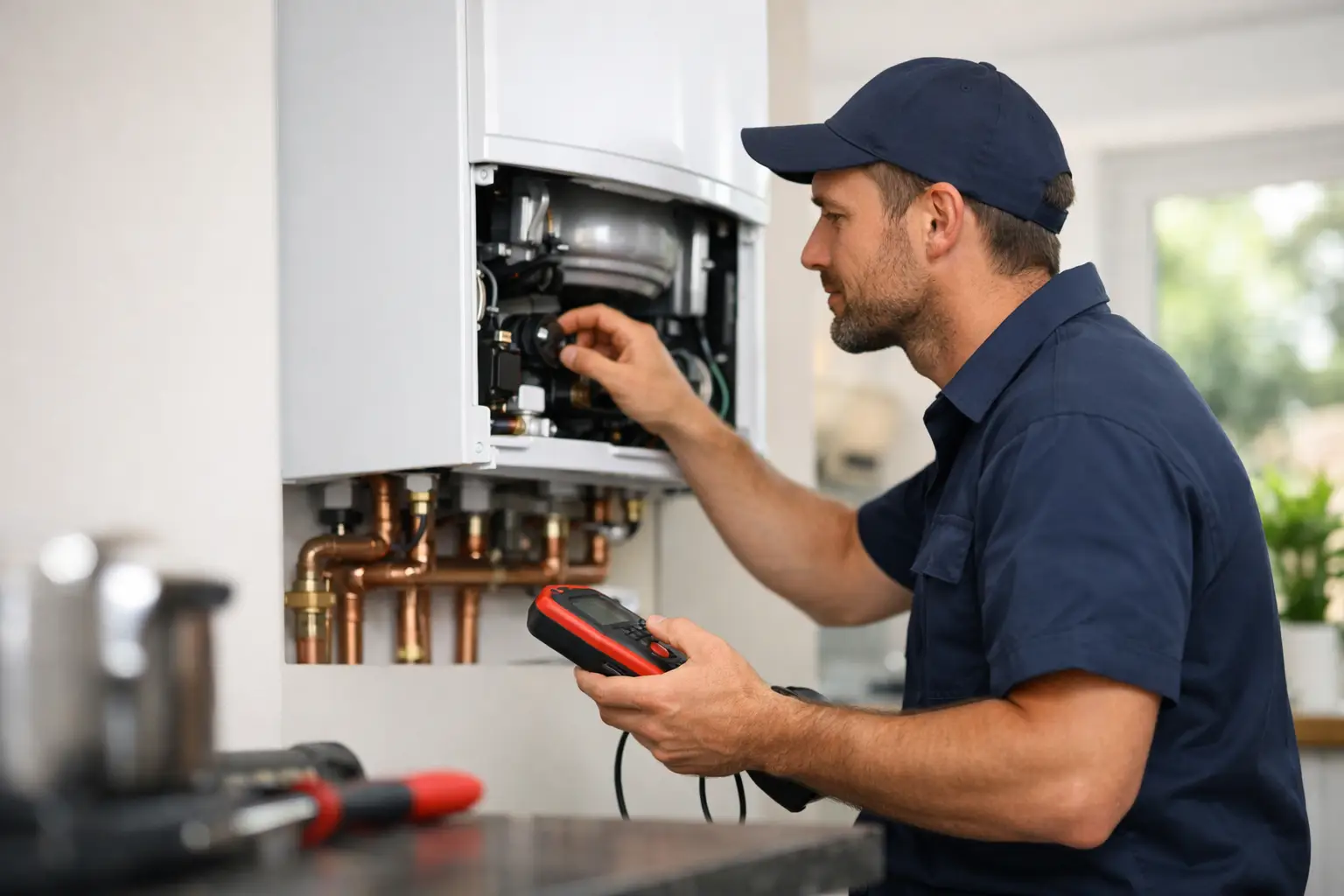
Boiler conversions replace one type of heating system with another, such as changing a regular boiler to a combi. They can give you more useful space and simplify hot water, but cost more than a like-for-like replacement because pipework, controls and system changes may be needed.
Quick answer: a straightforward boiler conversion commonly costs more than a direct replacement, often from around £3,500 and potentially £6,000 or more where tanks, cylinders, relocation or significant alterations are involved. The right option depends on your home’s water pressure, number of bathrooms and hot-water demand.
Get a fixed boiler quote online. Provide accurate property details and your postcode, and Smart Adapt can confirm whether your address is within its service area before a quotation or installation is accepted.
What is a boiler conversion?
A boiler conversion means changing the type or layout of your existing boiler system rather than simply fitting a newer version of the same arrangement. The most common example is replacing a regular boiler, with a hot-water cylinder and tanks in the loft, with a modern combi boiler.
Other conversions include changing from a combi to a system boiler, replacing an old back boiler with a new boiler elsewhere in the property, or retaining a cylinder while updating a regular boiler to a system boiler. Each involves different work, which is why an online quote may need a survey or technical assessment before it can be confirmed.
The appeal is understandable. A combi conversion may remove the need for a hot-water cylinder and loft tanks, freeing cupboard and loft space. A system boiler can offer stronger hot-water capacity for a busy household. However, the most suitable boiler is not always the one with the fewest components.
The main types of boiler conversions
Regular boiler to combi boiler
This is often chosen by owners of smaller homes, flats and properties with one bathroom. A combi boiler heats hot water on demand, so it does not store a tank of hot water in a cylinder.
For the conversion to work well, the incoming mains water supply needs adequate flow and pressure. A large home with two showers running at once may find that a standard combi cannot meet demand as comfortably as a cylinder-based system. In that situation, a high-output combi may be suitable, but a system boiler is often worth comparing first.
Regular boiler to system boiler
A system boiler works with a separate hot-water cylinder but keeps many of the key heating components within the boiler. This can be a practical update for homes that already have a cylinder and need stored hot water for more than one bathroom.
The work can be less disruptive than a combi conversion where the cylinder is staying in place. It may still require changes to controls, pipework, pumps or the expansion arrangement, depending on the existing system.
Combi boiler to system boiler
Moving from a combi to a system boiler is less common, but it can make sense after an extension or where a household’s hot-water use has increased. Adding a cylinder creates a stored supply of hot water, helping homes where several outlets are used at similar times.
You will need a suitable location for the cylinder, such as an airing cupboard or other appropriate space. This conversion needs careful design, not just a bigger boiler. Cylinder size, boiler output and the property’s heating demand all matter.
Back-boiler replacement
An old back boiler behind a fireplace is normally replaced with a modern boiler installed in a new location, often a kitchen cupboard, utility area, airing cupboard or loft where suitable. The old unit may be disconnected and made safe, while the new installation requires a new flue route and revised pipework.
Back-boiler replacements can involve more work than a conventional swap. Access, the fireplace opening, flue route and condition of the existing heating system all affect the scope and final price.
How much do boiler conversions cost?
A direct combi-for-combi replacement is usually the simplest type of installation. Boiler conversions are more variable because they may involve removing a cylinder or tanks, altering heating and hot-water pipework, fitting a new condensate route, installing controls, and creating a safe flue route.
As a broad guide, a conversion from a regular boiler to a combi may start at around £3,500 in a straightforward property. More involved work can exceed £6,000. A back-boiler replacement or a conversion with boiler relocation can also sit towards the higher end, particularly if access is difficult or substantial alterations are required.
These are estimates, not fixed prices. A confirmed quote should set out the selected boiler, installation work, standard materials and any assumptions. It should also explain potential extras before work begins, rather than presenting a low headline price that does not reflect the property.
Factors that can change the price include:
- the boiler type, output, brand and model selected
- whether a cylinder, tanks or old boiler need to be removed
- the new boiler location and flue route
- upgrades to heating controls or pipework
- system cleaning, filters or other work required by the installation design or manufacturer instructions
- access restrictions, scaffolding requirements or additional survey findings
Choosing between a combi, system and regular boiler
Start with how your household uses hot water, not with the boiler you currently have. A one-bathroom home with good mains water flow may benefit from the compactness of a combi boiler. There is no cylinder to heat and no wait for a stored tank to recover, although hot-water performance is limited by the boiler’s output and incoming water supply.
A system boiler is often a better match for larger homes, properties with two or more bathrooms, or households where showers, baths and taps are frequently used at the same time. The cylinder takes up space, but it stores hot water ready for use.
A regular boiler can still be appropriate in some older properties, especially where an existing open-vented system is being retained. That said, it is worth comparing a modern system boiler if you are replacing a regular boiler, as the installation may be simpler than a full combi conversion while improving the arrangement of the system.
Boiler output also needs to be right. Heating output is based on the home’s size, heat loss, radiator demand and insulation, while combi hot-water output is strongly influenced by the desired shower and tap flow. Bigger is not automatically better. An oversized boiler may cost more without improving how the system performs.
What happens during a conversion?
A good quotation process starts with the property. You will usually be asked about the current boiler, hot-water cylinder, tanks, bathrooms, preferred boiler location and flue position. Clear photos can help identify whether a survey is needed before the work is confirmed.
Once the design is agreed, the installation team isolates and removes the old equipment as required, completes the new pipework and flue arrangements, then fits the boiler and controls. The system is filled, checked and commissioned by a Gas Safe registered engineer. You should be shown how to use the new controls and given the relevant installation and warranty information.
Some conversions can be completed in two to three days. More complex back-boiler replacements, relocations or work involving extensive changes may take longer. A realistic installation date should only be agreed once the scope, product availability and access requirements are clear.
Warranties, finance and fixed quotes
Warranty length varies by manufacturer, boiler model and the terms in place when the boiler is registered. Some products require installation and registration within set timescales, and warranty conditions may include the use of specified controls or filters. Check the exact warranty offered for the boiler in your quote rather than relying on a general claim.
If you are considering monthly payments, finance may be available on selected installations. Finance is subject to status, eligibility, lender approval and terms. It is sensible to compare the total amount payable as well as the monthly figure.
A fixed online quote can be convenient when the information supplied accurately reflects the property. If photos, access details or a survey reveal additional work, this should be discussed clearly before installation is booked. Smart Adapt manages the quotation journey and arranges installation by qualified Gas Safe registered engineers.
FAQs about boiler conversions
Is converting to a combi boiler always a good idea?
No. It can be an excellent choice for a smaller home with one bathroom and good mains water flow. Homes with high simultaneous hot-water demand may be better served by a system boiler and cylinder.
Can a boiler be moved during a conversion?
Yes, provided there is a suitable location for the appliance, flue, condensate pipework and safe access. Moving it adds labour and materials, so it usually increases the installation price.
Do loft tanks always need to be removed?
Not always. They are commonly removed during a regular-to-combi conversion, but the final decision depends on the new system design and any remaining purpose for the tanks.
Will I need new radiators?
Not necessarily. Existing radiators may be suitable, but their condition, size and the overall system design should be assessed. A new boiler cannot compensate for poorly sized or unsuitable emitters.
How disruptive is a boiler conversion?
There will be some disruption, particularly where a cylinder, tanks or old back boiler are being removed. Installers should explain likely access needs, downtime for heating and hot water, and any work that cannot be completed until the property has been assessed.
Can landlords arrange a boiler conversion?
Yes. The same suitability checks apply, alongside the need to plan access with tenants and ensure the installation is properly commissioned and documented.
A boiler conversion should make daily life easier, not simply replace old equipment with the newest available model. Share accurate details of your home and how you use hot water, compare the options on their merits, and choose an installation plan that is clear from the outset. Get a fixed boiler quote online.