






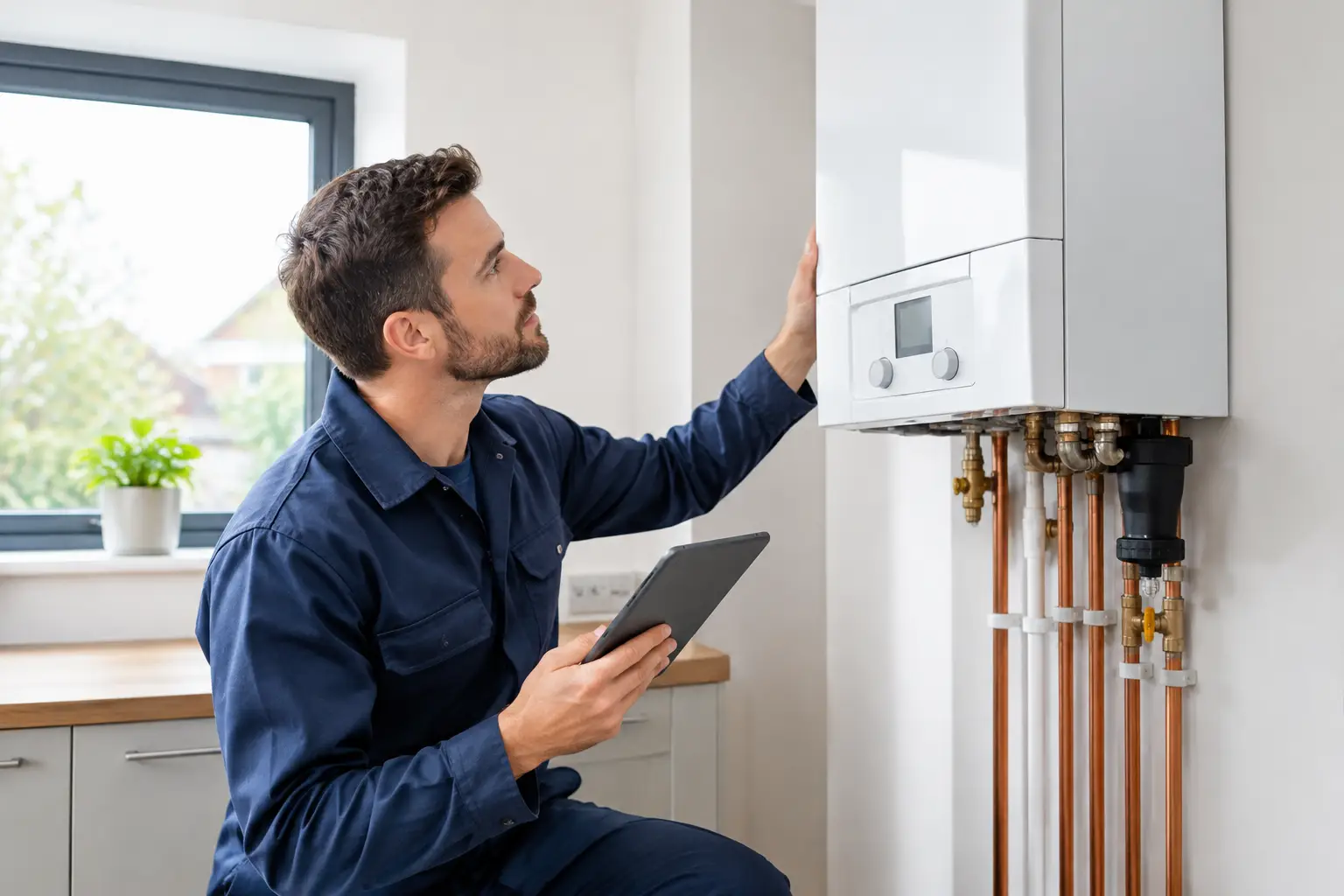
A boiler that is already unreliable in autumn rarely becomes more dependable when the temperature drops. If you are asking, “Should I replace boiler before winter?”, the answer is usually yes if it is old, costly to keep running, struggling to heat your home, or has had repeat faults. Planning a replacement before cold weather gives you more choice and avoids making a major decision under pressure.
Quick answer: replace your boiler before winter when the signs point to declining reliability or when it no longer suits your home’s heating and hot-water needs. A straightforward boiler swap can often be completed in a day, while conversions, relocations and more complex installations may take longer.
Get a fixed boiler quote online.
Why replace a boiler before winter?
Winter is when your boiler works hardest. A boiler that has been temperamental through spring and summer may still provide heating, but that does not mean it is a sensible long-term option. Waiting until it stops altogether can leave you with limited time to compare boilers, check installation availability or consider where the new unit should go.
Replacing before winter is not automatically the right choice for every household. A relatively modern boiler with an isolated, economical issue may be worth keeping. But where the boiler is approaching the end of its expected working life, requires increasingly frequent attention or cannot provide the hot water your household needs, replacement can be the more practical decision.
For landlords, a planned replacement can also reduce the risk of disruption for tenants during the heating season. The priority is not simply fitting the newest boiler. It is choosing a suitable system, output and installation approach for the property.
Signs it may be time for a replacement
Age alone does not decide whether a boiler should be replaced, but it does provide useful context. Many boilers become harder to justify keeping once they are well into their later years, particularly if parts are becoming difficult to source or faults are recurring.
Consider a replacement before winter if your boiler has repeatedly broken down, heating takes much longer than it used to, hot water is inconsistent, or repair costs are starting to add up. It may also be the right time when you are extending the property, adding a bathroom or finding that the existing boiler is undersized for the number of people using hot water.
A boiler that is safe, working properly and still meets your household’s needs does not need replacing simply because winter is coming. The question is whether you can reasonably rely on it through the season and whether spending more money on an ageing unit makes sense.
What does a new boiler cost before winter?
A confirmed price depends on the property, boiler selected and installation work required. As a broad UK guide, a like-for-like replacement boiler installation often falls around £2,000 to £4,500. This may include the boiler, standard controls, installation materials, labour, commissioning and removal of the old boiler.
More involved work costs more. A system or regular boiler replacement may need work around the hot-water cylinder and heating controls. Changing from a regular or system boiler to a combi, replacing a back boiler, moving the boiler to a new location, upgrading pipework or changing the flue route can all affect the final figure. Complex projects can exceed the typical range.
An online estimate is useful as a starting point, but a fixed quote should be based on accurate answers about your home and any technical checks needed. Ask what is included and what could cost extra. Possible additional work might involve flue changes, condensate drainage, upgraded controls, alterations to gas pipework, access requirements or remedial work identified during assessment.
This is why the lowest headline price is not always the most useful comparison. A clear quote should show the proposed boiler, scope of installation, expected work and any assumptions.
Choosing the right boiler type for your home
The best time to replace a boiler is also an opportunity to check whether your current type still suits the property.
Combi boilers
A combi boiler provides central heating and hot water from one compact unit, without a separate hot-water cylinder. It is often a strong option for flats and smaller to medium-sized homes with one bathroom, particularly where space is limited.
Its main consideration is simultaneous demand. If one person is showering while another needs hot water at a kitchen tap, flow can be reduced. A larger combi may improve hot-water performance, but boiler output must be matched to the property and incoming water supply rather than chosen on size alone.
System boilers
A system boiler works with a separate hot-water cylinder. It can be a better fit for homes with more than one bathroom or households where several people may need hot water at similar times. The cylinder stores hot water, helping it meet higher demand.
It needs space for the cylinder, so it is not always the best answer for smaller homes. However, keeping a system boiler can be the most sensible route when the property already has a suitable cylinder and the household benefits from stored hot water.
Regular boilers
A regular, or heat-only, boiler is commonly found in older properties with a traditional heating system and separate tanks or cylinder. Replacing it with another regular boiler can be straightforward where the existing arrangement remains appropriate.
Converting a regular boiler to a combi can free up space, but it is not automatically cheaper or better. It may require changes to pipework, tanks, cylinder connections and the water supply. A system boiler could offer a better balance for a busy family home.
Do not choose output by the old boiler alone
A 24kW, 30kW or 35kW label is not a simple measure of how warm your home will feel. For combi boilers, output is often driven largely by hot-water demand. For system and regular boilers, the heating requirement and cylinder setup are central to the decision.
The right recommendation should take account of the number of bathrooms, radiators, occupants, property size, insulation, likely simultaneous hot-water use and available water pressure. An oversized boiler can be unnecessary, while an undersized one can leave you with disappointing hot water or slow heating recovery.
How long will installation take?
A like-for-like boiler replacement in the same location can often be completed in one day. That assumes suitable access, no unexpected technical issues and a straightforward flue, pipework and condensate arrangement.
Allow more time for a boiler relocation, a conversion from regular or system boiler to combi, back-boiler replacement, changes to major pipework or work that requires further assessment. The installer should explain the likely timescale before work begins, along with any periods when heating or hot water will be unavailable.
The boiler must be installed and commissioned by a Gas Safe registered engineer. On completion, you should receive the relevant installation and commissioning information, and the boiler should be registered in line with the manufacturer’s warranty requirements.
Warranties, controls and paying for the work
Warranty length varies by manufacturer, model and the terms in force when the boiler is installed. Some warranties also depend on correct registration and meeting the manufacturer’s conditions. Check the exact product warranty rather than relying on a general claim about a brand.
Modern heating controls can make it easier to set schedules and manage temperatures around your routine. The best option depends on your heating system and how you use your home. A good quote should explain which controls are included rather than treating them as an afterthought.
If you are considering monthly payments, finance may be available on selected installations. Finance is subject to status, eligibility, lender terms and approval. It is worth comparing the total amount repayable as well as the monthly payment.
What happens when you request a quote?
Smart Adapt’s online process is designed to gather the details needed for a relevant recommendation: your current boiler type, property layout, bathrooms, hot-water use and the kind of installation you are considering. You can compare suitable combi, system and regular boiler options, along with pricing, inclusions and any potential additional work.
Postcode availability is confirmed before an installation is accepted. Smart Adapt supplies replacement boilers across selected areas of South Wales, the South West and London and nearby regions. Installation is arranged with Gas Safe registered engineers, with further technical assessment where required.
Frequently asked questions
Is autumn too late to replace a boiler?
No. Autumn can be a sensible time to arrange a planned replacement, but availability may be tighter as demand rises. Acting before the boiler fails gives you more time to compare options.
Can I replace my boiler in winter?
Yes, boilers can be installed in winter. The drawback is that you may have less flexibility if your existing boiler has already stopped working, and you will need to plan for a temporary interruption to heating and hot water.
Should I replace a working boiler before winter?
Possibly. If it is old, unreliable, poorly matched to your household or likely to need significant spending soon, a planned replacement may be more sensible than waiting. If it is dependable and suitable, there may be no need to rush.
Is a combi boiler always the best replacement?
No. A combi suits many homes, but properties with multiple bathrooms and high simultaneous hot-water demand may be better served by a system boiler and cylinder.
Will I know the final price before installation?
You should receive a clear fixed quote based on the agreed scope. If something outside that scope is discovered, such as unforeseen access or required remedial work, this should be explained before extra costs are agreed.
Can a boiler be moved to another room?
Often, yes. Relocation is possible in many properties, but the flue route, gas supply, condensate drainage, access and pipework changes all need to be assessed. It usually costs more than keeping the boiler in its current position.
A planned replacement gives you the chance to choose a boiler around how you actually live, rather than accepting whatever is available during a cold-weather breakdown. Get a fixed boiler quote online.