






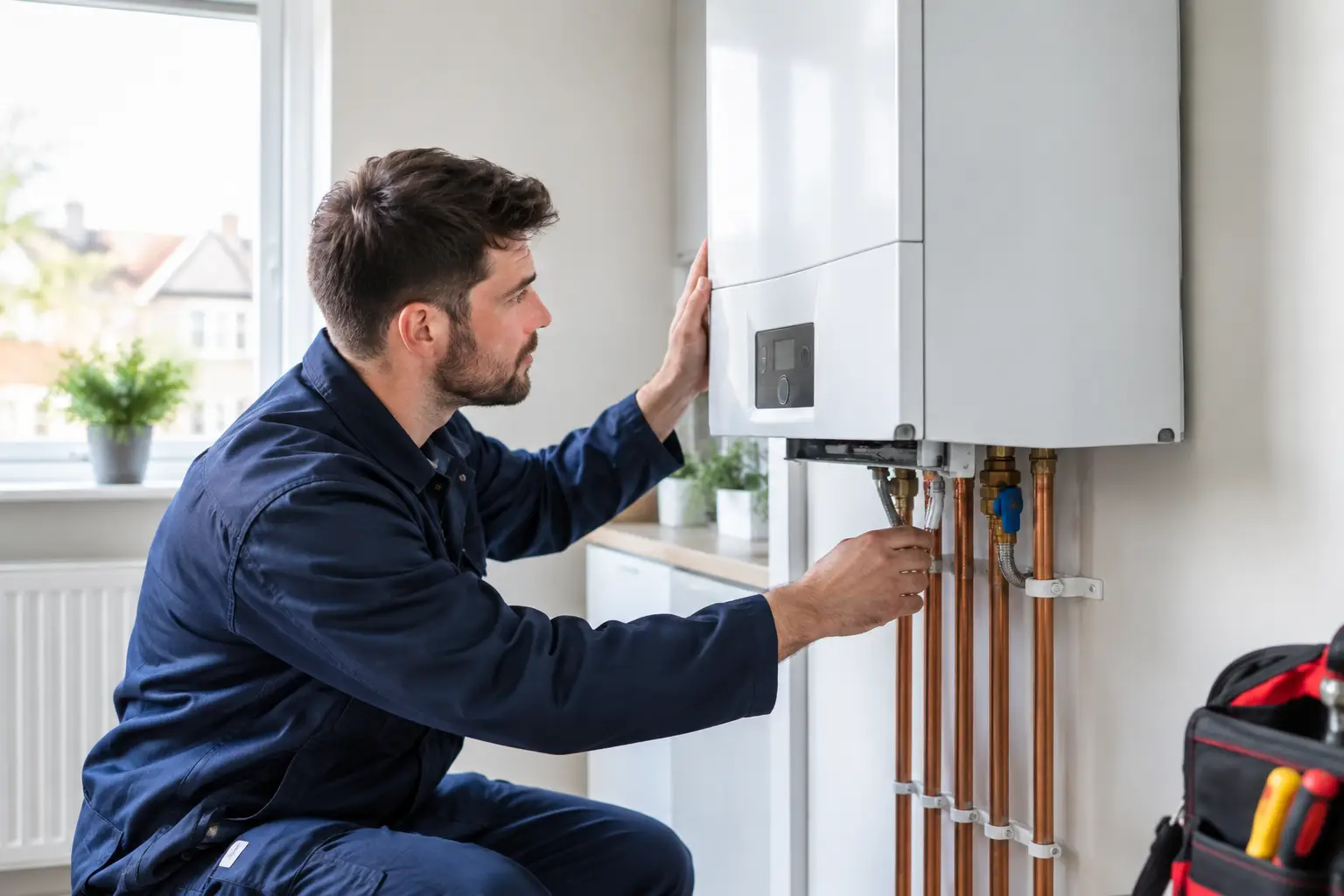
If your boiler is unreliable, costly to keep running or no longer suits your home’s hot-water needs, it may be time to replace it. Knowing when to replace an old boiler is less about its age alone and more about reliability, safety, repair costs and whether the system still works for your household.
Quick answer: replacement is often worth considering when a boiler is around 10 to 15 years old, has repeated faults, needs an expensive repair, struggles to provide heating or hot water, or uses parts that are difficult to source. A newer boiler can also be the sensible choice when you are changing the layout of your home or need better hot-water performance.
Get a fixed boiler quote online.
1. Your boiler is becoming unreliable
A boiler that stops working once can be frustrating. One that lets you down repeatedly is a different decision. If you are arranging call-outs regularly, losing hot water, seeing pressure problems return or dealing with the same fault more than once, replacement may offer better value than continuing to spend on an ageing appliance.
This does not mean every fault requires a new boiler. A relatively new boiler with a straightforward issue may be worth keeping. The balance changes when the boiler is older, the repair is costly, or there is no confidence that another part will not fail shortly afterwards.
2. A major repair would cost too much
There is no single repair-cost figure that makes replacement automatic. The useful question is whether the proposed repair is proportionate to the boiler’s age, condition and likely remaining life.
For example, paying for a minor component on a well-maintained boiler that is only a few years old can make sense. Paying a substantial amount for a major part on a boiler that is already near the end of its expected working life may not. You may also face further costs if replacement parts are obsolete or increasingly difficult to obtain.
Ask for the repair cost in writing, then compare it with the price of a suitable new boiler installation, including the warranty offered with the chosen model. It gives you a clearer decision than simply choosing the lowest immediate cost.
3. It no longer meets your hot-water demand
Households change. A boiler that was fine for a couple in a two-bedroom flat may struggle once there are more occupants, an additional bathroom or regular demand for hot water at the same time.
A combi boiler provides hot water directly from the boiler and can be a good fit for many homes with one bathroom and limited space. The output needs to be selected carefully, particularly where a stronger shower flow is wanted.
A system boiler stores hot water in a cylinder, making it a practical option for homes with multiple bathrooms or several people using hot water at once. A regular heat-only boiler is usually considered where a home already has a traditional cylinder and tanks, or where the existing system arrangement makes it the most suitable choice.
Replacing like for like is not always the right answer. The best boiler type depends on the property, radiator system, available space, water pressure and the way the household uses hot water.
4. Your heating bills have risen without another clear cause
An old boiler can become less efficient in real-world use, especially where it is no longer operating as intended or the controls are outdated. A new condensing boiler may reduce gas use compared with an inefficient older model, but the result depends on insulation, thermostat settings, radiator controls, household habits and energy prices.
It is better to view lower running costs as a possible benefit, not a guaranteed saving. A properly sized boiler and suitable controls matter just as much as replacing an old unit with the highest output available.
5. The boiler is noisy, leaking or difficult to source parts for
Banging, whistling, frequent loss of pressure, visible corrosion or water leaks all need prompt professional attention. Some causes can be resolved, while others point to wider wear within the boiler or heating system.
If a Gas Safe registered engineer advises that a boiler is unsafe, do not continue using it. If you smell gas, suspect a gas leak or a carbon monoxide alarm sounds, follow the relevant emergency guidance immediately and contact the appropriate emergency service or gas network provider.
For a boiler that is not unsafe but is becoming increasingly difficult to maintain, availability of parts can be a deciding factor. Once parts are no longer readily available, an apparently manageable fault can turn into a more disruptive replacement decision later.
6. You are planning a conversion, extension or new layout
A planned replacement gives you more choice than waiting for a breakdown. If you are removing a hot-water cylinder, adding an ensuite, relocating the kitchen or replacing a back boiler, the work may involve changes beyond a straightforward boiler swap.
Back-boiler replacement is particularly individual because the old appliance, fireplace opening, pipework and new boiler location all need assessing. Moving a boiler can also add cost for new pipework, flue routes, condensate drainage, electrical work associated with the boiler installation and making good where required.
These projects need accurate property details. An online quotation can identify likely requirements, but some installations need a survey or further technical assessment before the scope and fixed price are confirmed.
When to replace an old boiler rather than wait
Waiting can be reasonable if your boiler is working reliably, parts remain available and a repair is modest compared with the cost of replacement. However, a planned replacement is usually less stressful than making the decision during a cold-weather breakdown.
Landlords may also prefer to replace a clearly deteriorating boiler between tenancies or before winter, rather than risk extended loss of heating and hot water for tenants. The installation still needs to be suited to the property and carried out by a Gas Safe registered engineer.
What does replacing an old boiler cost?
Prices vary significantly by boiler type, output, manufacturer, warranty level and the work required at the property. As a broad UK guide, a straightforward like-for-like combi boiler replacement often falls around £2,000 to £3,500 supplied and installed. System or regular boiler replacements can commonly cost around £2,500 to £4,500, depending on the cylinder, controls and system requirements.
More involved work, such as a combi conversion, back-boiler replacement or boiler relocation, can cost £4,000 to £6,500 or more. These are estimates, not fixed quotes. They should not be used as a promise of what your home will cost.
The final price may change with flue alterations, access difficulties, upgrades to meet current installation requirements, changes to pipework, condensate drainage, system cleansing, new controls, cylinder work or remedial work identified during a survey. A clear quote should state what is included and explain any assumptions or possible extras.
How long does replacement take?
A straightforward replacement in the same location can often be completed in one day. A system change, relocation or more complex installation may take two or more days. The timing depends on access, the condition of the existing installation and whether extra work is required.
Before work begins, you should understand the planned boiler location, expected disruption, whether hot water and heating will be unavailable overnight, and what happens to the old boiler and packaging. Installation should be completed by Gas Safe registered engineers, with the required commissioning and handover information provided when the work is finished.
Choosing the right replacement boiler
The right boiler is not necessarily the most expensive model or the one with the longest headline warranty. It is the model that suits your property, demand and budget, with warranty terms you understand. Manufacturer warranties differ by model and may depend on correct installation, registration and terms being met.
Smart Adapt’s online quote journey is designed to use your property details to identify suitable combi, system or regular boiler options. You can compare choices, see what is included and understand where further assessment may be needed. Installation is arranged with Gas Safe registered engineers, and postcode coverage and availability are confirmed before an installation is accepted.
Finance may be available to spread the cost, subject to status, eligibility and lender approval. It is worth comparing the total amount payable as well as the monthly figure.
Frequently asked questions
Is a 15-year-old boiler worth replacing?
Often, yes, particularly if it is unreliable, inefficient in use or needs a costly repair. Age alone is not enough to decide, but it is sensible to obtain a replacement quote before an urgent breakdown forces the issue.
Should I replace my boiler before it breaks down?
If it is showing repeated signs of failure or parts are hard to source, a planned replacement can provide more time to compare options and arrange a convenient installation date.
Can I change from a regular boiler to a combi boiler?
In many homes, yes. Whether it is suitable depends on hot-water demand, incoming mains water pressure, the existing system and available space. A conversion is usually more involved than a like-for-like replacement.
What size boiler do I need?
Boiler size means output, measured in kilowatts, rather than physical dimensions. The appropriate output depends on the number of bathrooms, radiators, property heat loss and expected hot-water use. Bigger is not automatically better.
Will a new boiler come with a warranty?
Most new boilers include a manufacturer warranty, but the length and terms depend on the exact model. Check registration requirements, exclusions and whether any conditions apply before choosing.
Can I get a fixed price online?
An online quote can provide a fixed price where the property information and installation scope are confirmed. More complex work may require a survey or technical assessment before the quote is finalised.
Get a fixed boiler quote online. Share accurate details about your current boiler, property and hot-water needs so you can compare suitable options with fewer surprises later.
Replacing a boiler is a significant home decision, but it does not need to be rushed or confusing. A clear view of your current boiler’s condition, the work involved and the right system for your household makes the next step far easier.