






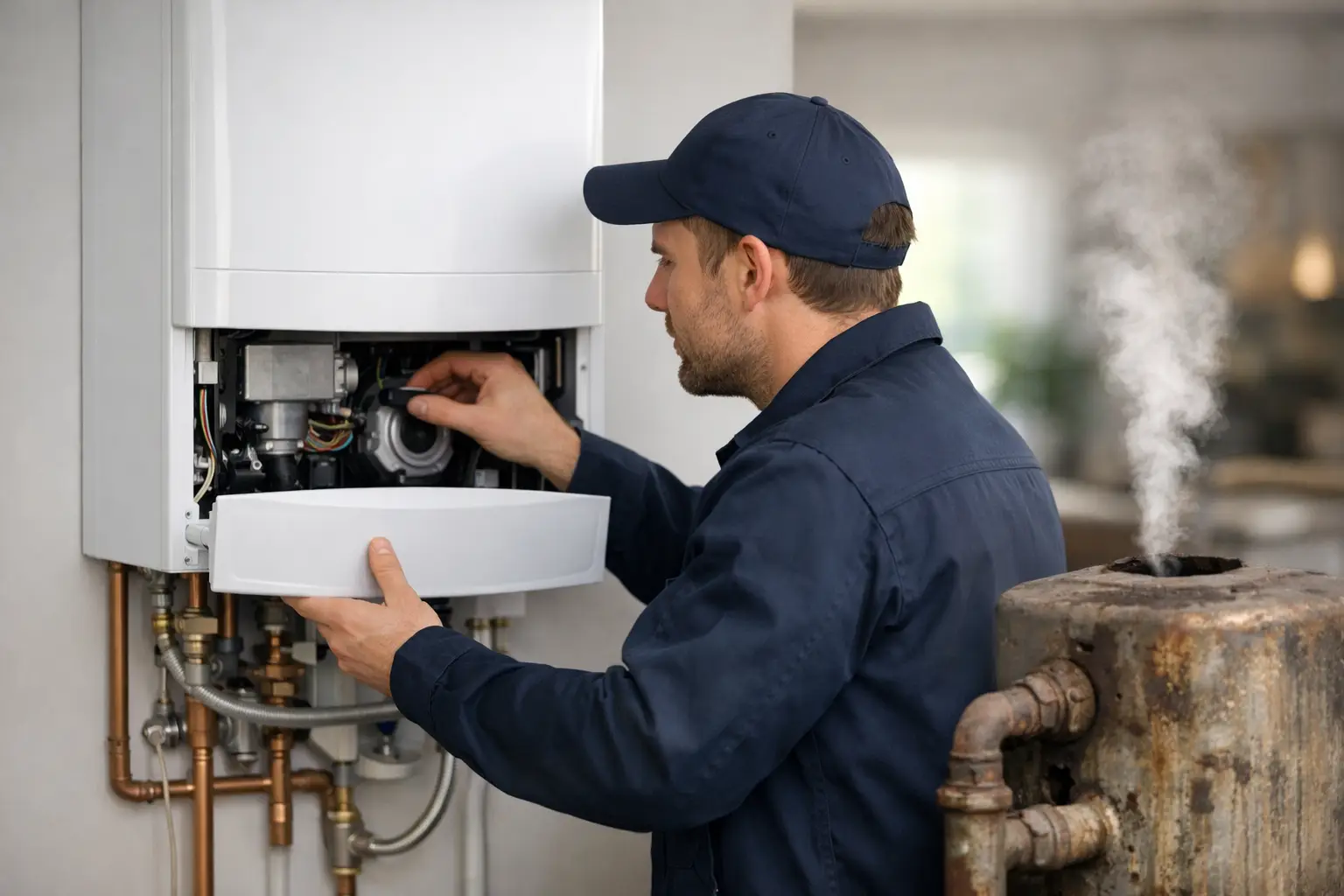
A Vaillant F22 fault usually means your boiler has detected low water pressure and has stopped to protect itself. If the pressure can be restored once and remains stable, the boiler may continue working. If F22 returns, particularly on an older boiler, it can be a sign that replacement is the more sensible long-term option.
Quick answer: check the pressure shown on the boiler gauge or display. A cold system commonly needs to sit around 1 to 1.5 bar, but always follow the instructions for your exact Vaillant model. Do not keep repressurising a boiler that repeatedly loses pressure. Get a fixed boiler quote online.
What does a Vaillant F22 fault mean?
On many Vaillant boilers, including a range of ecoTEC models, F22 indicates insufficient water pressure in the sealed heating system. The boiler may switch off because operating with too little water can cause overheating and damage internal components.
The fault code is not, by itself, a diagnosis. Pressure may have fallen gradually over months, perhaps after a radiator has been bled, or it may be falling because there is an underlying issue with the heating system or boiler. The wording and recommended pressure range can vary by model, so use the boiler manual as the authority for your appliance.
A one-off drop in pressure is different from a recurring fault. That distinction matters when you are deciding whether to spend money on an ageing boiler or put it towards a planned replacement.
Safe checks before deciding what to do
First, look at the pressure gauge or digital display when the boiler is cool. If it is below the range stated in the manufacturer instructions, the system may need topping up using its filling arrangement. Only do this if you know where the correct controls are and the boiler manual says it is appropriate for your model.
Do not guess which valves to turn, remove the boiler casing or try to reset the fault repeatedly without checking the pressure. If you cannot identify the filling arrangement confidently, or the pressure is very low, arrange help from a suitably qualified engineer.
Once pressure has been restored, monitor what happens over the next few days. A boiler that remains at a stable pressure after a single top-up may not need replacing just because it displayed F22. But a boiler that keeps dropping pressure is telling you that the underlying cause has not gone away.
Signs that point towards a bigger decision include pressure falling every few days or weeks, visible water around radiators or pipework, a discharge pipe outside releasing water, repeated fault codes, unreliable heating or hot water, and an appliance that is already beyond its warranty period.
When repeated F22 faults make replacement worth considering
No homeowner wants to replace a boiler because of one warning code. However, an older boiler with recurring pressure problems can become expensive and inconvenient, especially where other components are also nearing the end of their working life.
Replacement is often worth considering where the F22 fault is part of a wider pattern: breakdowns becoming more frequent, parts proving costly or difficult to source, hot water output no longer matching household demand, or a landlord needing a dependable solution between tenancies. A new boiler also gives you a fresh manufacturer warranty, subject to the chosen product, installation requirements and registration terms.
It depends on the boiler’s age, condition and the cause of the pressure loss. A relatively modern boiler with an isolated issue may be better retained. By contrast, directing further spend into a boiler that is old, unreliable and undersized for the home may offer poor value.
If you are weighing up the options, focus on the whole property rather than the F22 code alone. The number of bathrooms, occupants, radiators, showers and available space all affect which replacement boiler is suitable.
Choosing the right replacement boiler
For many flats and smaller homes with one bathroom, a combi boiler can be a practical replacement. It provides heating and mains-pressure hot water from one compact unit, without needing a separate hot-water cylinder. The trade-off is that hot-water flow is limited by the incoming mains supply and it may not suit simultaneous use at multiple outlets.
A system boiler works with a hot-water cylinder and can be better suited to larger homes, particularly where two bathrooms may be used at the same time. It needs more space, but stored hot water can improve flexibility for busy households.
A regular, or heat-only, boiler is usually considered where a property already has a traditional cylinder-and-tank arrangement or where retaining that system is the most appropriate route. Replacing like for like can sometimes reduce disruption, although it is not always the lowest-cost or best-performing option.
Boiler output should be based on hot-water demand and the heating requirement, not simply chosen as the biggest available model. An accurate online quotation asks the right questions about the property so that boiler recommendations are based on suitability rather than sales pressure.
What a new boiler may cost after an F22 fault
For a straightforward like-for-like boiler replacement, installed prices commonly start from around £2,000 and can rise beyond £3,500 depending on the boiler selected, its output, warranty level and installation requirements. These are broad estimates, not confirmed fixed quotes.
The total can be higher where the job includes moving the boiler, changing boiler type, replacing a back boiler, adding or altering flue components, upgrading controls, extensive pipework changes or work needed to meet current installation standards. Access, parking, condensate routing and the condition of the existing system can also affect the final scope.
A clear quote should explain the boiler and controls included, installation labour, standard materials, system preparation, commissioning and handover. It should also identify any items that need a survey, further information or an additional charge before work is agreed. This is particularly useful after a fault because the existing installation may reveal constraints that are not obvious from the boiler display.
Smart Adapt provides online boiler quotations for homeowners and landlords in selected areas of South Wales, the South West and London and nearby locations. Entering your postcode allows availability to be checked before a quotation or installation is accepted.
What happens if you replace the boiler?
After your property details have been reviewed, you can compare suitable combi, system or regular boiler options, prices and warranty terms. The final recommendation should reflect the home and your hot-water needs, including whether a direct replacement or a change of boiler type is appropriate.
Installation is carried out by Gas Safe registered engineers. A straightforward replacement may often be completed in a day, while a conversion, relocation or more involved system change can take longer. The installation team should confirm the expected timescale once the work has been assessed.
On completion, the boiler is commissioned and the controls are explained. Keep the product documentation and make sure any manufacturer warranty registration requirements are completed within the relevant timescale. If you are considering monthly payments, finance may be available, subject to status, eligibility and lender terms.
FAQs about the Vaillant F22 fault
Can I reset a Vaillant boiler showing F22?
A reset alone will not resolve low system pressure. Check the pressure first and follow the instructions for your specific Vaillant model. If F22 returns after pressure is restored, avoid repeatedly resetting it.
Is F22 an emergency?
The code normally relates to low water pressure rather than a gas emergency. However, if you smell gas, suspect carbon monoxide, or feel unwell, leave the property if necessary and follow the relevant emergency guidance. Do not use the boiler.
Why does boiler pressure keep dropping?
Repeated pressure loss can indicate an issue within the heating system or boiler. The exact cause needs proper assessment. Continually topping up is not a long-term solution.
Does F22 mean I need a new boiler?
Not always. One isolated F22 fault may be resolved once the correct pressure is restored. A replacement becomes more compelling when the code is recurring and the boiler is old, unreliable or no longer suitable for the household.
Will a new boiler stop low-pressure faults?
A correctly specified and installed new boiler removes faults associated with the old appliance, but the wider heating system must also be suitable. Installation planning should take account of the existing system and any required preparation.
Which boiler is best for a two-bathroom home?
It depends on how both bathrooms are used and the home’s water supply. A system boiler with a cylinder is often worth considering where simultaneous hot-water demand is high, while some homes may still suit a higher-output combi.
Can landlords get a fixed boiler quote online?
Yes. Accurate property details are needed to produce a useful quotation, including the existing boiler type, property layout and hot-water requirements. Postcode availability must be confirmed first.
A recurring F22 code is frustrating, but it can also be the point at which a planned, well-specified replacement becomes easier to justify than another uncertain expense. Compare boiler options around your home, your budget and the reliability you need, then Get a fixed boiler quote online.