






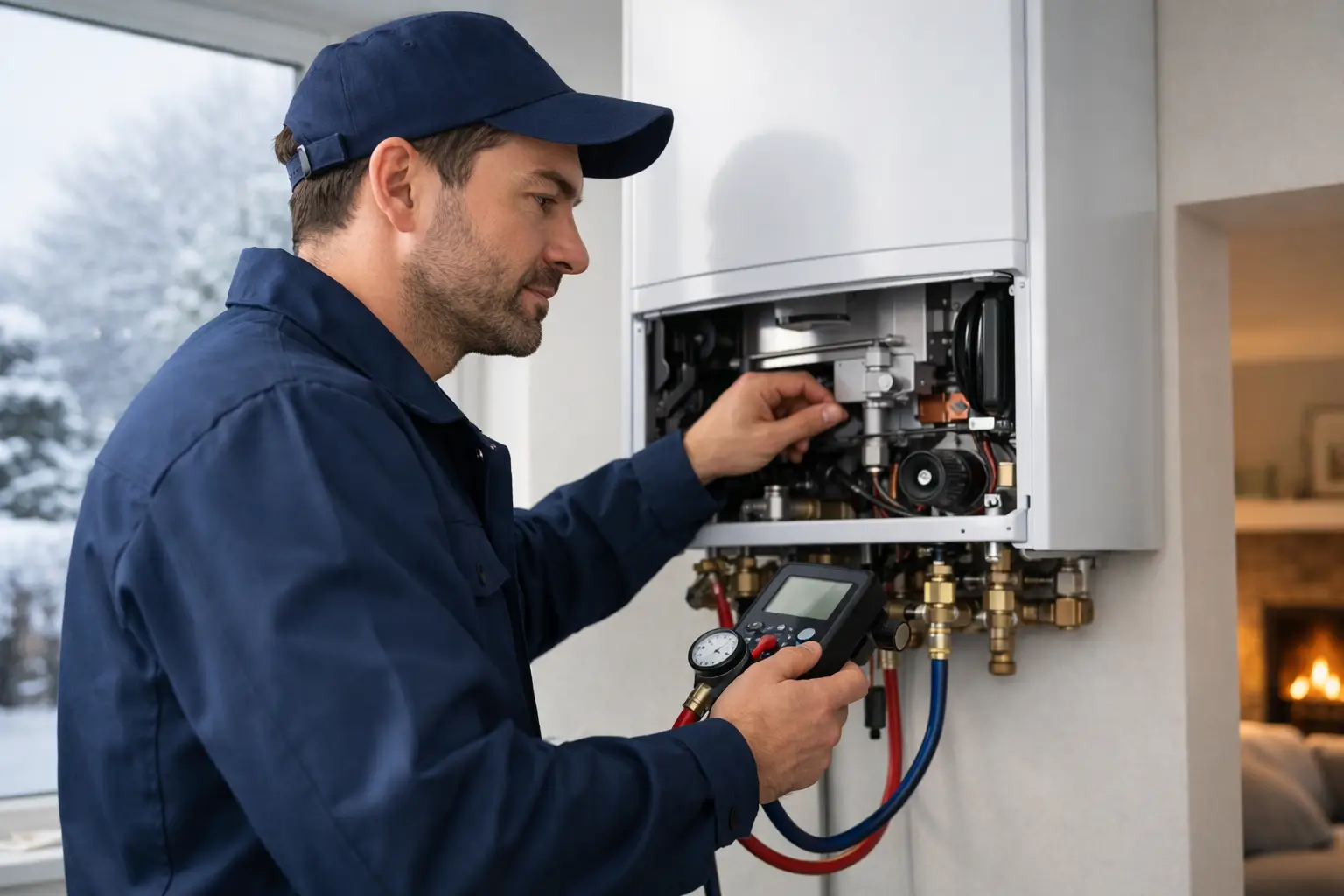
Does air conditioning heat your home? Some systems can produce warm air as well as cool it, but they are not usually a direct replacement for a gas boiler in a UK home. They normally do not provide hot water or heat radiators. Get a fixed boiler quote online.
Quick answer: an air-conditioning unit with a heating function can warm the room or rooms where indoor units are fitted. A boiler heats water for radiators, underfloor heating and, in many homes, taps and showers. If your priority is reliable whole-home heating and hot water, replacing an ageing boiler is often the more relevant decision.
Can air conditioning heat your home?
Some air-conditioning systems are designed to reverse their operation and deliver warm air indoors. This can be useful for heating a single room or selected areas, particularly at milder outdoor temperatures.
However, warmth is delivered through wall-mounted indoor units rather than through your existing radiators. A unit in one room will not automatically heat bedrooms, bathrooms or other closed rooms to the same standard. The result depends on the number and position of indoor units, insulation, draughts, room layout and how the system has been designed.
For most UK households, this is the key distinction: a boiler is part of a central-heating and hot-water system. Air-conditioning equipment is generally a room-by-room solution. It does not take over the job of supplying hot water for a bath, shower, kitchen sink or washing-up.
Air conditioning heating versus a boiler
A boiler burns gas to heat water, which is then circulated around radiators or stored in a cylinder. The right boiler can serve the whole property, subject to its output, radiator system and hot-water setup.
A combi boiler supplies central heating and hot water directly from the mains, without a separate hot-water cylinder. It is often suitable for flats and smaller to medium-sized homes with one bathroom and reasonable mains-water pressure.
A system boiler works with a hot-water cylinder. It can be a practical choice for homes with more than one bathroom or higher simultaneous hot-water demand. A regular, or heat-only, boiler also works with a cylinder and is commonly considered where an existing conventional heating system is being retained.
This means the choice is not simply about whether one system can make a room feel warm. It is about how your household uses heat and hot water every day. A family that needs two showers running at once has a different requirement from a one-bedroom flat with one occupant.
Why hot water changes the decision
It is easy to focus on space heating when an old boiler becomes unreliable, but hot water is often the deciding factor. An alternative system that only heats air can leave you dependent on your existing boiler or cylinder for showers and taps.
If your boiler is old, frequently failing or no longer suitable for your home, replacing it can address both heating and hot-water demand in one planned installation. It can also be an opportunity to correct poor boiler sizing, remove an unsuitable old setup or change boiler type where the property allows.
When replacing your boiler is the clearer option
A new boiler may be the more straightforward route if you want to retain radiators, need dependable hot water, or want one main system for the whole home. It is particularly relevant if you are replacing a boiler that has become expensive to keep running or has suffered a significant fault.
There is no automatic rule that replacement is always the right answer. The age and condition of the boiler, likely repair cost, available warranty, property layout and future plans all matter. But if the existing boiler is beyond economical repair, a like-for-like boiler replacement is usually less disruptive than changing the way an entire home is heated.
A suitable boiler recommendation should be based on more than the number of bedrooms. It should consider:
- the number of bathrooms and whether people use hot water at the same time
- the property’s existing boiler and heating-system type
- mains-water pressure and flow rate for a combi boiler
- radiator count, home size and heat demand
- whether a cylinder is present and worth retaining
- pipework, flue route, boiler location and access
What does a replacement boiler usually cost?
For a straightforward replacement in the same location, an installed boiler price commonly falls in the region of £2,000 to £4,500. This is an estimate, not a confirmed price. The selected boiler, output, controls, flue requirements, manufacturer warranty and local installation requirements all affect the total.
More involved work can cost more. A combi conversion, moving the boiler, replacing a back boiler, installing a new cylinder arrangement or upgrading unsuitable pipework may require additional materials and labour. Access issues, scaffolding for a flue terminal, condensate-drain changes and remedial work identified during a technical assessment can also alter the price.
A clear quotation should state what is included and identify foreseeable extras before work is agreed. At Smart Adapt, the online quotation process uses property details to help identify suitable options, with availability and final suitability subject to the information provided and any necessary assessment.
What should a boiler installation quote include?
A proper boiler quote should explain the boiler model and output, the type of installation, controls included, flue arrangement, condensate connection, removal of the old boiler and commissioning. It should also explain whether system cleansing, a filter, alterations to pipework or other work is included.
The installer should be Gas Safe registered and provide the documentation required after installation. Manufacturer warranties vary by model and may depend on the product being registered and installed in line with the manufacturer’s terms. Do not assume that one warranty length applies to every boiler.
Choosing between combi, system and regular boilers
A combi boiler can free up space because it does not need a separate hot-water cylinder. The trade-off is that hot-water performance depends on the incoming mains supply and a single combi may not suit high simultaneous demand.
A system boiler with a cylinder can store hot water for use across more than one outlet. It needs space for the cylinder, and the stored hot water will need time to reheat after heavy use. It can nevertheless be a sensible fit for larger households.
A regular boiler may be the least disruptive option where a conventional system is already in place and works well for the property. Changing boiler type can be worthwhile, but it should be chosen for a clear practical reason rather than because one option sounds newer.
If you are weighing up a replacement
Start by separating the problem you need to solve. Is it one chilly room, or is it an ageing boiler that affects heating and hot water throughout the property? If the second question applies, focus on the boiler system first.
Collect the useful details before requesting a quote: your current boiler type and location, number of bathrooms, whether you have a cylinder, and any planned changes such as moving the boiler. Clear information helps avoid a quote based on assumptions that later need to change.
Frequently asked questions
Does air conditioning replace central heating?
Not usually. It may warm the rooms where units are installed, but it does not normally heat water for radiators or provide domestic hot water.
Can I keep my radiators with air conditioning?
Your radiators would still need their own water-heating source. In a typical gas-heated home, that is the boiler.
Is a combi boiler suitable for a three-bedroom house?
It can be, but bedroom count alone is not enough. The number of bathrooms, mains-water flow and simultaneous hot-water use are more useful indicators.
How long does a boiler replacement take?
A straightforward like-for-like boiler swap is often completed within a day. Conversions, relocations and more complex system changes can take longer. Your installer should confirm the expected timescale for your property.
Will I know the final boiler price before installation?
You should receive a clear fixed quotation once the installation scope and property details have been confirmed. Additional work outside the agreed scope should be explained before it is carried out.
Can landlords replace a boiler between tenancies?
Yes. A planned replacement between tenancies can reduce disruption, but the right boiler still depends on the property’s heating and hot-water requirements.
Is finance available for a new boiler?
Finance options may be available, subject to status, eligibility and lender approval. Check the term, total amount payable and monthly payments before choosing this route.
If your main concern is a boiler that no longer keeps your home warm or supplies reliable hot water, a properly specified replacement is worth discussing before making changes that only address part of the problem. Get a fixed boiler quote online.