






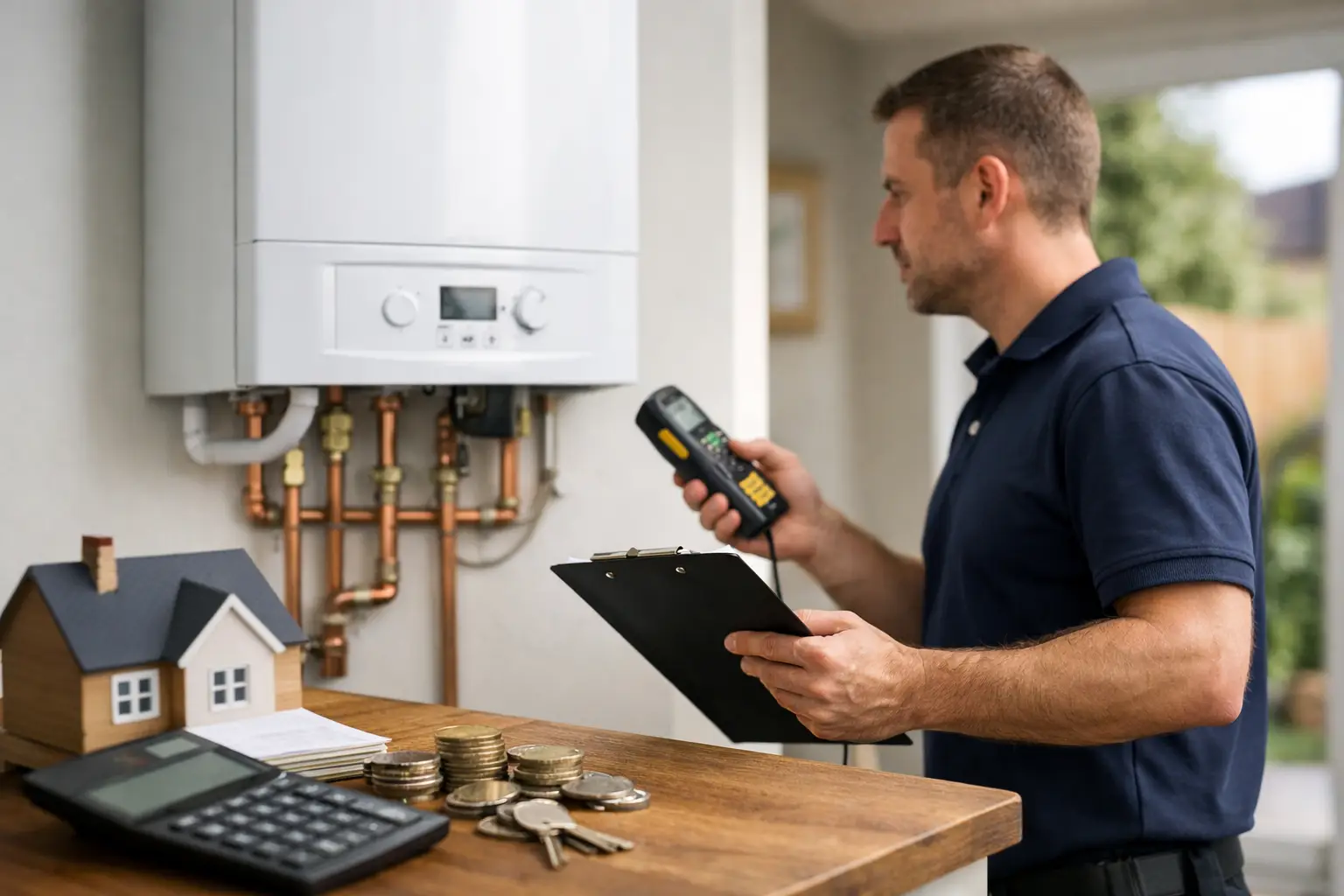
A combi boiler conversion typically costs £3,000 to £5,500 in the UK, including a new boiler and standard installation. Straightforward homes can fall below this range, while moving the boiler, altering pipework or removing tanks can take the total higher.
Quick answer: a conversion replaces a regular or system boiler arrangement with one combi boiler that provides heating and hot water on demand. It can free up cupboard and loft space, but it is more involved than a like-for-like boiler replacement. Get a fixed boiler quote online to see which boiler size and installation scope suit your property.
Combi boiler conversion cost: UK price guide
The figures below are sensible planning ranges for 2026. Your final price should be based on a proper assessment of the existing system, hot-water demand, boiler position and any required upgrades.
| Type of work | Typical installed cost | What this usually involves | |—|—:|—| | Straightforward conversion | £3,000-£4,000 | New combi in a practical existing location, removal of tanks and standard controls | | Typical family-home conversion | £4,000-£5,500 | More pipework changes, system cleaning, condensate work and a suitable higher-output boiler | | Complex conversion or relocation | £5,500-£7,500+ | Boiler moved to another room, extensive alterations, difficult flue route or remedial work |
A standard replacement combi boiler fitted in the same position is usually less expensive because the pipework, flue route and heating layout may already be suitable. A conversion costs more because the installer must safely alter the way the home produces and distributes hot water.
Prices vary by property rather than postcode alone. A compact two-bedroom flat with one bathroom may be a relatively simple job. A larger house with two showers being used at once may need a different approach, or a combi may not be the most suitable choice at all.
What does a conversion involve?
A regular boiler normally works with a hot-water cylinder and often has cold-water tanks in the loft. A system boiler also uses a cylinder, although it does not usually need loft tanks. A combi heats water directly from the mains when a tap or shower runs, so the cylinder and associated components are no longer needed.
During a conversion, the installation team may remove the old boiler, cylinder, feed-and-expansion tank, cold-water storage tank and redundant pipework. They then fit the combi boiler, make new heating and hot-water connections, install a condensate drain, connect or alter the flue, commission the appliance and register the installation as required.
The exact scope matters. For example, an old vented system may need sections of pipework converted to cope with mains-pressure hot water. The heating system should also be cleaned and protected correctly to help the new boiler operate reliably.
What is normally included in the price?
A clear quotation should set out the boiler model, warranty length and installation work rather than showing a single unexplained total. A standard conversion quote often includes the boiler itself, flue components, controls, filter, condensate connection, removal of redundant tanks, commissioning and handover.
It should also confirm whether the price allows for chemical cleaning or a powerflush, radiator valves, electrical alterations, making good after tank removal and any scaffolding. These items are not automatically required on every installation, which is why a price that looks lower at first can be difficult to compare.
Manufacturer-backed warranties are valuable, but they depend on the exact boiler, registration and servicing conditions. Check the model-specific warranty terms rather than assuming every boiler has the same cover.
The costs that can change your quote
The boiler is only one part of the conversion cost. The following issues usually have the greatest impact on the final price.
Boiler output and hot-water demand
Combi boilers are commonly selected by their central-heating output and, crucially, their domestic hot-water flow rate. A smaller property with one bathroom may be well served by a modest output. A home with a powerful shower, a large bath or regular demand from more than one bathroom may need a higher-flow model.
A combi has a practical limitation: it cannot usually deliver the same strong, simultaneous hot-water performance as a stored cylinder system serving several outlets. If two showers are routinely used at once, retaining a system boiler and cylinder may be the better long-term answer. A good quotation process should identify this before installation day.
Mains-water flow and pressure
A combi can only heat the water that reaches it. Strong mains pressure does not always mean sufficient flow, and a low flow rate can limit shower performance. The incoming supply should be assessed, particularly in older properties or homes with known water-pressure concerns.
If the supply is unsuitable, installing a larger combi will not solve the underlying issue. That is an important trade-off to discuss before choosing a boiler.
Boiler location and flue route
Keeping the boiler near its existing pipework can reduce labour and materials. Moving it from a kitchen to a utility room, loft or airing cupboard may require longer gas, water, heating, condensate and electrical runs.
The flue also needs a compliant route with the correct clearances. A vertical flue through a roof or a long horizontal route can add components and time. Access equipment may be needed where the external work cannot safely be reached from ground level.
Condition of the heating system
Sludge and debris from an older system can damage a new boiler or reduce its efficiency. An installer may recommend a chemical clean or powerflush depending on the system condition. A magnetic filter and inhibitor are common measures to help protect the boiler once installed.
Old radiator valves, leaks, undersized pipework and poor circulation can also come to light during assessment. These are not reasons to avoid a conversion, but they should be priced openly rather than becoming an unexpected issue halfway through the job.
Building work and practical access
Removing a cylinder and loft tanks can leave redundant pipework and small areas that need tidying. Basic removal may be included, but decorating, boxing-in and more substantial making-good work are often separate.
Restricted parking, difficult loft access, asbestos concerns, unusual wall construction or a need for external condensate protection can also affect the programme and cost. Ask how these possibilities will be handled if they are discovered.
Is converting to a combi boiler worth it?
For many households, yes. A combi can reclaim the airing cupboard and loft space, removes the need to wait for a cylinder to reheat and gives a neat, modern heating arrangement. It can be particularly attractive for flats, smaller houses and rental properties where simplicity and space matter.
It is not automatically the right answer for every home. Families with high simultaneous hot-water use may prefer the stored capacity of a cylinder. Homes with very low incoming mains flow may also need careful consideration. The best value is not simply the lowest installation price – it is a boiler and system design that works properly for the way the household uses hot water.
How to compare conversion quotations properly
When comparing prices, make sure each company has allowed for the same work. Ask whether the quotation includes tank and cylinder removal, the exact boiler and controls, flue changes, system cleaning, a magnetic filter, condensate work, waste removal and commissioning.
Also check who will manage the installation, whether a survey is needed before work starts, and what happens if additional issues are found. Gas boiler installation must be carried out by a Gas Safe registered engineer. You should receive the relevant commissioning information and have the installation notified in line with current Building Regulations requirements.
A fixed online quotation can be a convenient starting point, provided any assumptions are clear. Images, a video survey or a home visit may be needed where the system layout is unusual or the boiler is moving location.
How long does a combi conversion take?
Many straightforward conversions take around two to three days. More involved work can take longer, especially where the boiler is relocated, the system needs a thorough clean or access is difficult.
There may be periods without heating or hot water while the old equipment is removed and the new system is connected. Ask about the expected schedule before booking, particularly if the property is occupied by tenants, young children or someone vulnerable to cold temperatures.
Paying for a new combi boiler
The purchase price can feel significant, particularly when the old boiler has failed without warning. Some customers prefer to pay after installation under the agreed terms, while others may wish to consider available finance options. Finance is subject to status and eligibility, and the total amount repayable should always be understood before making a decision.
Smart Adapt provides a straightforward route to compare suitable boilers, understand the work included and arrange fast, professional installation in its covered areas. A £250 initial deposit may apply, with the remaining balance paid after installation subject to the agreed terms.
Frequently asked questions
Can I remove my hot-water cylinder when fitting a combi?
Usually, yes. Removing the cylinder is a core part of most conversions. However, it is sensible to first confirm that a combi can meet your household’s hot-water demand and that the mains supply is adequate.
Does a combi conversion need new radiators?
Not necessarily. Existing radiators can often remain if they are in good condition and correctly sized. A system assessment may show that some need replacing or balancing, particularly after extending the property or changing room use.
Will I need planning permission?
Most boiler replacements and conversions do not need planning permission, but flue position and listed-building or conservation-area restrictions can require extra care. Your installer can explain any relevant requirements for the property.
Can a landlord fit a combi boiler in a rental property?
Yes, provided the installation is suitable and completed correctly. Landlords must also meet their ongoing gas-safety responsibilities, including arranging the required annual gas-safety checks.
The right conversion should leave you with more than a new boiler on the wall: it should give your home dependable heating, suitable hot-water performance and a clear record of what has been installed. Get a fixed boiler quote online and compare suitable options before committing to the work.