






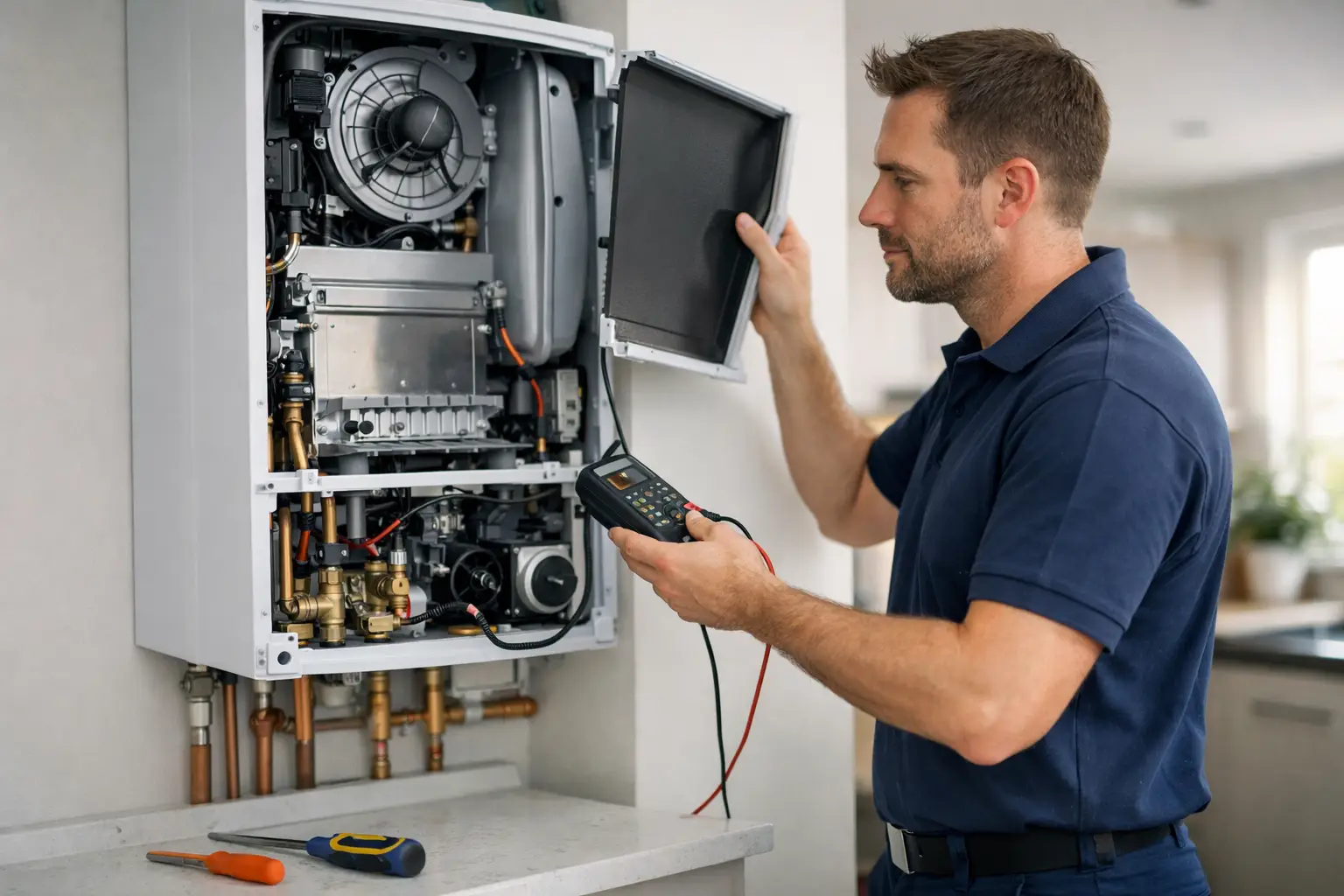
A Vaillant F29 fault means your boiler’s flame has gone out while it was running. It can be a temporary interruption, but repeated F29 codes can point to an ageing boiler that is becoming unreliable. If your heating or hot water has stopped and the boiler is older, replacement may be worth considering alongside a professional diagnosis.
Quick answer: do not keep resetting the boiler if the code returns. Check the boiler manual for its reset instructions, make sure there is no gas smell, and arrange for a Gas Safe registered engineer to assess the appliance. If replacement is the practical route, Get a fixed boiler quote online.
What does a Vaillant F29 fault mean?
On many Vaillant boilers, F29 indicates flame loss during operation. Put simply, the boiler had lit successfully, then detected that the flame was no longer present. It shuts down as a safety measure rather than continuing to operate incorrectly.
The exact wording and reset process can differ between Vaillant ranges and controls, so use the instructions for your specific model. An F29 code alone does not confirm which part has caused the problem, and it does not automatically mean you need a new boiler. However, the context matters: an isolated code on a relatively recent boiler is different from repeated shutdowns on a boiler nearing the end of its useful life.
Put safety first
If you smell gas, feel unwell, or suspect a gas leak, turn off the gas supply only if it is safe to do so, avoid electrical switches and naked flames, ventilate the property, and call the National Gas Emergency Service on 0800 111 999. Do not attempt to remove the boiler case or investigate the appliance yourself.
Where there is no sign of a gas emergency, follow the manufacturer’s reset guidance once if appropriate. Repeated resets are not a solution. A gas appliance fault should be assessed by a suitably qualified Gas Safe registered engineer.
When an F29 fault changes the replacement decision
Homeowners often search for an F29 code because they need heat and hot water back quickly. The bigger question is whether spending money on an older appliance still makes sense. There is no universal age at which every boiler should be replaced, but several factors make a new installation more compelling.
A replacement is often worth exploring when the fault keeps returning, the boiler has a history of breakdowns, parts are difficult to obtain, or it is approaching the point where further spending feels uncertain. Landlords may also prefer the predictability of a new boiler and manufacturer warranty rather than risking further disruption for tenants.
Think about the rest of the system as well. A boiler that has become unreliable may have been undersized from the start, may no longer suit a growing household, or may be installed in an inconvenient position. Replacement creates an opportunity to correct those issues rather than simply restoring the previous arrangement.
A newer boiler is not automatically the right answer after one fault. If the boiler is comparatively recent, otherwise dependable and correctly sized for the home, replacement may not represent good value. An assessment should consider condition, age, fault history, hot-water demand and the cost of the proposed work – not just the code on the display.
Choosing the right replacement boiler
The best replacement depends on how your home uses heating and hot water, rather than simply choosing the same output as the old boiler.
Combi boilers for homes with modest hot-water demand
A combi boiler provides heating and hot water directly from the mains, without a separate hot-water cylinder. It is often well suited to flats, smaller homes and households with one bathroom, provided the incoming mains water pressure and flow are adequate.
For a home with one bathroom and a typical shower, a combi can be a neat, space-saving choice. The key limitation is simultaneous demand. Running two showers at once can reduce flow, even where the boiler’s central-heating output is more than sufficient.
System boilers for more than one bathroom
A system boiler works with a hot-water cylinder. It can be a better fit where several people need hot water at similar times, particularly in larger homes with two or more bathrooms. The cylinder needs space, and the system must be planned around the property’s available storage and water supply.
This arrangement can deliver a more comfortable experience for busy households, but it is not automatically better than a combi. If storage space is limited and simultaneous use is rare, a combi may remain the more sensible option.
Regular boilers for compatible existing systems
A regular, or heat-only, boiler is generally used with a cylinder and separate tanks in the loft. It can be appropriate where retaining the existing system arrangement is the least disruptive route, or where the property has particular water-supply constraints.
Changing from a regular boiler to a combi is possible in many homes, but it is a conversion rather than a like-for-like swap. It can involve removing tanks and a cylinder, altering pipework and assessing whether the mains supply can support a combi. That extra work affects the final price and installation plan.
What can a replacement cost after a Vaillant F29 fault?
For a straightforward replacement boiler installation, homeowners commonly budget around £2,000 to £4,500. The lower end is more likely for a like-for-like combi replacement in an accessible location. A higher figure may apply where the boiler is moved, a system is converted, a cylinder is added or replaced, or significant alterations are required.
That is a guide, not a confirmed price. Boiler model, output, flue route, controls, system condition, access, location and any required remedial work all affect the quote. London and complex installations can also carry higher costs.
A clear installation quotation should explain what is included. This normally covers the selected boiler, standard installation materials, controls where specified, commissioning and the relevant paperwork. It should also identify potential extras before work is accepted, such as relocating the boiler, upgrading the flue route, making good after old equipment removal, or adapting pipework.
Warranty length depends on the exact Vaillant model, the manufacturer’s current terms, correct installation and any registration requirements. Check the warranty offered for the specific boiler on your quotation rather than assuming all models carry the same cover.
What happens when you request a replacement quote?
An online quote works best when the property details are accurate. You will normally be asked about your existing boiler, its location, the number of bathrooms and radiators, whether you have a cylinder, and any plans to move the boiler. Photos can help identify potential access or flue considerations early.
Smart Adapt uses those details to recommend suitable combi, system or regular boiler options and provide a fixed quote where the installation scope can be confirmed. Postcode availability is checked before an installation is accepted, as coverage and engineer availability vary across service areas. More complex work may need a survey or further technical assessment before the price is finalised.
Installation time depends on the job. A straightforward like-for-like replacement may be completed in a day, while a conversion, relocation or work involving a cylinder can take longer. The installer should confirm the expected timescale before work starts, rather than promising a date that has not been properly assessed.
Finance may be available on eligible installations, subject to status, lender terms and approval. It is worth comparing the total amount payable as well as the monthly payment.
FAQs about the Vaillant F29 fault
Can I reset a Vaillant boiler showing F29?
Follow the reset instructions in the manual for your model, but avoid repeatedly resetting it if the fault returns. Persistent flame-loss faults need professional assessment.
Does F29 mean there is no gas supply?
Not necessarily. The code indicates that the flame was lost during operation. Only a qualified engineer can establish the cause safely.
Is a Vaillant F29 fault dangerous?
The boiler shuts down as a safety response. If you smell gas or suspect a leak, treat it as an emergency and call 0800 111 999. Otherwise, do not tamper with the appliance and arrange an appropriate assessment.
Should I replace a boiler after one F29 code?
Usually not on the code alone. Replacement becomes more relevant when faults recur, the boiler is old, parts are problematic, or the cost and uncertainty of keeping it no longer feel reasonable.
Can I replace an old regular boiler with a combi?
Often, yes, subject to a property assessment. Your mains-water flow, pipework, bathroom demand and the work needed to remove tanks and the cylinder all need consideration.
Will a new boiler come with a warranty?
New boilers usually include a manufacturer warranty, but the term and conditions depend on the chosen model and correct registration. Your quotation should state the applicable warranty clearly.
How do I get an accurate installation price?
Provide full property information, including boiler location, number of bathrooms, heating arrangement and any desired changes. This helps ensure the recommendation and quote reflect the actual scope of work.
A recurring fault is frustrating, but it can also be a useful point to reassess what your home needs from its heating and hot water. Get a fixed boiler quote online. A properly scoped replacement gives you a clearer price, a suitable boiler type and a planned route back to reliable heating.