






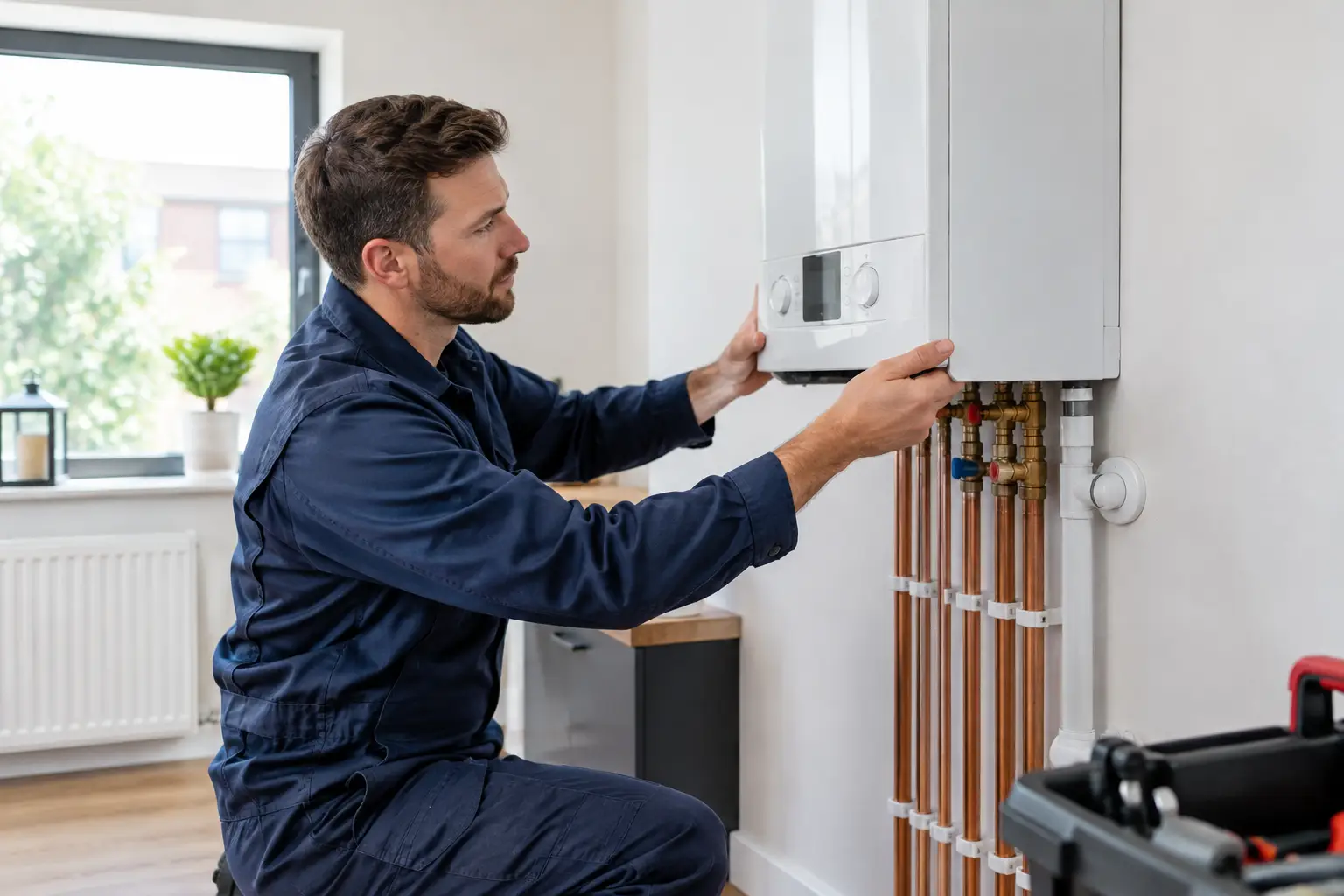
A system boiler is usually the simpler choice where a home already has a hot-water cylinder, while a regular boiler can be the better fit for older, traditional heating systems with tanks in the loft. In the system versus regular decision, the right answer depends on your existing pipework, water demand and planned changes – not simply the size of the property.
Quick answer: both boiler types store hot water in a cylinder and can supply several bathrooms well. A system boiler has more components built into the boiler itself, whereas a regular boiler relies on separate tanks and controls. Replacing like for like is often less disruptive; changing type can make sense, but costs more because the system needs altering.
Get a fixed boiler quote online.
System versus regular boilers at a glance
System and regular boilers are often grouped together as cylinder-based boilers. Unlike a combi boiler, they do not heat all domestic hot water only when a tap opens. Instead, they heat water held in a cylinder, ready for baths, showers and taps.
A system boiler takes water directly from the mains for the heating system. Key components, commonly including the pump and expansion vessel, are fitted within the boiler casing. It normally works with an unvented hot-water cylinder, although the exact arrangement must be suitable for the property.
A regular boiler, also called a conventional or heat-only boiler, uses separate external components. In many older homes, this includes a feed and expansion tank and a cold-water storage cistern in the loft, along with a vented cylinder. The boiler itself is comparatively straightforward, but the overall system has more visible parts.
Neither is automatically better. A regular boiler can be a sensible replacement in a period property where the existing gravity-fed or vented arrangement is working well. A system boiler can reduce the amount of equipment needed in the loft and is often chosen when modernising an existing cylinder system.
When a system boiler is likely to suit your home
A system boiler is worth considering if your household needs stored hot water but you would prefer a more compact arrangement than a traditional regular system. It can be particularly practical in family homes with more than one bathroom, provided the incoming mains water supply is strong enough for the chosen cylinder and outlets.
Because hot water is stored, a system boiler can support consecutive showers and a bath more comfortably than many combi installations. The cylinder size matters as much as the boiler output. A large boiler paired with an undersized cylinder will not create more stored hot water.
It may also be a good option when replacing an existing regular boiler if you want to remove loft tanks. However, this is a conversion rather than a straightforward swap. Your installer must assess the cylinder, pipework, controls, discharge route where applicable, water pressure and available space before confirming the design.
When a regular boiler is the safer choice
A regular boiler remains a sensible option for homes with an older vented heating and hot-water system, especially where retaining the current layout avoids unnecessary changes. Some properties have low incoming mains pressure, complex pipework or a cylinder arrangement that is not economical to convert.
Replacing an existing regular boiler with a new regular model can be less invasive than converting to a system boiler. The tanks and cylinder may remain in place if they are suitable, although their condition and compatibility need checking as part of the quotation.
This does not mean every older system should stay the same. Loft tanks take up space, and older cylinders may have limited insulation or capacity. If you are already replacing a cylinder or making substantial alterations, a system boiler may be the more practical long-term layout. It depends on the property and how you use hot water.
Hot-water demand matters more than bedroom count
Bedroom numbers are useful context, but they do not tell the whole story. A two-bedroom home with one bathroom and two occupants has very different demand from a two-bedroom home where several people shower before work.
When comparing system versus regular boilers, consider how many bathrooms are used at the same time, whether baths are common, how many people live in the property and whether morning demand is concentrated. Also consider the available space for a cylinder. A cupboard cylinder is usually more convenient than one in an awkward loft, but the final location must allow safe installation and future access.
Your heating requirement is separate from your hot-water requirement. Boiler output is calculated from heat loss, radiator demand and the system design, while the cylinder capacity helps determine how much hot water is available. An accurate quote should ask about both.
What does a new system or regular boiler cost?
For a straightforward replacement, installed prices commonly start in the low thousands and rise depending on the boiler model, output, warranty level and the work required. A like-for-like regular or system boiler replacement is generally less expensive than changing boiler type, moving the boiler or replacing a cylinder.
A confirmed fixed quote should make clear what is included. This may cover the boiler, standard flue components, controls, installation labour, commissioning and registration where required. The exact inclusion list varies with the property and selected product.
Costs can increase where the installation needs additional work, such as:
- converting from regular to system boiler, including cylinder or tank alterations
- moving the boiler to a different room or floor
- fitting a new flue route, condensate run or external flue components
- upgrading controls, pipework or radiators to suit the new design
- replacing an unsuitable hot-water cylinder or making safe access arrangements
These are not hidden charges when identified before work starts. They are reasons why a questionnaire, photos and, where needed, a survey are valuable before the installation price is confirmed.
Installation time and disruption
A simple same-location replacement can often be completed in a day, but this is not a promise for every home. A conversion, relocation, cylinder replacement or significant pipework alteration may take longer. The installer should explain the expected timescale before you accept the work.
During installation, there will normally be a period without heating and hot water. Access to the boiler, cylinder, loft equipment and radiators may be needed. Clearing the immediate work area beforehand helps the job run smoothly, but your installer should confirm exactly what access is required.
At the end, the new boiler should be commissioned, the controls explained and the relevant installation documentation provided. Gas work must be carried out by a Gas Safe registered engineer working within the appropriate scope of registration.
Warranty, controls and product choice
Warranty lengths vary by manufacturer, boiler range and the conditions attached to registration and installation. Longer terms are not the only reason to choose a model. Parts availability, suitable output, controls, cylinder compatibility and the needs of the household all matter.
Modern controls can make a meaningful difference to comfort because they allow the heating to run to a schedule and respond to room temperature. The best choice depends on how the home is occupied and the existing heating layout. A clear quote should identify the proposed boiler and controls rather than relying on a vague promise of an equivalent model.
Smart Adapt uses accurate property information to identify suitable replacement options, explain the quoted scope and arrange installation by Gas Safe registered engineers in confirmed service areas. If the online details show that more checks are needed, this should be explained before an installation is accepted.
Frequently asked questions
Is a system boiler better than a regular boiler?
Not in every home. A system boiler is usually neater and can remove the need for loft tanks, while a regular boiler may be the most practical replacement for a retained vented system. Suitability comes first.
Can I replace a regular boiler with a system boiler?
Usually, yes, but it requires an assessment of the mains supply, cylinder, pipework, controls and any tanks being removed. It is more involved than a like-for-like replacement.
Do I need a hot-water cylinder with a system boiler?
In most conventional domestic system-boiler installations, yes. The boiler heats water stored in a separate cylinder for use around the home.
Will a system boiler improve shower pressure?
It can, but not automatically. Shower performance depends on the incoming mains supply, the cylinder arrangement, pipe sizes and the shower itself. Pressure and flow should be assessed rather than assumed.
Can a regular boiler work without loft tanks?
A traditional regular boiler system normally uses separate tanks. If removing tanks is a priority, a system boiler conversion or a different system design may be considered following a property assessment.
Is finance available for a new boiler?
Finance options may be available, subject to status, eligibility and lender approval. Check the quoted terms carefully, including the deposit, monthly payment, term and total amount payable.
How do I get an accurate price?
Provide clear details about your current boiler, cylinder, tanks, bathrooms, radiators and preferred boiler location. Photos can help identify likely extra work, but some homes also need a survey or technical assessment.
Choosing between a system and regular boiler should leave you with a heating setup that fits the home you have, rather than forcing the property into a standard package. Get a fixed boiler quote online.