






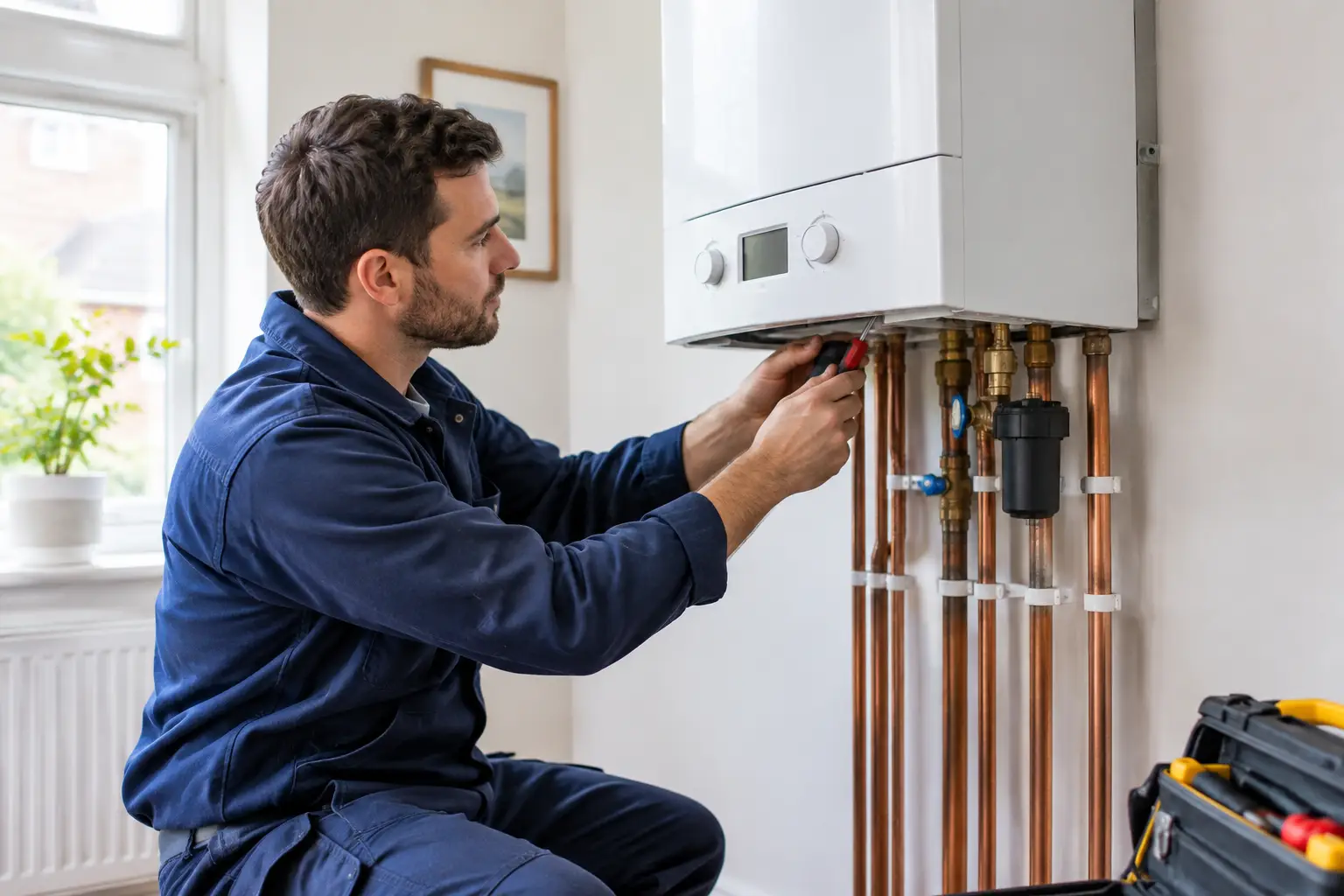
A boiler replacement goes more smoothly when the installer has clear details about your home, your hot-water use and the existing system. If you are researching how to prepare boiler replacement, start by identifying your boiler type, clearing access and deciding what you need the new boiler to do. Get a fixed boiler quote online.
Quick answer
Before replacing a boiler, gather photos and details of the current installation, consider whether your household needs a combi, system or regular boiler, and flag any changes such as moving the boiler or removing a hot-water cylinder. A straightforward like-for-like swap is usually simpler and less disruptive than a conversion or relocation, but the right choice depends on the property and demand.
How to prepare for boiler replacement
Preparation is not about knowing every technical detail. It is about giving an installer enough accurate information to recommend a suitable boiler and identify work that could affect the final price or installation time.
Start with the boiler you have now. Note its make and model if visible, whether it is a combi, system or regular boiler, and where it is fitted. Clear photographs of the boiler, its pipework, flue, controls and any hot-water cylinder or tanks can be useful when requesting an online quote. Include wider shots of the cupboard, kitchen, loft or utility area so access can be assessed properly.
Also think about what is not working for your household. Perhaps the boiler struggles to supply hot water when more than one shower is used, the property has been extended, or you want to remove tanks from the loft. These points are more useful than simply choosing the highest output boiler. Boiler suitability is based on heat loss, radiator demand, hot-water demand and the layout of the existing system.
Choose the right boiler type before comparing models
The most suitable replacement is not always the same type as the old boiler. Keeping the existing arrangement can reduce installation work, but a change can be worthwhile where the property and household needs support it.
Combi boilers
A combi boiler provides central heating and hot water directly from the mains. There is no separate hot-water cylinder, which makes it a practical option for many flats and smaller to medium-sized homes with one bathroom. It can also free up space.
The trade-off is that hot-water performance depends on the incoming mains-water flow and pressure. A combi may be less suitable where several people regularly need showers or baths at the same time, particularly in a larger home with more than one bathroom.
System boilers
A system boiler works with an unvented or vented hot-water cylinder. It can be a good fit for homes with higher hot-water demand because stored water can serve more than one outlet at once. The cylinder needs space, and you should consider when household members tend to use hot water. Once the stored supply is used, it needs time to reheat.
Regular boilers
Regular, or heat-only, boilers are often found in older systems with a cylinder and tanks in the loft. Replacing one with another regular boiler may make sense where the existing system layout is suitable and the property has a traditional open-vented arrangement. Converting to a system or combi boiler is possible in some homes, but it involves more changes and should be priced after the property details are checked.
Be clear about changes to the installation
A fixed quote should reflect the work required, not just the boiler selected. Tell the installer at the quotation stage if you are considering a conversion, moving the boiler to another room, replacing a back boiler, adding or changing controls, or removing a cylinder and tanks.
Relocating a boiler can improve access or release cupboard space, but it may require longer pipe runs, a new flue route, condensate drainage, electrical work associated with the boiler installation and making good afterwards. The new position must also meet manufacturer instructions and current gas-safety and building requirements. It is not simply a case of placing the boiler wherever there is an empty wall.
Back-boiler replacement needs particularly careful planning. These installations are commonly located behind a fireplace and their removal can involve opening up the area, choosing a new boiler location and dealing with the old fireplace finish. Ask what is included in the quotation and what cosmetic reinstatement, if any, remains your responsibility.
Budget for the installation, not just the boiler
New boiler prices vary with the boiler type, output, manufacturer, warranty level and installation complexity. As a broad guide, a straightforward replacement boiler installation can often cost around £2,000 to £3,500. A conversion, relocation, back-boiler replacement or job requiring substantial alterations can be around £3,500 to £6,000 or more.
These are planning estimates, not confirmed prices. The final figure depends on the property, selected boiler and scope of work. Check whether the quote includes VAT, the boiler and flue components, controls, filters where specified, removal of the old boiler, system treatment or cleaning where required, commissioning, registration and documentation.
Possible additional costs should be explained before you accept a quote. They can include difficult access, changes to the flue route, condensate drainage alterations, work to make the existing system suitable for the new boiler, or a site survey where the information supplied cannot confirm the installation route. Clear photos and accurate answers at the start reduce the risk of a quote needing to change later.
If you are considering monthly payments, review the total amount repayable as well as the monthly figure. Finance is subject to status, eligibility and lender approval, and available terms can vary.
Prepare the home for installation day
Most like-for-like boiler replacements are commonly completed in a day, although the actual timescale depends on access and the work involved. Conversions, relocations and back-boiler replacements may take longer. Do not arrange other work around an unconfirmed installation duration.
Before the engineer arrives, make space around the boiler, cylinder, airing cupboard or loft hatch. Remove belongings from cupboards and protect or move valuables from the immediate work route. If the boiler is in the loft, ensure the hatch can be opened and that there is safe, usable access. Let the installer know in advance about parking restrictions, permits, pets, tenants, building-management rules or access codes.
You may be without heating and hot water for part of the day, so plan around that where possible. Keep a kettle available if convenient, but do not interfere with the gas supply, boiler casing, flue or pipework. The engineer should isolate and test the installation as part of the work.
For landlords, agree access with the tenant in writing and make sure they know the expected arrival window, likely disruption and who to contact on the day. The property must be safe and accessible for the work to proceed.
Check the quote, warranty and handover details
A good replacement quote should make it easy to understand what boiler is proposed and why it suits the home. Compare output, hot-water performance, controls, installation scope and warranty conditions rather than focusing only on the headline price.
Manufacturer warranties differ by boiler model and may depend on the boiler being installed by a qualified engineer, registered within the required period and maintained in line with the manufacturer’s terms. Ask how long the warranty is for, what is covered, who registers it and what paperwork you will receive. Do not assume every boiler from the same manufacturer carries the same warranty.
On completion, the engineer should explain the controls, provide the relevant documentation and confirm the installation has been commissioned. A Gas Safe registered installer is required for domestic gas-boiler work. You should also receive the appropriate Building Regulations compliance documentation following notification of the installation.
Smart Adapt’s online journey is designed to collect the details needed for a clear replacement recommendation. Availability is confirmed by postcode and depends on property suitability, engineer availability and the installation type.
Frequently asked questions
Do I need a survey before replacing a boiler?
Not always. Accurate property details and photographs can be enough for some straightforward replacements. A survey or further technical assessment may be needed where access, the flue route, the existing system or planned changes cannot be confirmed remotely.
Should I replace my boiler with the same type?
Often, but not automatically. A like-for-like replacement can be more straightforward, while a different boiler type may better match changed hot-water needs, available space or the property layout.
How do I know what boiler size I need?
Boiler output should be selected around the home’s heating requirements and hot-water demand. For combis, the hot-water flow requirement matters as much as the number of radiators. More kilowatts are not automatically better.
Can I move a boiler to the loft or garage?
It may be possible, subject to safe access, flue positioning, condensate drainage, frost protection, pipework and manufacturer requirements. The proposed location needs assessing before it can be confirmed or priced accurately.
What should I tell an online quotation service?
Provide the current boiler type and location, number of bedrooms and bathrooms, radiator count where requested, photos of the installation area and details of any planned changes. Mention low water pressure, access issues or a cylinder and loft tanks where relevant.
Will the engineer remove my old boiler?
Removal of the old boiler is commonly included in a replacement installation, but you should check the quotation. Removal of related items, such as a cylinder, tanks or a back boiler, should be listed separately if included.
Preparing well does not mean making every decision before you ask for help. It means giving clear information, asking what is included and choosing a boiler around the way your household actually uses heating and hot water. Get a fixed boiler quote online.