






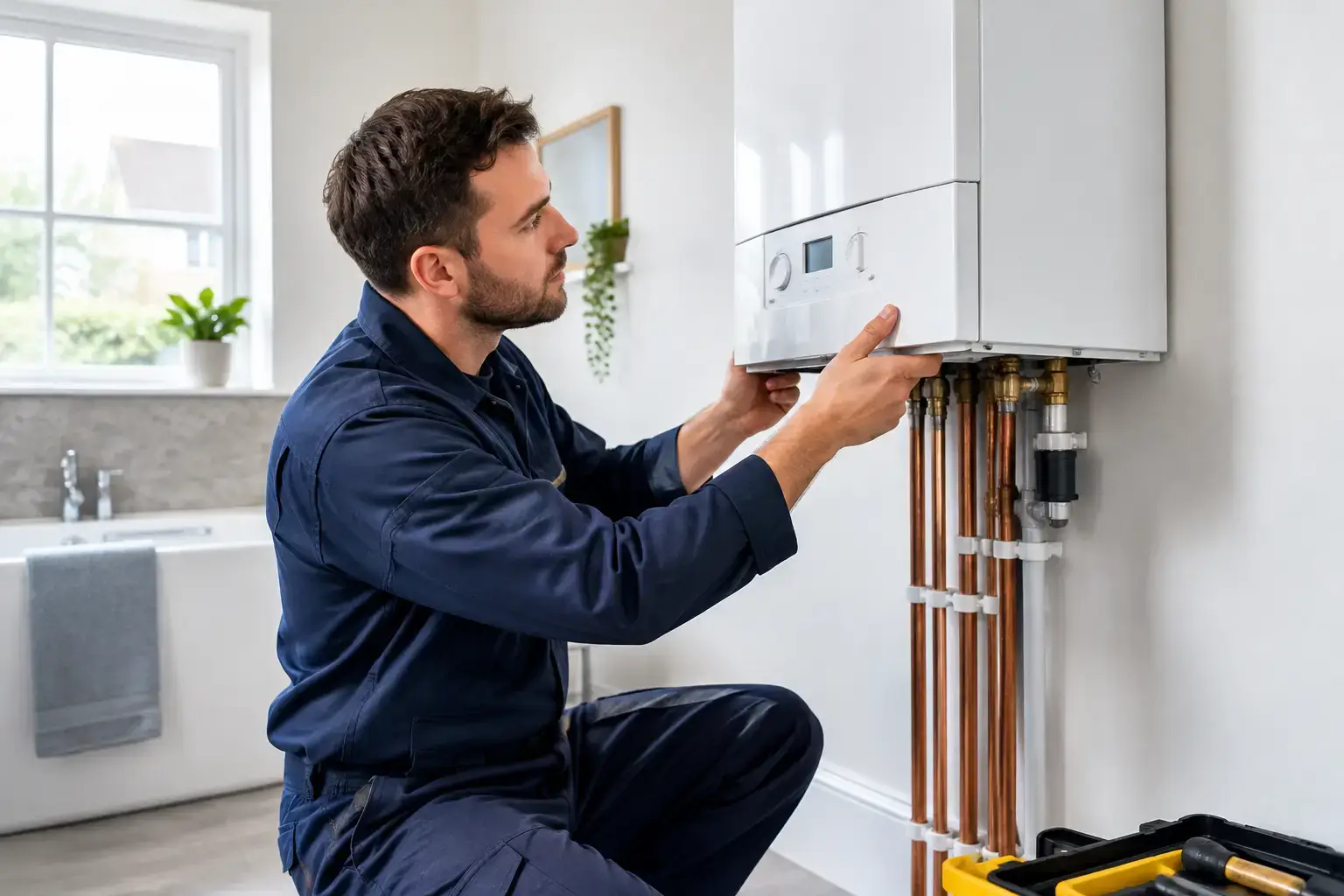
A combi boiler can supply a bath, and for many UK homes it is an excellent choice. The key question is whether its hot-water flow rate matches your bath size, cold-water mains supply and the way your household uses hot water. Get a fixed boiler quote online.
Quick answer: a suitably sized combi boiler can fill a standard bath well, usually in around 10 to 15 minutes. Larger baths, low mains pressure, more than one bathroom or regular simultaneous use may point towards a higher-output combi or a system boiler with a hot-water cylinder instead.
Can combi boilers supply baths as well as showers?
Yes. A combi boiler heats domestic hot water directly from the mains when you open a tap or run a bath. Unlike a regular or system boiler, it does not store hot water in a cylinder. This saves space and means you are not limited by the amount of hot water stored earlier in the day.
For a bath, the practical measure is hot-water flow rate, usually expressed in litres per minute. A boiler with a higher domestic hot-water output can deliver more hot water to the bath taps, provided the incoming mains supply is strong enough.
A typical small or medium family home with one bathroom may be well suited to a combi in the 28kW to 35kW range. That does not mean every property needs the largest boiler available. Boiler output for heating and hot water should be assessed separately, along with the property’s heat loss, radiator system and water demand.
What determines how quickly a combi fills a bath?
The boiler matters, but it is only one part of the system. A new high-output combi cannot create a better flow rate than the cold-water main entering the property can provide.
The boiler’s domestic hot-water flow rate
Manufacturers normally quote a flow rate at a stated temperature rise, often 35°C. As a broad guide, a combi delivering around 12 litres per minute at this temperature rise can be adequate for a standard bath and one shower used separately. Models delivering roughly 14 to 16 litres per minute can give a more comfortable bath-filling rate in homes with higher demand.
These figures should be used for comparison rather than as a promise of the exact flow from your taps. The temperature of the incoming cold water changes through the year, and pipework, taps and water pressure also affect the result.
Bath size and how full you like it
A compact bath naturally needs less water than a deep freestanding bath. Many standard baths hold around 150 to 200 litres when full, although the usable water volume is lower once someone gets in. A larger bath can still work with a combi, but filling it will take longer and may be less satisfying where the boiler or mains supply has a modest flow rate.
If a long, deep bath is a daily priority, tell the person preparing your quote. It is a useful detail when comparing a high-output combi with a cylinder-based system.
Mains pressure and flow
Pressure and flow are not the same thing. Pressure helps push water through the pipework, while flow is the volume available each minute. A property can appear to have reasonable pressure but still have limited flow when a bath is running.
An installer may need to assess the incoming mains supply before confirming whether a particular combi boiler will meet expectations. This is especially relevant in older properties, flats and homes with shared or restrictive incoming supplies.
Simultaneous hot-water use
A combi boiler is at its best when hot-water demand is mainly one outlet at a time. Running a bath while somebody uses a hot tap elsewhere may reduce the bath flow or alter its temperature. Trying to run two showers at once from most combis is where limitations become more obvious.
For households with two bathrooms used at the same time, a system boiler and unvented cylinder can be a better fit. The cylinder stores a larger volume of hot water, helping serve multiple outlets together. It does, however, need space and must be correctly sized for the household.
Choosing a combi boiler for a home with a bath
Do not choose a boiler solely by the number of bedrooms. A one-bedroom flat with a large bath and strong mains supply can have different hot-water needs from a three-bedroom house with one shower room and limited incoming flow.
For a home with one bathroom, one bath and ordinary day-to-day demand, a quality combi boiler is often the most straightforward replacement. It avoids retaining a cylinder cupboard, provides hot water on demand and can be a sensible option when replacing an existing combi.
Where the property has one bathroom plus an en-suite, assess how often those outlets will be used at once. A higher-flow combi may be suitable if simultaneous demand is occasional. If two showers, baths or taps are routinely used together, a system boiler with a cylinder deserves serious consideration.
A regular heat-only boiler may remain the right option where an existing conventional system, tanks and cylinder are suitable, or where the property’s layout and demand favour stored hot water. The right answer should be based on the property, not on pushing every home towards one boiler type.
When a combi may not be the best bath solution
A combi is not automatically the wrong choice because you have a bath. However, it may be less suitable if your household has several people drawing hot water at the same time, an unusually large bath, poor mains flow, or a need for two strong showers to operate together.
Converting from a regular or system boiler to a combi can also involve more work than a like-for-like replacement. Removing tanks and a cylinder, altering pipework, upgrading the gas supply where required, moving the boiler or changing the flue route can all affect cost and installation time.
As a broad UK guide, a straightforward combi boiler replacement may often fall around £2,000 to £4,000, depending on the boiler selected and the work required. A conversion or more complex installation can cost £3,000 to £5,000 or more. These are estimates, not confirmed prices. A fixed quote should set out the boiler model, standard installation work, warranty information and any identified extras.
What a clear boiler quote should consider
An accurate online quotation should ask about your current boiler type, number of bathrooms, bath and shower use, existing cylinder or tanks, boiler location and flue position. Photos and property details can help identify whether further technical checks are needed before installation.
Smart Adapt arranges replacement boiler installations through Gas Safe registered engineers in its confirmed service areas. Postcode coverage, engineer availability and property suitability are checked before an installation is accepted. If the quote identifies possible additional work, such as a boiler relocation, flue alteration or gas-pipe upgrade, this should be explained clearly rather than appearing as an unexpected cost later.
Manufacturer warranties vary by boiler model and may depend on correct installation, registration and the manufacturer’s terms. If you are considering finance, it is subject to status, eligibility and lender approval.
FAQs about combi boilers and baths
Will a 24kW combi boiler fill a bath?
It can, particularly in a smaller home with one bathroom and a standard bath. However, a 24kW boiler generally has a lower hot-water flow rate than larger combis, so filling may take longer. It is worth comparing domestic hot-water figures, not just the kW rating.
How long should a combi boiler take to run a bath?
With a suitable boiler and good mains flow, a standard bath may take around 10 to 15 minutes. The actual time depends on the bath volume, desired temperature, tap flow and incoming cold-water temperature.
Can I run a shower while the bath is filling?
Usually, this will reduce the available hot-water flow and may affect temperature stability. Some higher-output combis cope better than others, but a cylinder-based system is often preferable for frequent simultaneous use.
Is a bigger combi boiler always better for a bath?
No. A larger boiler can offer stronger hot-water delivery, but it must still suit the mains supply, property heating requirement and installation setup. Oversizing without checking these factors does not solve every hot-water issue.
Does a combi need a hot-water cylinder for a bath?
No. Combi boilers heat water directly as it is needed, so no cylinder is required. A cylinder is associated with system and regular boiler setups, which can be better for higher simultaneous demand.
Can I change from a regular boiler to a combi?
Often, yes. Whether it is worthwhile depends on your hot-water habits, available mains flow and the work needed to remove or adapt the existing system. A conversion should be quoted after considering the full property setup.
What happens after I request a quote?
You provide property and current-system details so suitable boiler options can be identified. The proposed installation is checked against postcode availability and technical requirements, then any survey or further information needed can be arranged before the work is confirmed.
A bath should be a simple part of daily life, not a reason to settle for an unsuitable boiler. Get a fixed boiler quote online and choose between combi, system and regular boiler options based on how your home actually uses hot water.