






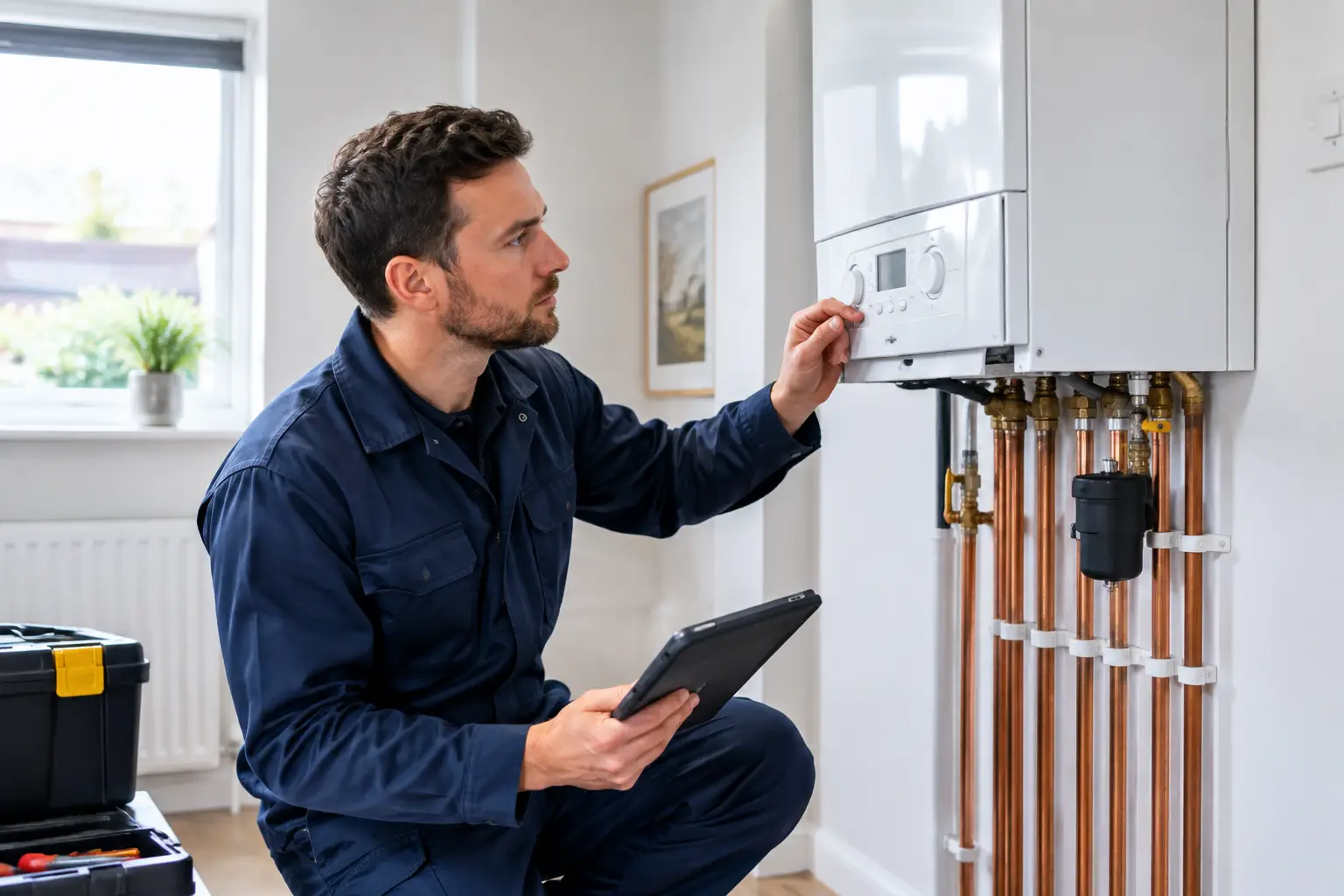
A boiler that has stopped working can make repair versus replacement feel like an urgent and expensive choice. In most cases, replacement is worth considering when the boiler is old, unreliable, costly to put right or no longer suitable for your home’s heating and hot-water demand.
Quick answer: A newer boiler with a single, modest issue may be worth repairing. A boiler with repeated faults, unavailable parts or a major repair bill may be better replaced, particularly if it is nearing the end of its expected working life. The right answer depends on the fault, boiler age, repair estimate and the installation your property needs.
Get a fixed boiler quote online.
Repair versus replacement: start with the real cost
The repair price alone should not decide it. A lower-cost repair can be sensible if it returns a relatively modern boiler to reliable operation. However, spending several hundred pounds on one issue can be difficult to justify if other components are ageing, the boiler has broken down before, or a further fault could leave you without heating again soon.
Ask for a clear explanation of the problem, the parts required and whether the part is readily available. Then compare that cost with a replacement boiler installation designed around your property. This gives you a practical choice rather than making a decision under pressure.
Replacement may also solve a wider problem. An undersized boiler, poor hot-water flow, a dated back boiler or a system that no longer suits the household can all be reasons to look beyond the immediate fault.
When a repair may still make sense
Repair can be the proportionate option where the boiler is relatively young, has otherwise been dependable and the issue is isolated. It can also be reasonable where the repair cost is modest compared with the price of a new installation and the existing boiler meets your household’s needs.
A boiler still covered by a valid manufacturer warranty may have a different route for an eligible fault. Warranty cover depends on the exact product, correct registration, installation requirements and the manufacturer’s current terms. Check the paperwork rather than assuming every part or visit is included.
There is no universal age at which every boiler must be replaced. Condition matters more than a date on the casing. That said, as a boiler gets older, replacement parts and the likelihood of further failures can become a more significant consideration.
Signs replacement deserves serious consideration
A replacement quote is particularly useful if you are dealing with repeated breakdowns, a major component failure, rising repair costs or parts that are difficult to obtain. It is also worth exploring if your current boiler cannot comfortably meet demand – for example, a busy family home where more than one shower is often used close together.
Other common situations include:
- A back boiler that needs replacing with a modern boiler in a new location.
- A planned conversion from a regular boiler and hot-water cylinder to a combi boiler.
- A move to a system boiler because the property needs stored hot water.
- A boiler relocation to improve access, create space or support a kitchen alteration.
These are installation projects rather than straightforward like-for-like swaps, so the final scope needs more care. Pipework changes, flue position, condensate drainage, controls, system preparation and making good can all affect the price and timescale.
What does a replacement boiler cost?
For a straightforward replacement of an existing gas combi boiler in a similar position, UK installed prices commonly begin at around £2,000 and can rise to £4,500 or more depending on the boiler selected and the work required. System and regular boiler installations, conversions, relocations and back-boiler replacements can cost more because the installation is more involved.
These are broad estimates, not a promised price. A confirmed fixed quote should reflect the actual property details, chosen boiler, flue route, existing heating system and any necessary additional work.
A clear quotation should explain what is included. This will normally cover the boiler and agreed installation materials, labour by appropriately qualified Gas Safe registered engineers, the controls specified in the quote, commissioning and required documentation. It should also make potential extras clear before work is accepted.
Possible additional costs can include a longer or more complex flue run, relocation work, changes to gas or heating pipework, new condensate arrangements, access equipment, removal of a back boiler, or remedial work identified through a survey or technical assessment. Not every property needs these items, which is why an accurate online journey and, where required, further checks matter.
Choose the boiler type for the home you have
A new boiler is not automatically an upgrade if it is the wrong type or output. The best option depends on the number of bathrooms, hot-water habits, available space and the existing system.
Combi boilers
A combi boiler provides heating and hot water directly from one compact unit. It is often a good fit for flats and smaller to medium-sized homes with one bathroom, especially where space is limited and there is no need for a hot-water cylinder. Its hot-water performance depends on the boiler’s flow rate and incoming mains water supply.
A combi conversion can free up space where an older regular boiler and cylinder are no longer wanted. It can, however, involve more changes than a like-for-like replacement.
System boilers
A system boiler works with a separate hot-water cylinder. This can suit homes with higher hot-water demand, particularly where two bathrooms may be used at similar times. The cylinder needs suitable cupboard or airing-cupboard space, but stored hot water can be a practical advantage for larger households.
Regular boilers
A regular, or heat-only, boiler is typically used with a cylinder and often a separate tank arrangement. Keeping this type of system can be sensible where it already suits the property and the installation can remain broadly like for like. It is not always necessary or beneficial to convert simply because another boiler type is available.
Do not overlook boiler size and output
Boiler output is measured in kilowatts (kW), but bigger is not automatically better. For combi boilers, hot-water performance is often the key factor. For system and regular boilers, the property’s heat demand and cylinder arrangement are central to the decision.
An accurate recommendation should account for the home’s size, number of radiators, bathrooms, occupancy and typical use. A landlord should also consider the likely needs of the property and a reliable, suitable specification rather than choosing solely on the lowest upfront figure.
The brand and model matter too. Compare the warranty length and conditions, controls compatibility, physical dimensions, hot-water performance where relevant and the price of the complete installation. Longer warranties can be valuable, but only when the exact model and requirements have been checked.
What happens when you request a quote?
Smart Adapt’s online quotation process is designed to gather the details needed for a realistic recommendation. You will be asked about the property, current boiler, desired location and heating and hot-water requirements. This helps identify whether a combi, system or regular boiler is likely to suit the home.
You can compare appropriate boiler options, prices and what is included before deciding. If the installation is within the confirmed service area and the details are suitable, the next step may involve final technical checks or a survey where needed. Installation availability depends on postcode coverage, engineer availability, property suitability and the complexity of the work.
Once the scope is confirmed, the installation is arranged with Gas Safe registered engineers. A simple like-for-like replacement can often be completed more quickly than a conversion, relocation or back-boiler replacement, but the agreed schedule should reflect the actual work rather than an unrealistic promise.
Finance may be available to spread the cost, subject to status, eligibility and lender approval. It is sensible to consider the total amount payable and the terms, not only the monthly figure.
Frequently asked questions
Is it cheaper to repair or replace a boiler?
A single minor repair is usually cheaper upfront. Replacement can represent better value where faults recur, a major repair is needed or the boiler no longer meets the property’s needs.
Should I replace a 10-year-old boiler?
Not automatically. Consider its reliability, the current fault, repair estimate, parts availability and whether its capacity still suits the household. A quote for replacement gives you a useful comparison.
Can I replace a regular boiler with a combi boiler?
Often, yes, but suitability depends on hot-water demand, mains water supply, pipework and the work needed to remove or alter the existing cylinder arrangement.
Is a system boiler better than a combi boiler?
Neither is always better. A combi often suits lower hot-water demand and limited space. A system boiler can suit homes that need stored hot water for multiple bathrooms.
How long does a boiler replacement take?
A straightforward replacement may take around a day, while conversions, relocations and back-boiler replacements generally take longer. The exact timescale depends on the work required.
Will the final price match an online quote?
A fixed quote depends on accurate property information and confirmed terms. If additional work is identified through checks or a survey, this should be explained before installation is agreed.
If repairs are becoming a cycle of uncertainty, a properly specified replacement can give you a clearer plan for heating and hot water. Get a fixed boiler quote online.