






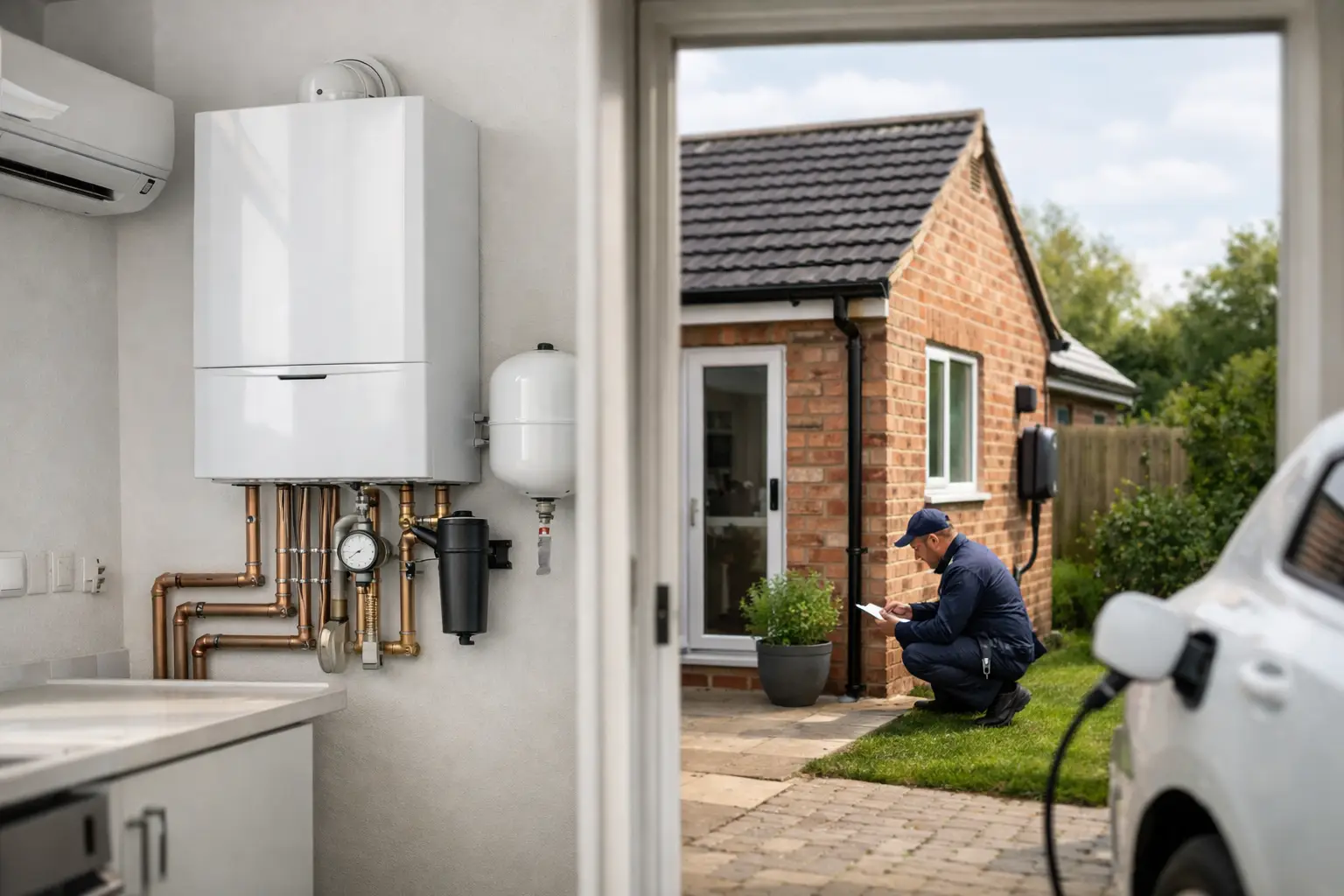
For most one- or two-bedroom homes with one bathroom, the best boiler for a small house is usually a 24-30kW gas combi boiler. It provides central heating and hot water from one compact appliance, without needing a separate hot-water cylinder or loft tanks.
The right answer still depends on your hot-water demand, existing pipework and whether more than one person regularly needs a shower at the same time. Get a fixed boiler quote online to compare suitable models for your home and see clearly what the installation includes.
Quick answer: which boiler suits a small home?
A combi boiler is the natural choice for many small houses, flats and compact rental properties. It heats water when you turn on the tap, so there is no stored cylinder taking up cupboard space. It can also make a conversion from an older regular boiler simpler in properties where the tanks and cylinder are no longer wanted.
A system boiler can be the better option where a small house has two bathrooms, a high-flow shower, or regular demand for hot water at the same time. It works with a hot-water cylinder, which takes space but stores a useful reserve of hot water.
| Boiler type | Usually best for | Space required | Main consideration | |—|—|—|—| | Combi boiler | One bathroom and modest simultaneous hot-water use | Boiler only | Hot-water flow is shared if several outlets run together | | System boiler | Two bathrooms or higher hot-water demand | Boiler plus cylinder | Requires a suitable location for the cylinder | | Regular heat-only boiler | Homes retaining an existing conventional system | Boiler, cylinder and usually tanks | Often chosen where keeping the current layout is more practical |
Why a combi boiler often works best in a small house
Space is usually the deciding factor. A combi boiler can be fitted in a kitchen cupboard, utility area or airing cupboard where the manufacturer’s clearance requirements are met. With no cylinder and typically no cold-water storage tanks, it can free up valuable storage space.
It also gives hot water on demand. You do not need to wait for a cylinder to reheat after it has been used, which suits households with predictable, moderate demand. A modern combi is a sensible replacement for an ageing combi, especially if the existing heating system is in good order and the boiler location remains suitable.
There is a trade-off. A combi does not create unlimited hot water for multiple outlets. If someone is showering while another person runs a bath or opens a hot tap elsewhere, the flow and temperature can be affected. In that situation, choosing a higher-output combi may help, but a system boiler and cylinder can be the more dependable long-term design.
Boiler size matters more than the size of the house
It is easy to assume that a small house needs the smallest boiler. For central heating alone, a compact, well-insulated property often has a relatively low heat requirement. However, combi boiler output is frequently selected around hot-water performance rather than heating demand.
A 24-30kW combi is a common starting point for a small home with one bathroom. The higher end of that range can offer better hot-water flow, but it is not automatically the right choice for every property. Oversizing does not solve poor water pressure, restrictive pipework or an unsuitable shower.
Your installer should consider the property’s heat loss, number of radiators, insulation, bathrooms, incoming mains-water flow and pressure, and the type of shower you use. A gravity-fed shower, for example, may need different planning if a combi conversion removes the tanks that supplied it.
Do not choose by kilowatt rating alone
Two boilers with similar output can differ in hot-water flow rate, physical dimensions, controls compatibility and warranty terms. The most suitable model is one that meets demand without adding unnecessary complexity or cost.
A proper quotation should also account for whether the boiler is staying in the same place. Replacing a like-for-like combi is generally more straightforward than moving it to another room or changing from a regular boiler to a combi system.
When a system boiler is the better choice
A small house does not always mean a combi boiler. A system boiler deserves consideration if the property has two bathrooms, a family bathroom with a bath used regularly, or occupants who commonly use hot water at the same time.
Because the cylinder stores heated water, a system boiler can supply more than one outlet with less compromise than a combi. This can make daily life easier in a busy household. The compromise is the cylinder space, plus the cost and practical work involved if the property does not already have one.
For landlords, the decision should balance tenant demand, available cupboard space and the condition of the existing system. A like-for-like system boiler replacement can be a practical route where the cylinder is in good condition and the property genuinely benefits from stored hot water.
What affects the cost of fitting a boiler in a small house?
A small property can mean fewer radiators and a shorter pipe run, but installation cost is not based on floor area alone. The boiler type, location and existing system have a much bigger effect on the work required.
A clear boiler quotation should explain the boiler model, controls, flue arrangement, system treatment and commissioning. It should also make clear whether extras may apply after a survey or technical assessment. Common cost factors include:
- moving the boiler to a new location or extending gas, water, heating and condensate pipework
- converting from a regular or system boiler to a combi boiler
- upgrading controls, replacing a pump or making changes to radiators and valves
- difficult flue routes, access constraints or remedial work needed to meet current installation requirements
A boiler replacement also needs to be installed and commissioned by an appropriately qualified Gas Safe registered engineer. The installer should complete the relevant building compliance notification and provide the appliance paperwork, benchmark records and warranty registration information where applicable.
Choose the boiler around your routine
Before comparing models, think about the occasions when your current boiler lets you down. Is it slow hot water at the kitchen tap, an unreliable shower, uneven radiator heat or repeated breakdowns? Those details help identify whether the problem is boiler capacity, water flow, controls or the wider heating system.
For a couple in a one-bathroom terrace, a quality combi with sensible controls is often all that is needed. For a compact house with two showers and a growing household, the extra space taken by a cylinder may be worth it. For a property with an older conventional layout, retaining a heat-only or system arrangement can avoid disruption where there is no strong reason to convert.
Manufacturer-backed warranties are another important comparison point, but check the exact model and current terms. Warranty length can depend on the product, installer requirements, registration and servicing conditions. It should support a good installation, not replace one.
What happens when you request a quotation?
An online quotation process should be straightforward, but the questions matter. You will normally be asked about the current boiler, fuel type, number of bathrooms, property type, boiler location and whether you want to move or change the system.
Smart Adapt manages the quotation and installation journey with clear prices and straightforward installation information. Where a survey or further assessment is needed, it helps confirm the specification before work is agreed. A £250 initial deposit may apply, with the remaining balance due after installation under the agreed terms. Finance options may also be available, subject to status and eligibility.
On installation day, the engineer should protect the work area, remove the old appliance where included, fit and test the new boiler, flush or treat the system as required, and show you how to use the controls. Keep the handover documents somewhere safe, particularly if you are a landlord responsible for future servicing and records.
FAQs about the best boiler for a small house
Is a 24kW boiler big enough for a small house?
Often, yes. A 24kW combi can suit a small, one-bathroom home, but suitability depends on the hot-water flow you want and the property’s heating requirement. An assessment is more reliable than choosing solely by bedroom number.
Can I replace a regular boiler with a combi boiler?
Usually, yes, but it is a conversion rather than a simple swap. Removing the cylinder and tanks, adapting pipework and checking shower compatibility can add work. It is worth comparing the conversion cost with a like-for-like replacement.
How long does a small-house boiler replacement take?
A straightforward like-for-like replacement is often completed more quickly than a relocation or conversion, but the timescale depends on the specification and site conditions. Confirm the expected schedule before booking.
Should I repair or replace an old boiler?
If the fault is minor and the boiler is otherwise reliable, a repair may be sensible. Repeated faults, obsolete parts, poor efficiency or a boiler nearing the end of its useful life can make replacement the more practical decision. A qualified engineer can assess the condition before you commit.
The best choice is the boiler that fits your household’s real hot-water demand, the available space and the condition of the system already in place. Compare suitable boilers for your home, ask what is included, and get a fixed boiler quote online before making the decision.