






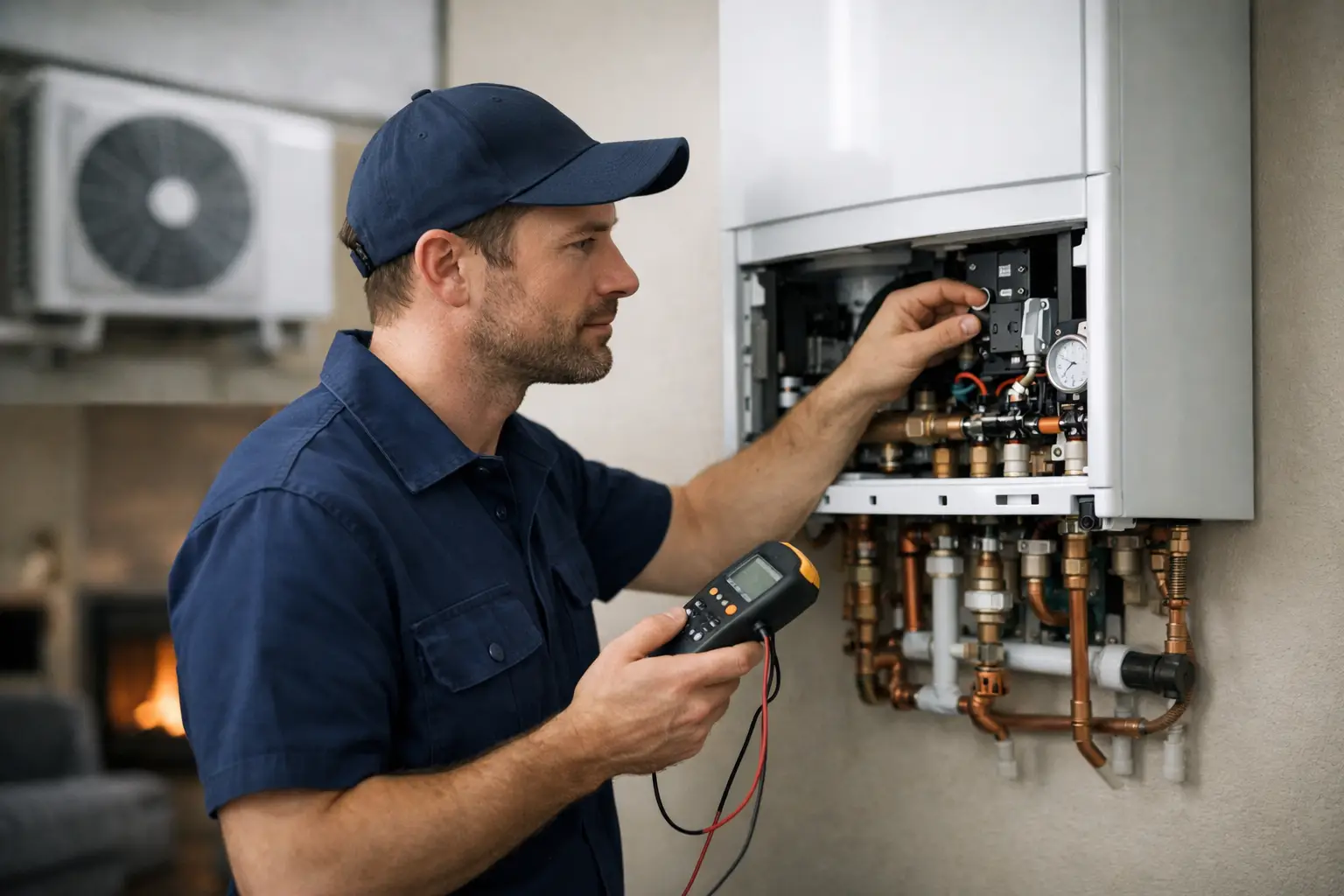
If you are comparing air-conditioning costs, heating and cooling, first separate the systems involved. A replacement gas boiler provides central heating and hot water, not cooling. For a UK boiler replacement, a realistic installed price is commonly around £2,000 to £5,000 or more, depending on the boiler type, property and work required.
Quick answer: a like-for-like combi boiler swap is usually the most straightforward and lower-cost option. Changing boiler type, moving its location, replacing a back boiler or upgrading a larger system can increase the price. The right choice depends on your home’s heating demand, bathrooms and hot-water use – not simply the boiler’s headline price.
Get a fixed boiler quote online.
Air-conditioning costs, heating and cooling: where boilers fit
Searches for air-conditioning costs, heating and cooling can cover several different household systems. Smart Adapt focuses on replacement gas boilers for homeowners and residential landlords. A boiler heats radiators and, in many homes, supplies hot water for taps and showers.
That distinction matters when comparing costs. Buying a boiler that is too small can leave a busy household with weak hot-water performance. Buying a more powerful model than the property needs can mean paying for capacity you are unlikely to use. An accurate quote should start with the existing system, the number of bathrooms, radiator demand and the proposed boiler position.
What does a new boiler cost in the UK?
A confirmed price can only follow accurate property information and, where needed, a technical assessment. However, the following broad installed estimates can help you plan a replacement budget.
A straightforward replacement combi boiler may be around £2,000 to £3,500. A system boiler replacement, often chosen where a hot-water cylinder is retained, may be around £2,500 to £4,500. Replacing a regular heat-only boiler can be in a similar range, although the condition and layout of tanks, cylinder and pipework can have a significant effect.
More involved installations can cost more. For example, changing from a regular boiler to a combi boiler, moving a boiler to another room, or replacing a back boiler may involve new pipework, flue alterations, electrical work associated with the boiler installation, system changes and making good. These projects are usually assessed individually rather than priced from a standard advert.
The boiler itself is only one part of the cost. A useful quotation explains the appliance, installation labour, flue components, controls, system protection, waste removal and commissioning. It should also identify work that may be additional if it cannot be confirmed from the information available.
The main factors that change boiler installation prices
Boiler type and output
Combi boilers heat water directly and do not use a separate hot-water cylinder. They can suit many flats, smaller houses and homes with one bathroom, particularly where space is limited. Their hot-water output needs careful consideration if more than one shower may run at once.
System boilers work with an unvented or vented hot-water cylinder. They can be a better fit for larger households with greater simultaneous hot-water demand. Regular boilers, also known as heat-only boilers, work with a cylinder and usually tanks in the loft. Keeping this arrangement can be sensible where it already suits the property.
Output is measured in kilowatts (kW), but a higher figure is not automatically better. Space-heating demand depends on the home and radiator system, while combi sizing also depends heavily on the required flow of hot water. A good recommendation considers both.
Like-for-like replacement or conversion
Replacing a combi with a similar combi in the same position is generally less disruptive than changing system type. A conversion may still be worthwhile if your household’s needs have changed, but it needs a fuller assessment of water pressure, pipe routes, cylinder space and existing equipment.
For example, converting to a combi can free up space previously used by a cylinder or tanks. In return, a combi may be less suitable for a home where several bathrooms regularly need hot water at the same time. There is no universal ‘best’ boiler type.
Boiler location and flue route
A boiler in a kitchen cupboard, utility room, airing cupboard, loft or garage may each need different levels of work. Relocating it can improve access or create space, but longer gas, water and condensate runs add labour and materials. The flue must also be positioned and terminated correctly, so this is never a detail to guess from a photograph alone.
The condition of the heating system
Older systems may need cleaning, filters, valves or controls as part of a replacement installation. If radiators, pipework or the existing layout reveal an issue during assessment, this should be explained before work is agreed wherever possible. Clear scope matters more than an unrealistically low starting price.
What should be included in a boiler quote?
A fixed boiler quote should make it easy to see what you are paying for. Check whether it covers the chosen boiler model, standard flue installation, controls, magnetic system protection where specified, removal of the old boiler, commissioning and registration requirements.
Also ask how possible extras are handled. These can include unusual flue work, asbestos-related restrictions, major pipework changes, access equipment, relocating the boiler or repairs to concealed parts of the system discovered once work begins. A professional installer should not treat every home as identical.
Smart Adapt’s online process is designed to collect property details first, then match suitable combi, system or regular boiler options to the home. Postcode coverage, engineer availability and property suitability are confirmed before an installation is accepted. Installation is carried out by Gas Safe registered engineers.
Choosing a boiler without paying for the wrong one
Start with daily use rather than brand names. Consider how many people live in the property, how many bathrooms are used at busy times, whether a cylinder is already in place and whether you expect your hot-water demand to change.
A landlord may prioritise a suitable, dependable replacement that fits the existing system and minimises void time. A family extending their home may need to reassess the boiler output and hot-water arrangement rather than simply replace the old unit with the nearest equivalent.
Brand, model and warranty are important, but warranty length alone should not decide the purchase. Manufacturer warranties vary by product and can depend on correct installation, registration and the manufacturer’s current terms. Read the terms for the exact boiler offered, including what must be done to activate the cover.
Installation time and disruption
Many straightforward like-for-like boiler replacements can be completed in a day. More complex work, including conversions, relocations and back-boiler replacements, can take longer. The installer should explain the expected timescale once the scope is confirmed, rather than promising a date or duration before the property details are understood.
There will normally be a period without heating and hot water while the old boiler is removed and the new one is commissioned. Clearing access to the boiler, airing cupboard and relevant radiators before the appointment can help the day run smoothly.
Finance and fixed prices
Finance can make the cost of a replacement easier to manage, but it is not suitable or available for everyone. Any finance option is subject to status, eligibility and lender approval. Compare the total amount payable, term and monthly payment before deciding.
A fixed quote is different from a rough online estimate. It should be based on the information provided, the agreed boiler and stated installation scope. If information changes or unforeseen work is found, the installer should explain the impact before proceeding.
Frequently asked questions
Is a combi boiler always cheaper to install?
Not always. A like-for-like combi replacement is often simpler, but a combi conversion can involve substantial changes. Retaining a suitable system or regular boiler arrangement may be better value for some homes.
How do I know what size boiler I need?
The number of radiators, property size, insulation, bathrooms and hot-water use all matter. For combis, shower and tap demand is particularly important. A quote should recommend an output suited to your household rather than relying on a one-size calculation.
Can I replace a back boiler with a modern boiler?
Yes, but it is usually a more involved replacement because the back boiler and associated fire arrangement must be removed and the new boiler installed elsewhere. A survey or detailed assessment is normally required.
Will I need a new hot-water cylinder?
It depends on the boiler type selected and the condition of your existing cylinder. A combi does not normally use one, while system and regular boilers do. Your existing setup should be assessed before making a decision.
Are boiler warranties included?
The warranty available depends on the exact boiler model and the manufacturer’s current terms. Registration and installation requirements may apply. Confirm the warranty for the model in your quote before accepting it.
Can a boiler be moved to another room?
Often, yes. The feasibility and cost depend on gas, water, condensate and flue routes, as well as access and the proposed location. Relocation should be priced as part of the agreed scope.
How do I get an accurate price?
Provide clear details about your current boiler, property, bathrooms and preferred location. Photographs can help at the quotation stage, although more complex installations may need a further technical assessment.
Get a fixed boiler quote online.
A well-matched boiler is not simply the lowest initial price. It is one that suits the property, delivers the hot water your household needs and comes with a clear installation scope before work begins.