






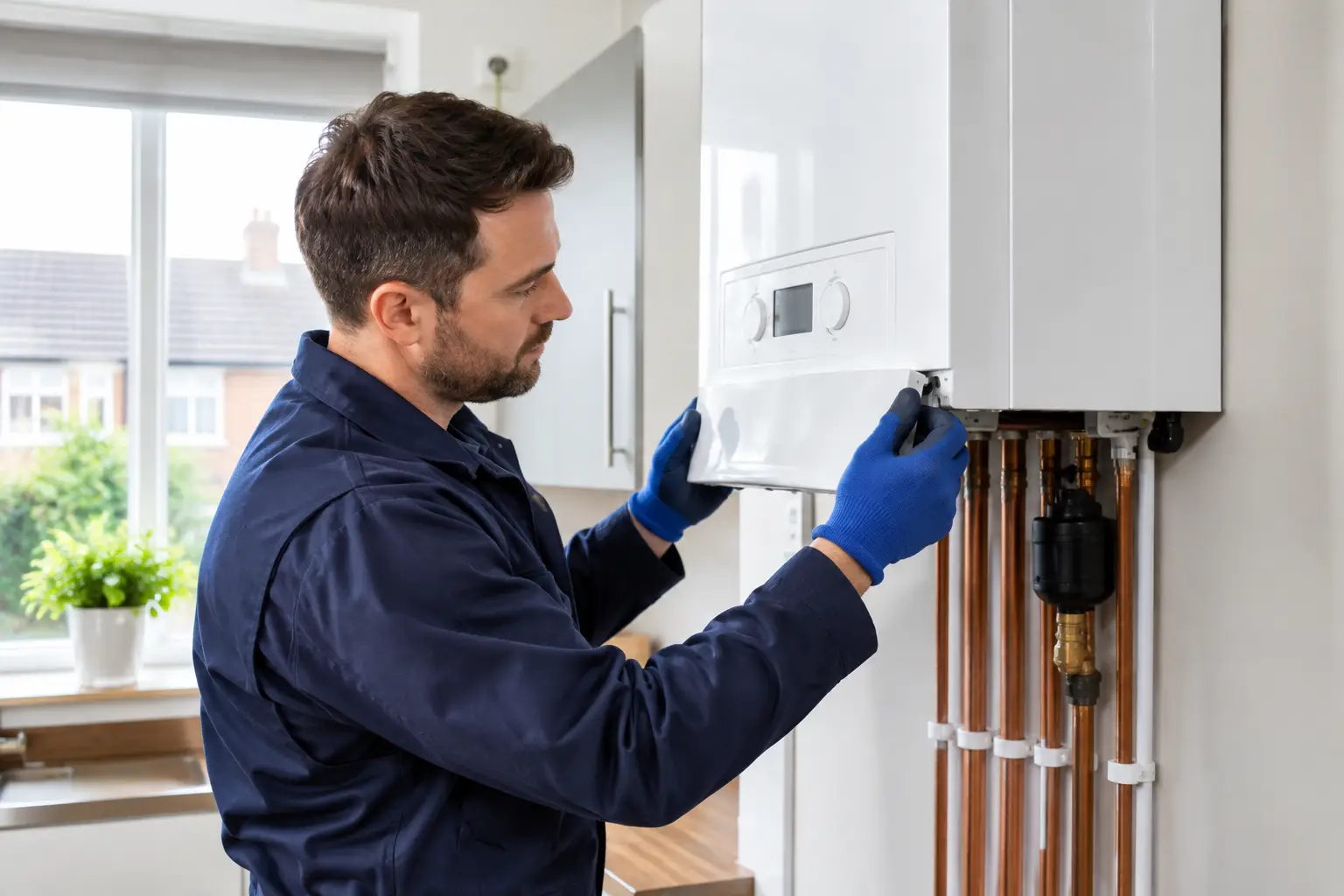
A Cardiff terrace boiler replacement will usually involve choosing a boiler that suits your hot-water demand, checking the existing flue and pipework route, and confirming access in a compact property. A straightforward like-for-like replacement can often be completed in a day, while conversions and relocations take longer. Get a fixed boiler quote online.
Terraced homes vary far more than their street frontage suggests. A two-bedroom Victorian terrace with one bathroom has different requirements from a three-storey family home with an en-suite, loft conversion and busy morning water use. The right answer is not always the largest boiler or the lowest initial price. It is the boiler and installation plan that fit the property properly.
Quick answer: Cardiff terrace boiler replacement
For many Cardiff terraces, a combi boiler is a practical choice where there is one bathroom and limited storage space. It provides heating and hot water from one compact unit, without a separate hot-water cylinder.
A system boiler may be more suitable for homes with two or more bathrooms, or where several people regularly need hot water at the same time. It works with a stored hot-water cylinder. A regular heat-only boiler can be the sensible replacement where the property already has a traditional tank-and-cylinder arrangement and there is no strong reason to change it.
Typical installed prices depend on the boiler selected and the work involved. A straightforward replacement may commonly fall around £2,000 to £3,500. A conversion from a regular boiler to a combi, a back-boiler replacement, or moving the boiler to a new position can be £3,500 to £5,500 or more where significant changes are needed. These are guide prices, not a confirmed quote.
Why terrace properties need a careful survey
Many Cardiff terraces have boilers in kitchens, airing cupboards, bedrooms or loft spaces. Some retain older heating layouts, while others have been extended in stages. That history affects both the boiler choice and the installation work.
The engineer needs to confirm that the new boiler has a safe, compliant flue position. This matters particularly where properties are close together, have narrow side passages or rear extensions. The condensate pipe also needs a suitable route and protection where it runs externally, so it is less likely to freeze in cold weather.
Access can influence the plan too. A boiler can often be brought through the house, but narrow hallways, stairs and loft hatches may limit where equipment can be positioned. These are practical questions rather than reasons to worry, but they should be accounted for before a price is fixed.
Choosing the right boiler for a Cardiff terrace
Combi boilers for smaller homes and one-bathroom layouts
A combi boiler heats hot water when you turn on the tap. It removes the need for a cylinder, which can free up an airing cupboard. This makes it popular in terraces where storage is limited.
However, a combi has limits. If one person is showering while another runs a hot tap, the flow can reduce. Water pressure and incoming mains flow are also important. A larger output combi may improve hot-water performance, but it cannot create more mains water flow than the property receives.
For a typical one-bathroom terrace, a 24kW to 30kW combi may be considered, but the correct output depends on the home, radiator demand and hot-water use. Boiler size should never be chosen on bedroom count alone.
System boilers for higher hot-water demand
A system boiler works with a cylinder that stores hot water. It is often worth considering in a larger terrace, a home with two bathrooms, or a property where simultaneous showers are a regular part of family life.
The trade-off is space. You need room for the cylinder and associated components. If a usable cylinder is already in place, retaining a system can sometimes be less disruptive than converting to a combi. The quotation should set out whether the existing cylinder is suitable or whether replacement is needed.
Regular boilers where the existing layout works
A regular boiler, sometimes called a heat-only boiler, suits traditional open-vented systems with tanks in the loft and a cylinder below. It is not automatically outdated simply because it is older technology.
Keeping this arrangement can be a sensible route where the system serves a larger household and the available layout works well. Changing to another boiler type can bring benefits, but it can also add pipework changes, tank removal and making-good work. The best option depends on the property, not a one-size-fits-all rule.
What affects the cost of a Cardiff terrace boiler replacement?
The boiler itself is only one part of the price. A clear installation quotation should explain the model, output, controls, flue arrangement and labour included. It should also identify any work that may need an inspection or survey before it can be confirmed.
Costs may change depending on:
- whether the new boiler stays in the same position or is relocated
- the existing boiler type and whether a conversion is planned
- flue route requirements, including extensions or a vertical flue
- upgrades to controls, pipework or system protection
- access to lofts, cupboards and external walls
- whether an old back boiler, cylinder or tanks need removing
- the condition and suitability of the existing heating system
A back-boiler replacement deserves particular attention. These older boilers sit behind a fireplace and replacing one usually involves removing the appliance, adapting pipework and fitting a new boiler elsewhere. It is normally a more involved installation than changing a modern wall-hung boiler for a similar new model.
What should be included in the installation?
Every installation differs, so ask for the written scope rather than assuming two prices include the same work. A typical replacement quote should make clear the boiler model, standard flue, controls, installation labour, commissioning, registration and handover arrangements.
It should also explain whether a magnetic system filter, inhibitor, condensate alterations, boiler relocation, disposal of the old appliance and any required electrical work are included. If something cannot be confirmed from an online assessment, that should be stated before you commit.
Smart Adapt manages the quotation journey and arranges installation by Gas Safe registered engineers. Property and postcode details are checked before an installation is accepted, helping ensure the proposed work is suitable and that availability can be confirmed in Cardiff and the wider service area.
How long will installation take?
A like-for-like boiler swap in an accessible location can often take one day. Allow longer where the boiler is moving, the system is changing from regular to combi, a cylinder is being removed, or flue and pipework routes need substantial alteration.
Before work starts, confirm where the boiler will be located, whether you will be without heating or hot water during the day, and whether clear access is needed to the loft, airing cupboard or rear of the property. The installer should commission the boiler, explain the controls and provide the information needed for warranty registration.
Warranties and paying for a new boiler
Manufacturer warranties vary by brand and exact model. The length may also depend on the boiler being registered within the manufacturer’s required timescale and on the installation meeting its terms. Check the specific product warranty rather than relying on a general headline figure.
If spreading the cost would help, finance options may be available. Finance is subject to status, eligibility and lender approval, and the available term and monthly payment will depend on the agreement offered. Compare the total amount payable as well as the monthly figure.
Frequently asked questions
Is a combi boiler always best for a terrace?
No. A combi is often a good fit for a one-bathroom home with limited space, but a system boiler can be better for households using multiple bathrooms at the same time.
Can I move my boiler from the kitchen to the loft?
Often, yes, provided the loft has suitable access, clearances, ventilation considerations where relevant, a compliant flue route and protection from freezing. Relocation adds cost and may extend the installation time.
Do I need to replace my radiators with a new boiler?
Not necessarily. Existing radiators can often remain if they are suitable for the system. The installer should assess the heating layout and explain if any changes are recommended.
What if my old boiler still works occasionally?
Replacement may be worth considering if the boiler is unreliable, parts are difficult to obtain, or repeated faults are becoming expensive. The decision depends on its condition, age and the likely cost of keeping it running.
Can landlords arrange a boiler replacement online?
Yes. Accurate details about the property, current boiler and tenant access help produce a more useful quote. Installation arrangements must still allow for property suitability and safe access.
Is an online boiler quote fixed?
A fixed quote relies on the information supplied being accurate and on the confirmed installation terms. If a survey or technical check identifies work not visible at the quotation stage, this should be explained before installation proceeds.
A new boiler should make life simpler, not create more unanswered questions. Start with the home’s hot-water needs and the existing layout, then compare suitable options on a like-for-like basis. Get a fixed boiler quote online.