






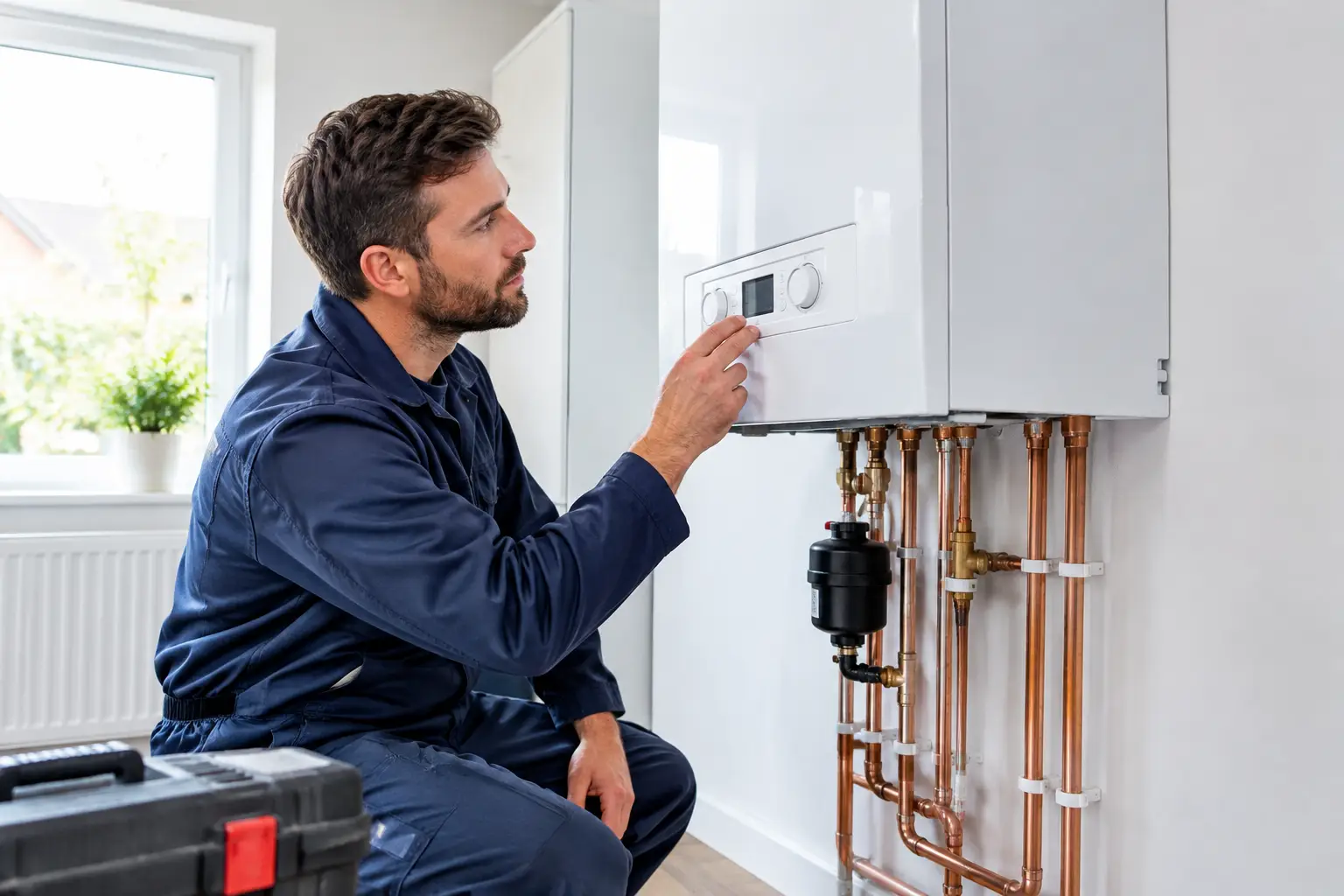
If you are comparing heat-only versus combi boilers, the right choice comes down to your hot-water demand, existing pipework and available space. A combi suits many smaller homes with one bathroom, while a heat-only boiler can be the better replacement where a cylinder and tanks already serve a larger household.
Quick answer: choose a combi boiler for mains-pressure hot water without a cylinder, usually in a flat or smaller house with modest simultaneous demand. Choose a heat-only boiler when your home already has a traditional system and stored hot water, particularly if several people may need hot water at similar times.
Get a fixed boiler quote online.
What is the difference between heat-only and combi boilers?
A combi, short for combination boiler, provides central heating and hot water from one compact appliance. When you open a hot tap, it heats water directly from the mains. There is no separate hot-water cylinder or roof tanks, which can free up cupboard and loft space.
A heat-only boiler is also called a regular or conventional boiler. It heats radiators and sends heat to a separate hot-water cylinder. Traditional heat-only systems normally have a cold-water storage tank and a smaller feed-and-expansion tank in the loft, although the exact arrangement varies with the property and system design.
The boiler itself is only one part of the decision. A like-for-like heat-only replacement may make practical sense if the cylinder, tanks and pipework are in good order. Changing from heat-only to combi can remove those components, but it is a conversion rather than a simple boiler swap.
Heat-only versus combi boilers: which is better for your home?
Neither is automatically better. A boiler needs to match the way the household uses heating and hot water, not just the number of bedrooms.
When a combi boiler is usually suitable
A combi can be a sensible choice for a one-bathroom flat, terrace or smaller family home where people are unlikely to run more than one demanding hot-water outlet at once. It delivers hot water on demand and avoids waiting for a cylinder to reheat.
It can also be attractive when space is limited. Removing a cylinder may create an airing cupboard, while removing loft tanks can make later loft use simpler. However, a combi needs adequate incoming mains water flow and pressure. A powerful boiler cannot compensate for a poor water supply, so this should be checked before recommending a model.
A combi has limits. If one person is showering while another fills a bath or runs a second shower, the available flow is shared. Larger combis can improve flow rates, but they still depend on the mains supply entering the home.
When a heat-only boiler is usually suitable
A heat-only boiler often works well in a larger home with an existing conventional system, more than one bathroom or a household with regular, overlapping hot-water use. The cylinder stores a volume of hot water, so several outlets can be supplied without relying solely on instantaneous boiler output.
It may also be the lower-disruption option where replacing an older regular boiler. Retaining a sound cylinder and existing layout can reduce alteration work. That does not mean every old system should stay as it is. The condition, capacity and insulation of the cylinder, along with the cold-water storage arrangement, all matter.
Stored hot water needs planning. Once the cylinder is used, it requires time to reheat, and an undersized cylinder may still be frustrating in a busy home. The right cylinder capacity and boiler output should be assessed together.
Do you need a system boiler instead?
There is a third option worth considering. A system boiler also works with a hot-water cylinder, but many of its main components are built into the boiler rather than located in the loft. It normally takes its water supply directly from the mains and does not require traditional feed tanks.
For some homeowners replacing a heat-only boiler, a system boiler provides a useful middle ground: stored hot water for higher demand, with the potential to remove loft tanks. It is not suitable for every existing system without changes, which is why an accurate survey or detailed quotation matters.
Boiler size is not just about the size of the house
Boiler output is measured in kilowatts (kW). For a combi, the domestic hot-water output is especially important because it affects shower and tap flow. For a heat-only boiler, the key question is whether the boiler can heat the radiators and recharge the cylinder effectively.
A larger kW figure is not automatically the right answer. Oversizing can add cost without improving comfort, while undersizing can leave a household waiting for hot water or struggling to heat the property in colder weather. The number and type of radiators, bathroom use, insulation, layout and existing system all influence the recommendation.
Tell the quotation team about any planned bathroom changes, frequent guests or a growing household. These details are more useful than selecting a boiler based on bedroom count alone.
What do heat-only and combi boiler replacements cost?
Prices depend on the property and scope of work. As a broad UK guide, a straightforward combi-to-combi boiler replacement often falls around £2,000 to £3,500 supplied and installed. A straightforward heat-only replacement may sit in a similar range, but costs can rise where the cylinder, tanks, controls or pipework also need attention.
A heat-only-to-combi conversion commonly costs more because it may involve removing a cylinder and tanks, changing pipework, upgrading the gas supply where required, altering the flue route and making good the former equipment locations. In more involved properties, a conversion can be around £3,500 to £5,500 or more.
These are estimates, not confirmed fixed prices. The final cost should reflect the exact boiler model, warranty option, access, flue position, system changes and any work needed to meet current installation requirements.
Common factors that can affect a replacement quote include:
- whether the boiler stays in its current location or is moved
- the condition and type of the existing heating system
- a new flue route, condensate pipework or drainage alterations
- access to loft tanks, cylinders, pipework and the boiler position
- controls, filters and other required installation components
- back-boiler removal or a conversion from an older layout
A clear quote should set out what is included and identify foreseeable additional work. Smart Adapt uses the information provided about the home to prepare a fixed online quote, subject to confirmed property details and installation terms. If further technical checks are needed, these should be explained before the installation is accepted.
Installation time and disruption
A like-for-like combi or heat-only boiler replacement is often completed in one day. A conversion, relocation or back-boiler replacement can take longer, commonly two or more days, because the old system arrangement must be altered safely and new components may be needed.
Expect the heating and hot water to be off while the work is carried out. The installer should explain the planned timescale, access needed and any areas that may be affected before work begins. Your new boiler must be installed by a Gas Safe registered engineer and registered in line with the applicable requirements.
Warranties, controls and finance
Manufacturer warranties vary by boiler model and can depend on correct installation, product registration and the manufacturer’s current terms. Longer warranties are not the only reason to choose a boiler. Consider the model’s suitability, available warranty conditions and the practical support offered if you need to make a claim.
Modern controls can make it easier to set heating times and temperatures around the household. Your quote should explain the controls included rather than assuming every installation has the same setup.
If you would prefer to spread the cost, finance may be available on selected installations. Finance is subject to status, eligibility, lender approval and terms. Check the total amount payable and the agreement details before choosing a monthly payment option.
Questions homeowners often ask
Can I replace a heat-only boiler with a combi boiler?
Usually, yes, but suitability depends on the incoming mains water supply, the hot-water demand and the alterations needed. It is worth comparing the conversion cost with the benefit of removing the cylinder and tanks.
Is a combi boiler enough for two bathrooms?
It can be, if the bathrooms are not normally used simultaneously and the mains flow is strong enough. For regular simultaneous shower use, a cylinder-based heat-only or system boiler is often more suitable.
Will I need to remove my hot-water cylinder?
Not for a heat-only replacement. A combi conversion normally makes the cylinder unnecessary, although the work and making-good should be included in the proposed scope.
Are heat-only boilers less efficient than combis?
Efficiency depends on the individual boiler, controls, installation and how the system is used. A cylinder system has stored-water heat loss, but it can better suit high demand. Choose based on performance in your home, not efficiency labels alone.
Can a new boiler be fitted in a different location?
Yes, in many homes. Relocating it can improve access or free up space, but new pipework, a different flue route and condensate drainage can add cost and time.
What information is needed for an accurate quote?
Details of your current boiler, property type, number of bathrooms, radiator count, boiler location and preferred new location are a good start. Photos can help identify the existing system and any likely installation considerations.
Does every boiler come with the same warranty?
No. Warranty length and conditions differ by manufacturer and model. Confirm the exact warranty offered for the selected boiler before proceeding.
Get a fixed boiler quote online. Enter your postcode first so Smart Adapt can confirm coverage, then provide accurate details about your property and hot-water use. The enquiry is managed by Smart Adapt, with installation arranged through Gas Safe registered engineers once the proposed work and price are confirmed.
The best replacement boiler is the one that meets your busiest morning, fits the property sensibly and gives you a clear understanding of the work before installation day.