






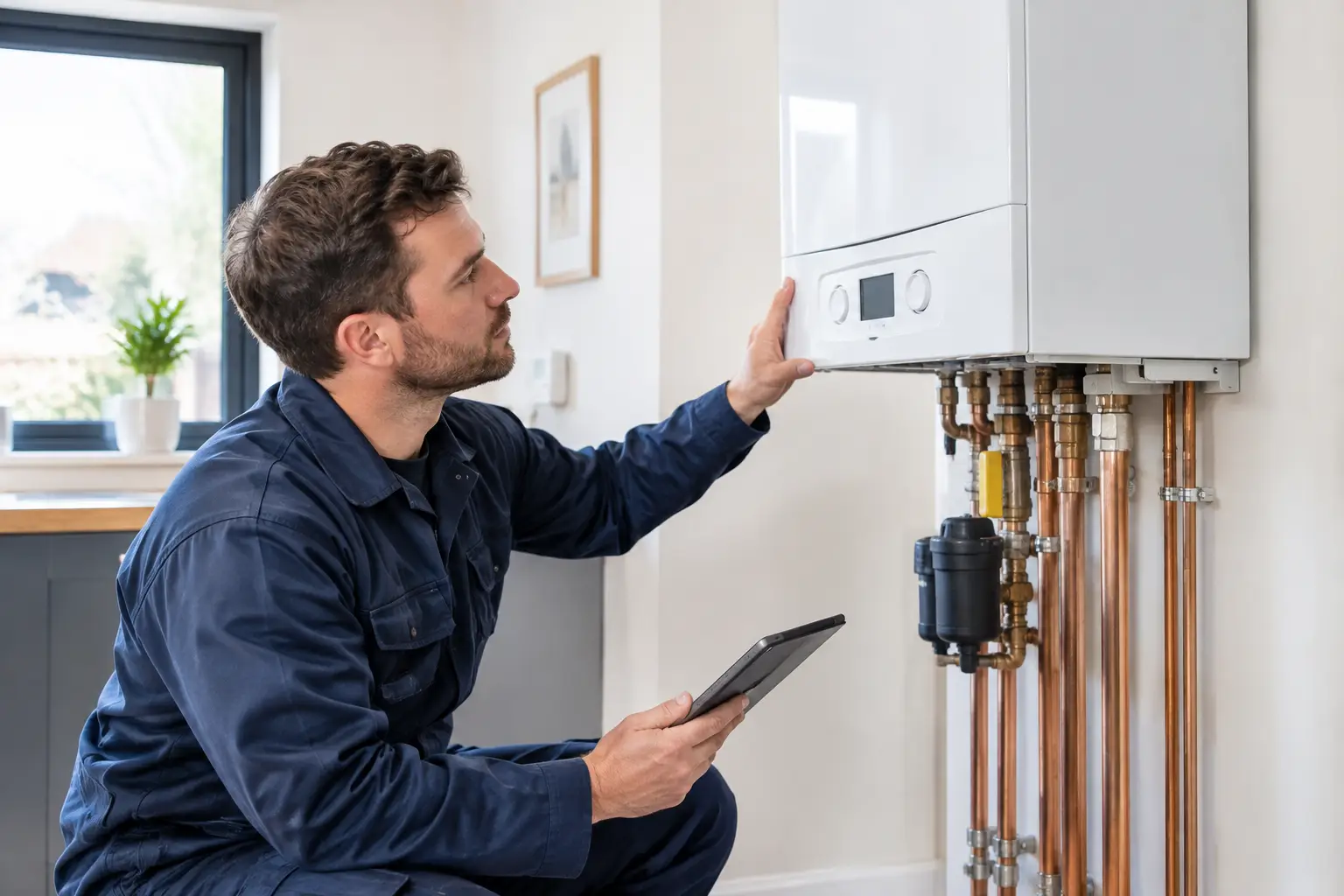
For regular versus combi boilers, a combi is often the practical choice for smaller homes with one bathroom, while a regular boiler can suit homes with higher simultaneous hot-water demand. The right answer depends on your existing system, water pressure, available space and how your household uses hot water.
Get a fixed boiler quote online.
Quick answer: choose a combi when you want hot water on demand and no cylinder. Keep or replace a regular boiler when your home relies on a hot-water cylinder, has several bathrooms used at once, or a conversion would involve unnecessary disruption and cost.
Regular versus combi boilers at a glance
A combi boiler provides central heating and domestic hot water from one wall-mounted unit. It heats water directly from the mains when you open a hot tap or shower, so there is no separate hot-water cylinder and usually no cold-water storage cistern in the loft.
A regular boiler, sometimes called a heat-only or conventional boiler, works with a hot-water cylinder and usually a cold-water feed and expansion tank. It heats the water stored in the cylinder, ready for use. This setup takes more space, but stored hot water can be useful in households where more than one person may need hot water at the same time.
Neither type is automatically better. Replacing like for like is often the most straightforward route, particularly where the existing pipework, cylinder and loft tanks are in good condition. Changing boiler type can be worthwhile, but it should be based on the property rather than the appeal of freeing up a cupboard.
When a combi boiler makes sense
A combi is commonly suitable for flats, smaller houses and homes with one bathroom. It is particularly attractive where space is limited, as removing a cylinder can release an airing cupboard and removing loft tanks may create more usable loft space.
With a combi, you do not need to wait for a cylinder to reheat after using its stored hot water. A well-sized model delivers hot water as it is needed, provided the incoming mains supply has enough flow and pressure. This is an essential check. A powerful combi boiler cannot create more mains water flow than the property receives.
Combi boilers are generally a good fit if your household usually uses one shower or tap at a time. If someone runs a bath while another person wants a strong shower, the flow can be divided between outlets. This may be acceptable for some households and frustrating for others.
A straightforward combi replacement is also often less complex than a conversion from a regular system. Indicative replacement costs can commonly start from around £2,000 to £3,500, depending on the chosen boiler, flue route, controls, location and work required. This is a guide, not a confirmed installation price.
When a regular boiler remains the better option
A regular boiler can be a sensible choice for larger or older homes that already have a cylinder-based system. It is often suited to properties with multiple bathrooms, particularly where two showers may be used at the same time.
Because hot water is stored in the cylinder, the home can supply several outlets without relying solely on instantaneous mains flow. The trade-off is that the cylinder has a finite store of hot water. Once it has been used, it needs time to reheat, although cylinder size, insulation and boiler output all affect this.
Keeping a regular setup may also avoid major alterations. Removing tanks, changing pipework, modifying controls and installing a new condensate route can add time and cost to a combi conversion. In some properties, retaining the existing format is the more proportionate replacement plan.
An indicative like-for-like regular boiler replacement may often fall around £2,500 to £4,500 or more. Costs vary widely because the condition and accessibility of the cylinder, tanks, pipework and flue matter as much as the boiler itself.
Do not overlook a system boiler
For many homes, the decision is not only regular or combi. A system boiler works with a hot-water cylinder but does not normally need the loft tanks associated with a traditional regular system. It can be a practical middle ground where a household wants stored hot water but would prefer to remove tanks from the loft.
A system boiler still needs space for a cylinder, and suitability depends on the existing system and water supply. If you are comparing options, it is worth considering all three boiler types rather than assuming a combi conversion is the only modern choice.
What affects the cost of changing from regular to combi?
A regular-to-combi conversion costs more than a direct swap because it changes how the home produces and distributes hot water. Typical conversion estimates may start around £3,500 and can exceed £6,000 where extensive alterations are needed. A survey or detailed quotation is needed to establish the real cost.
The main price factors include the boiler output and model selected, location of the new boiler, flue position, condition of the heating system, and whether the cylinder and tanks are removed. New gas pipework, an upgraded condensate drain, electrical work directly needed for the boiler installation, access difficulties and remedial work identified during assessment can also affect the final figure.
A clear quote should explain what is included, such as the boiler, standard flue components, controls, installation labour and commissioning where applicable. It should also set out any work that may cost extra if the property details or site conditions differ from those provided.
Choosing the right boiler output
Boiler size is about output, measured in kilowatts, rather than the physical dimensions of the appliance. For combis, hot-water performance is often the key consideration. A higher-output combi can improve hot-water flow, but only where the mains supply can support it.
For regular boilers, heating demand and cylinder recovery are central to sizing. The number of radiators, the home’s heat loss, insulation, property layout and hot-water habits all matter. Choosing the largest boiler without assessment is not a shortcut to better comfort or lower bills.
An accurate online quotation asks for details about your property, bathrooms, existing boiler and hot-water system for this reason. Photographs and follow-up questions may be needed before a fixed quote can be confirmed.
Installation time and disruption
A direct replacement in the same location can often be completed in one day, but this depends on the installation. A boiler type conversion, relocation, back-boiler replacement or work involving substantial system changes may take longer.
Before work begins, the installer should confirm the planned boiler position, flue route, controls and any required alterations. After installation, the boiler must be commissioned by a Gas Safe registered engineer, and the relevant documentation and manufacturer warranty registration requirements should be explained.
Warranty lengths differ by manufacturer and exact model. They may also depend on correct installation, registration within the stated timeframe and meeting the manufacturer’s terms. Treat a long warranty as one factor in the decision, alongside suitability, installation quality and what is covered.
How to make the decision with confidence
Start with the way your household uses hot water, not just the boiler you currently have. Consider whether simultaneous showers are common, whether mains water flow is strong enough for a combi, and whether the cylinder cupboard or loft tanks are genuinely needed.
Then compare the cost and disruption of a like-for-like replacement with the benefits of conversion. A regular boiler is not outdated simply because it has a cylinder, and a combi is not automatically right because it saves space. The best choice is the one that meets your daily demand without unnecessary alterations.
Frequently asked questions
Can I replace a regular boiler with a combi boiler?
Usually, yes, subject to the property’s mains water supply and installation assessment. The conversion may involve removing the cylinder and tanks, altering pipework and changing controls, so it costs more than a like-for-like replacement.
Is a combi boiler cheaper to install than a regular boiler?
A straightforward combi-for-combi replacement is often less costly than replacing a regular boiler system or converting from one. However, a regular replacement can be better value where it avoids extensive conversion work.
Can a combi run two showers at once?
It can supply more than one outlet, but flow is shared. Whether this provides an acceptable shower experience depends on the boiler’s hot-water output and, crucially, the property’s incoming mains flow rate.
Do regular boilers need a hot-water cylinder?
Yes. A regular boiler heats water stored in a separate cylinder. Traditional regular systems also commonly use loft tanks, although the exact arrangement varies by property.
Will removing a hot-water cylinder save money?
It may free up space, but it does not automatically make a combi conversion the lower-cost option or the best long-term fit. The value depends on the conversion cost and your household’s hot-water needs.
Can I spread the cost of a replacement boiler?
Finance options may be available, subject to status, eligibility and lender approval. The total amount repayable, term, interest and representative example should be reviewed before making a decision.
For homeowners and landlords in Smart Adapt’s confirmed service areas, enter your postcode and property details to check availability and receive a recommendation based on the home rather than a one-size-fits-all sales pitch. Get a fixed boiler quote online.