






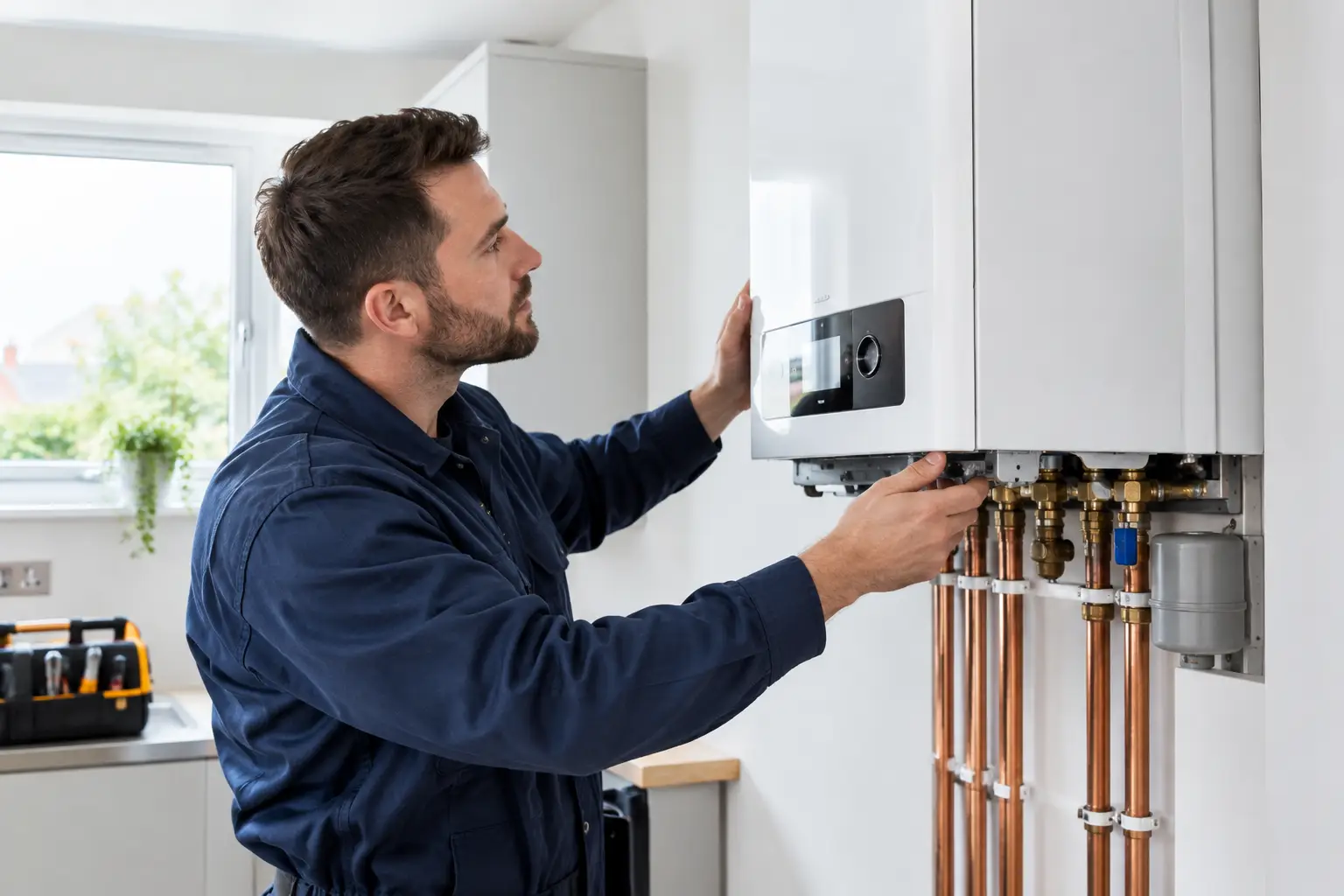
A back boiler cannot simply be swapped for a modern equivalent in the same fireplace. To replace a back boiler, a Gas Safe registered engineer removes and disconnects the old appliance, then installs a new combi, system or regular boiler in a suitable location. The work usually involves changes to pipework, hot-water controls and the fireplace opening.
Quick answer: most households replacing a back boiler choose a combi boiler for mains-pressure hot water and extra space, but a system or regular boiler can be the better fit where demand is high or an existing cylinder is worth retaining. Costs are usually higher than a straightforward boiler swap because the old system and fireplace need more work.
Get a fixed boiler quote online. Provide accurate property details, including the location of the back boiler, existing cylinder and number of bathrooms, so the recommended boiler and price reflect the work involved.
Why replacing a back boiler is different
Back boilers sit behind a gas fire or within a fireplace recess. They were common in older UK homes, but are no longer installed as new appliances. Replacing one means moving the heating appliance out of the fireplace and reconfiguring parts of the heating and hot-water system.
The old boiler and associated fire need to be safely disconnected and removed by a suitably qualified Gas Safe registered engineer. A modern boiler is then normally fitted in a kitchen cupboard, utility room, airing cupboard, loft or another suitable internal location. The chosen position must allow safe flueing, adequate access and a condensate drain.
The fireplace itself also needs a plan. Some customers want the opening made safe and ready for decoration; others may arrange separate cosmetic or structural finishing work. If the fireplace, surrounding materials or old flue arrangement raise concerns during the survey, this should be assessed before installation. Do not remove a back boiler or disturb its gas connections yourself.
Choosing the right replacement boiler
There is no single best boiler type for every former back-boiler home. The practical choice depends on the number of bathrooms, household hot-water use, available space, water pressure and whether you want to retain a cylinder.
Combi boiler: often the simplest conversion
A combi boiler provides central heating and hot water directly from the mains, so it does not need a separate hot-water cylinder or cold-water storage tank. For a flat, terrace or family home with one bathroom and reasonable mains pressure, this is often the most space-saving route.
A combi conversion can remove the old cylinder and tanks if they are no longer required. That creates useful cupboard or loft space, but it can involve more pipework changes. Combi boilers deliver hot water well for one main outlet at a time, although performance can be limited if several showers or taps are used together.
System boiler: useful for higher hot-water demand
A system boiler heats radiators and works with an unvented hot-water cylinder. The cylinder stores hot water, making this arrangement better suited to homes with more than one bathroom or households likely to run showers at the same time.
It needs space for the cylinder, and the condition, size and suitability of any existing cylinder must be checked. Reusing components is not automatic. A new cylinder and controls may be recommended where the existing equipment does not suit the new boiler or current installation requirements.
Regular boiler: for some traditional systems
A regular, or heat-only, boiler works with a cylinder and usually feed-and-expansion tanks. It can be appropriate where a conventional system is being retained, particularly in a larger or more complex property. However, it takes up more space than a combi arrangement and is not always the most straightforward choice when modernising a former back-boiler system.
Your installer should size the boiler for the property’s heat loss and hot-water requirements, rather than choosing output by bedroom count alone. Radiator capacity, insulation, bathrooms and the way your household uses hot water all matter.
How much does it cost to replace a back boiler?
A back-boiler replacement is generally one of the more involved domestic boiler installations. As a broad planning estimate, many projects fall from around £4,000 to £7,500 or more, including a new boiler and installation. A confirmed fixed quote can only follow accurate information and, where needed, a technical survey.
The lower end may apply where access is good, the new boiler position is close to the existing system and the conversion is relatively simple. Costs can rise where longer pipe runs, a new hot-water cylinder, extensive radiator alterations, flue changes, difficult access or more substantial work around the fireplace are required.
A clear quotation should set out what is included. Depending on the property and selected boiler, this may cover the boiler, flue, controls, system cleansing, condensate route, installation labour, commissioning and notification of applicable gas work. It should also identify anything that may cost extra before the job is accepted, rather than leaving it as a surprise on installation day.
The usual steps to replace a back boiler
The process starts with a detailed quote journey or survey. Photos of the fireplace, current hot-water cylinder, airing cupboard, loft and prospective new boiler location can help establish what is feasible. Your postcode should also be checked before an installation is accepted, as Smart Adapt serves selected areas of South Wales, South West England, London and nearby regions.
Once the boiler type and location are agreed, the installation is planned around access, flue position and disruption. On the day, the engineer isolates the gas and water supplies, decommissions the back boiler and prepares the new location. New pipework is run where required, then the boiler, flue and controls are installed.
The heating system is cleaned and filled, then the engineer checks operation, safety and hot-water performance before commissioning the boiler. You should be shown the controls and given the relevant paperwork. Manufacturer warranties vary by boiler model and are subject to the manufacturer’s terms, including any registration requirements.
Many installations take two to three days, but this is not a promise. A simple conversion may be quicker, while a larger property, new cylinder, awkward pipe routes or additional fireplace work can extend the programme. A survey is the right point to discuss whether you need heating and hot water kept available overnight.
What can increase the price or disruption?
Back-boiler projects vary because older systems vary. The key issues are usually the distance between the fireplace and the new boiler location, access to routes for new pipes, the need to alter the hot-water arrangement and the condition of the existing heating system.
You may also need to consider:
- whether a combi conversion involves removing a cylinder and tanks;
- whether mains water flow is sufficient for the combi boiler you want;
- the location and length of the new flue route;
- access through cupboards, lofts or tight spaces;
- remedial work needed to leave the old fireplace safe and presentable; and
- whether existing radiators and controls are suitable for the new system.
These are not reasons to avoid replacement. They are the details that make an online estimate more accurate and help turn it into a clear, fixed installation quote.
Is it better to repair or replace a back boiler?
If a back boiler has become unreliable, replacement is often the more practical long-term decision. Parts can be difficult to source for older appliances, efficiency is lower than a modern condensing boiler and a replacement may give you better control over heating and hot water.
That does not mean every household should automatically choose a combi. A home with two or three bathrooms may be better served by a system boiler and cylinder, while a smaller home can benefit from freeing up space through a combi conversion. The right answer comes from the property, not a sales script.
Frequently asked questions
Can I replace a back boiler with a combi boiler?
Yes, in many homes. The engineer will check mains water flow and pressure, hot-water demand, pipe routes and the proposed boiler position before recommending a combi.
Where will the new boiler go?
Common locations include a kitchen cupboard, utility room, airing cupboard, loft or another suitable internal space. The final position must meet manufacturer instructions and gas safety requirements.
Can the old fireplace still be used?
Not with the old back boiler in place. Once it has been removed, any future fireplace plans need to be considered separately, with the opening made safe as part of the agreed scope of work.
Do I need a survey before replacing a back boiler?
Often, yes. The additional pipework, fireplace arrangement and new boiler location make a survey or technical assessment particularly useful for confirming the price and installation plan.
Will I have to replace my radiators?
Not necessarily. Existing radiators may be retained if they are suitable, but their condition, output and compatibility with the new system should be assessed during quotation.
Is finance available for a back-boiler replacement?
Payment and finance options may be available, subject to status, eligibility and lender approval. The available options and terms should be checked before you proceed.
How do boiler warranties work?
Warranty length and conditions depend on the selected manufacturer and model. Registration, correct installation and compliance with the manufacturer’s terms can be required, so keep the commissioning documents safely.
Replacing a back boiler is a chance to make the heating system suit how your home works now, rather than preserving a layout designed decades ago. Get a fixed boiler quote online. With the right property details, you can compare suitable boiler options, understand likely extras and arrange professional installation by a Gas Safe registered engineer.