






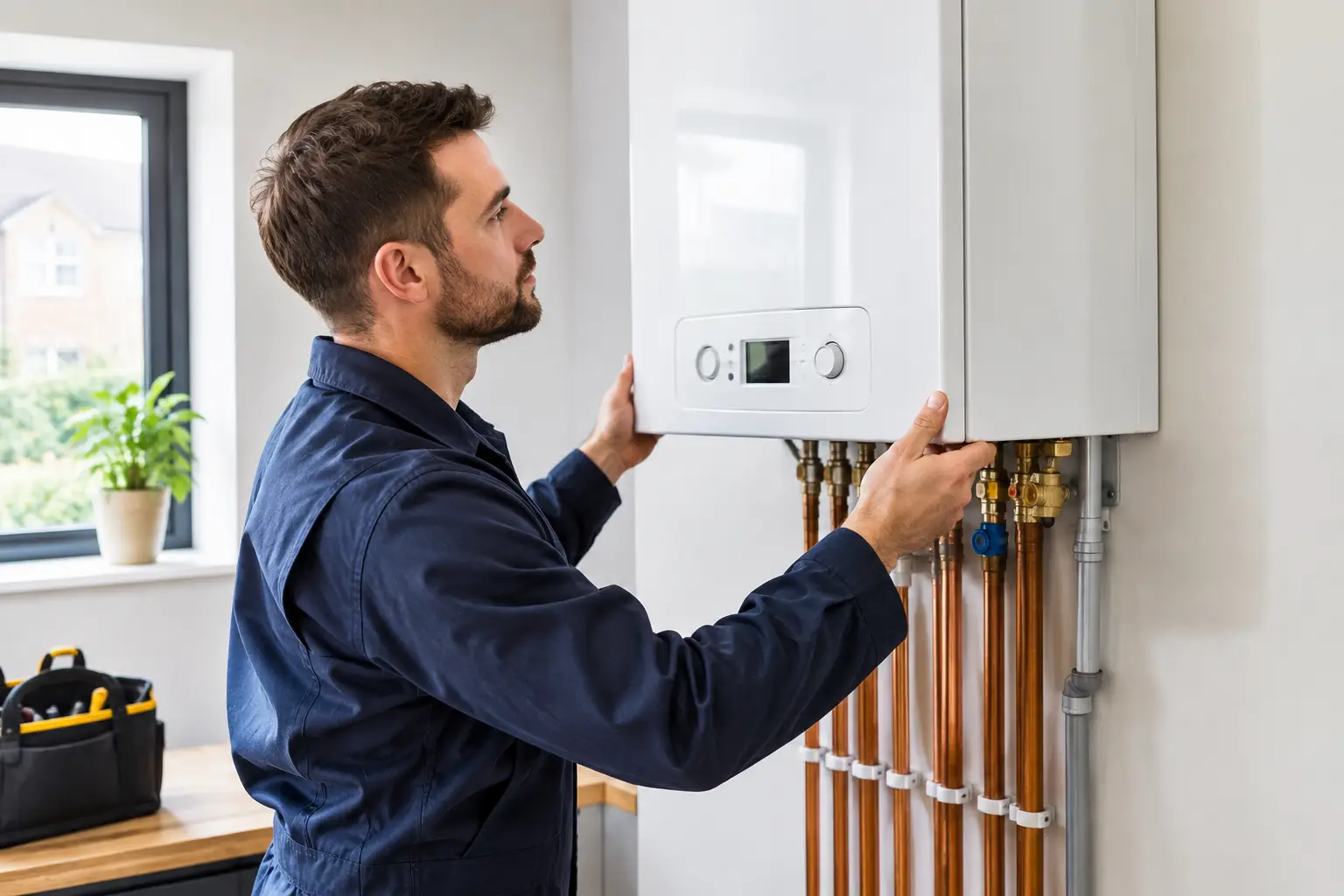
Changing from a regular or system boiler to a combi usually costs around £3,000 to £5,500 in the UK, depending on the existing system, boiler location and pipework required. More complex work can cost more. Get a fixed boiler quote online.
A combi conversion removes the need for a separate hot-water cylinder and, in many homes, the cold-water storage tank in the loft. That can free up useful space, but it is more involved than fitting a like-for-like replacement. The final price should reflect the work your home actually needs, rather than a one-size-fits-all estimate.
Quick answer: a straightforward conversion in a smaller home may sit near the lower end of the range. A larger property, a boiler move, extensive pipe alterations or removal of an old back boiler can push the cost beyond £5,500.
What is included in a combi boiler conversion cost?
A conversion involves more than replacing the boiler itself. Your existing heating and hot-water setup has to be altered so that the new combi can provide heating and hot water directly from the mains supply.
A properly itemised quote should make clear whether it includes the new boiler, flue and fittings, controls, installation labour, system cleansing where required, condensate pipework, commissioning and registration. It should also explain the warranty available for the chosen model and any manufacturer registration requirements.
When moving from a regular boiler, the installer may decommission and remove the hot-water cylinder, feed-and-expansion tank and cold-water storage tank. Some pipework will need changing, and the heating system may need adapting to suit the new boiler and controls.
The exact scope varies. For example, a cylinder in an easily accessed airing cupboard is different from one boxed into a tight space, while loft tank removal can take longer where access is restricted.
Typical UK combi conversion prices
These are broad planning estimates, not fixed prices. A quotation based on your property details and, where needed, a technical assessment is the reliable figure.
- A straightforward regular-to-combi or system-to-combi conversion often costs around £3,000 to £5,500.
- A more involved conversion, such as one requiring a boiler relocation, significant new pipe runs or difficult access, may be £5,500 to £7,000 or more.
- Replacing a back boiler with a new combi is commonly more complex and may cost from around £4,500 upwards, depending on the old appliance, new boiler position and remedial work required.
The boiler itself is only one part of the overall cost. A premium boiler with a longer manufacturer warranty may increase the upfront price, while reducing installation complexity can make a bigger difference than selecting between two similar models.
What can make the price higher or lower?
The main question is not simply whether you want a combi. It is whether a combi is suitable for your property, water pressure and household demand.
Your home’s hot-water demand
Combi boilers heat hot water as it is used. They work particularly well in homes with one bathroom, or where simultaneous showers and taps are limited. The boiler needs enough output to provide a useful hot-water flow rate as well as heating.
A larger combi may be appropriate for a home with greater demand, but it will not overcome every limitation. If two or more bathrooms are regularly used at the same time, retaining or replacing a cylinder-based system may offer a more consistent hot-water experience. A conversion is not automatically the right answer just because it creates more storage space.
Mains water supply and pressure
A combi relies on the incoming mains water supply. Low pressure or low flow can affect shower performance and may limit whether a combi is suitable. This should be considered before a boiler is selected, not after installation has begun.
Boiler location
Keeping the new boiler close to the existing appliance can reduce labour and materials. Moving it from a kitchen to a loft, cupboard or utility area can be possible, but may require longer gas, heating, condensate and flue routes. Each route must meet the relevant installation requirements.
Existing pipework and heating system condition
Older systems can need additional work before a new boiler is connected. This may include changing unsuitable pipework, fitting a magnetic filter, adding modern controls or cleaning the system. The work required depends on the condition and design of the system, so it should be explained before you accept a quote.
Access and removal work
Removing tanks and cylinders is usually part of a conversion, but the practicalities matter. Tight loft hatches, restricted stair access, built-in cupboards and old boiler locations can add time. Back-boiler replacements can also involve more extensive removal and making-good work, which should be scoped carefully.
Is a combi conversion worth it?
For many households, it can be. Removing a cylinder and loft tanks creates space, and a modern combi gives hot water on demand without waiting for a stored cylinder to reheat. It can also simplify the layout of a smaller home or flat.
The trade-off is that a combi does not store a reserve of hot water. If several people need high-flow hot water at once, a system boiler with an unvented cylinder may be the better fit. Landlords should also consider the number of bathrooms, expected occupancy and how straightforward the system will be for tenants to use.
The most suitable option is the one that matches the property and household, not necessarily the boiler type with the lowest initial conversion price.
How long does a combi conversion take?
A like-for-like boiler replacement can often be completed in a day, but a conversion normally takes longer. Many straightforward conversions take two to three days. More complex work, including boiler relocation, substantial pipework changes or back-boiler removal, can take several days.
Before work starts, confirm where engineers will need access, whether water and heating will be off for part of the installation, and whether any areas need clearing. A good installation plan reduces avoidable disruption and gives you a clearer expectation of the timescale.
Choosing the right combi boiler
Boiler size is not just about the number of bedrooms. Heat loss, radiator demand, insulation, bathroom count and hot-water use all affect the recommendation. A small, well-insulated two-bedroom home and a four-bedroom family house may need very different outputs even if they have a similar number of radiators.
It is also worth comparing manufacturer warranties, provided for the specific boiler model and subject to the manufacturer’s terms and registration rules. A longer warranty can be valuable, but only alongside a boiler that is correctly sized and suitable for the system.
Smart Adapt manages the online quotation process and arranges installation by Gas Safe registered engineers. Enter your postcode first so service availability can be confirmed in your area, then provide accurate details about your existing boiler, cylinder, tanks and preferred location. That helps identify whether the initial price can be fixed or whether a survey is needed.
Questions to ask before accepting a conversion quote
Ask whether the boiler output is based on your heating and hot-water demand, and whether the incoming mains supply has been considered. Check exactly what will happen to the cylinder and tanks, where the new boiler and flue will be positioned, and whether controls or system protection are included.
You should also ask which work is included in the quoted price and what circumstances could create an additional cost. A fixed quote is most useful when it is based on complete, accurate property information and confirmed installation terms.
FAQs
How much does it cost to change from a conventional boiler to a combi boiler?
A typical UK estimate is £3,000 to £5,500 for a conversion. The figure can be higher if the boiler is moved, pipework needs extensive alteration, access is difficult or the existing appliance is a back boiler.
Is it cheaper to keep my system boiler instead?
Often, yes. Replacing a system boiler with another system boiler can involve less alteration because the cylinder remains in place. However, lower installation cost does not automatically make it the better long-term choice if you want to remove tanks and a cylinder or your household’s hot-water demand suits a combi.
Can I remove the hot-water cylinder when fitting a combi?
Usually, yes. Removing the cylinder is one of the main features of a conversion. The installer will need to alter the pipework so hot water is supplied directly from the combi boiler.
Do I need to remove the loft tanks?
In many regular-to-combi conversions, the cold-water storage tank and smaller feed-and-expansion tank are removed or decommissioned. The precise work depends on the existing system and should be confirmed in the quote.
Can a combi run two showers at once?
It depends on the boiler’s hot-water flow rate and the incoming mains supply. A combi may be less suitable for frequent simultaneous shower use in a larger household. A cylinder-based system can be a better option in that situation.
Does moving a boiler increase the conversion cost?
Usually. A new location can mean longer pipe runs, a different flue route, condensate drainage changes and more labour. Keeping the boiler near the existing location is often simpler, although suitability and access still come first.
Can I spread the cost of a new combi boiler?
Finance options may be available for eligible customers, subject to status, lender terms and approval. Check the total amount payable, term length and monthly payments before deciding.
A combi conversion should leave you with a boiler that fits the way your home uses heating and hot water, not simply a tidier cupboard. Provide clear details of your current system to receive an accurate recommendation and Get a fixed boiler quote online.