






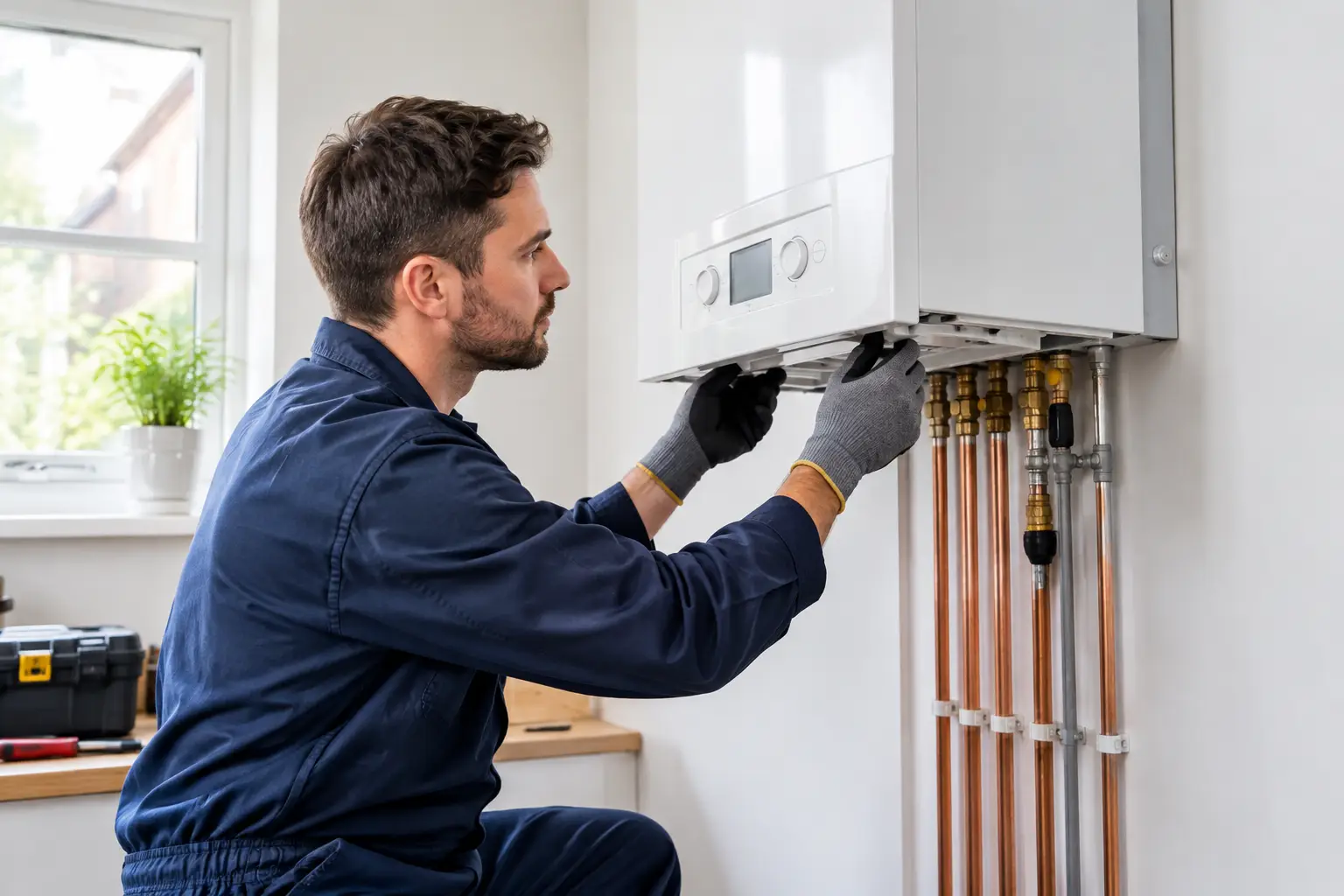
A regular and heat-only boiler installation is usually the right choice when your home already has a hot-water cylinder and may need to supply several bathrooms at once. It can be a straightforward replacement, but the final scope depends on the condition and layout of the existing system. Get a fixed boiler quote online.
Quick answer
A heat-only boiler, often called a regular boiler, heats water for radiators and sends hot water to a separate cylinder. It does not produce hot water directly from the boiler like a combi. That makes it particularly suitable for larger homes, homes with higher simultaneous hot-water demand, and properties that already have a conventional heating system.
A like-for-like replacement is commonly less disruptive than changing boiler type. However, cylinder controls, pipework, flue route, system cleanliness and access can all affect the work and confirmed price.
What is a regular or heat-only boiler?
“Regular boiler” and “heat-only boiler” are often used to mean the same thing. The boiler heats the central-heating water and usually works alongside a hot-water cylinder. Traditional regular systems may also have tanks in the loft, while some modern arrangements use a different system design. The important point is that hot water is stored rather than supplied on demand from the boiler.
When you open a hot tap, hot water comes from the cylinder. This can be a real advantage where two showers, a bath and kitchen taps may be used close together. The cylinder needs time to reheat after a large draw-off, so the right cylinder size and boiler output matter.
A regular boiler should not be chosen simply because it is what you already have. It should be selected because it suits the property’s heating load, existing system and normal hot-water use.
When a heat-only boiler is the sensible replacement
Keeping the same boiler type often makes sense if the current arrangement performs well for the household. A heat-only replacement is worth considering where there is an existing cylinder in good condition, several occupants use hot water at busy times, or water pressure makes a combi less attractive.
It can also be the practical route in older properties with conventional pipework and loft tanks. Converting to a combi may free up space, but it can involve changes to pipe sizing, water supplies, controls and the hot-water system. That is not automatically wrong, but it is a different project with different costs and disruption.
For landlords, a like-for-like regular boiler replacement can be a straightforward way to retain a familiar system for tenants while updating an ageing appliance. The decision should still take account of the cylinder, controls and overall reliability of the installation.
Regular and heat-only boiler installation costs
For a straightforward replacement in the same position, a regular boiler installation will often cost around £3,000 to £5,500, including the boiler and standard installation work. A more involved job can cost £5,000 to £8,500 or more where substantial alterations are required.
These are planning estimates, not a fixed price. Boiler brand and model, output, warranty level, property access and the exact installation specification all matter. A fixed quote should be based on accurate property information and confirmed terms, with any assumptions clearly stated.
Costs can increase when the work includes a new or upgraded hot-water cylinder, replacement heating controls, flue alterations, a boiler relocation, difficult access, major pipework changes or work needed to bring the installation up to current requirements. A system clean or suitable water treatment may also be specified where needed to protect the new boiler and its warranty conditions.
The lowest initial figure is not always the best value. A boiler that is correctly sized, installed with suitable controls and backed by the applicable manufacturer warranty is usually a better long-term decision than choosing on headline price alone.
Choosing the right boiler output
Boiler output is measured in kilowatts (kW). With a heat-only boiler, output is primarily about the home’s heating demand and how the cylinder is heated, rather than combi-style hot-water flow rate.
A small, well-insulated flat with modest radiator demand may need far less output than a larger older house with many radiators. Adding more kW “just in case” is not a reliable approach. An oversized boiler can cycle on and off more frequently, while an undersized one may struggle to heat the property comfortably in colder weather.
The right recommendation considers the radiator load, insulation, property layout, existing cylinder, number of bathrooms and how the household uses hot water. If you are replacing a boiler, the old boiler’s output is useful background information, but it should not be treated as proof that the same size is right.
Boiler brand, model and warranty choices
Different manufacturers offer different model ranges, controls and warranty terms. A longer stated warranty can be valuable, but always check the exact boiler model, required registration process, installation conditions and any ongoing requirements set by the manufacturer.
Your choice may come down to budget, preferred controls, available cupboard space and the warranty offered on the selected product. A clear quote should identify the model proposed and explain what is included rather than leaving you to compare vague boiler descriptions.
What the installation usually involves
A standard same-location replacement can often be completed in one to two days. More complex regular boiler installations may take longer, particularly where the cylinder, controls, pipework or boiler location is changing. An installation date should only be confirmed once availability, property suitability and the scope of work are agreed.
The process normally begins with an online quotation journey or survey information. Smart Adapt manages the enquiry and checks the details needed to prepare an accurate quotation. The boiler installation is then carried out by Gas Safe registered engineers.
On installation day, the engineer will isolate the old boiler, remove it, fit the new boiler and flue arrangement, connect and test the system, and commission the appliance. They should explain the controls and provide the relevant handover information. Expect some noise and short periods without heating or hot water while the work is underway.
Before work starts, it helps to clear access around the boiler, cylinder and any areas needed for the flue route. If the boiler is in a loft or confined cupboard, make this clear during quotation. Good access information reduces the risk of a price or programme change later.
What a fixed quotation should make clear
A useful fixed quote is more than one number. It should set out the boiler and key components, the installation work included, any agreed controls, warranty information and known exclusions or possible extras.
Ask whether the price includes removal of the old boiler, flue components, condensate pipework where required, commissioning, notification of the installation where applicable, and disposal of waste. If an existing cylinder is being retained, confirm whether it has been assessed as suitable for the new boiler and expected hot-water demand.
Some details can only be confirmed after a survey or further photographs. That is not a sales tactic when it is explained properly – boiler installations involve safety, access and existing-system conditions that cannot always be judged from a brief description.
If you are considering monthly payments, finance may be available on selected options. Finance is subject to status, eligibility and lender approval, so it should be considered alongside the total amount payable and product terms.
Should you keep a regular boiler or convert to a combi?
A combi conversion can be appealing if you want to remove a cylinder and create storage space. It may suit a smaller household with one bathroom and good incoming mains-water flow. Yet a combi is not always the strongest choice for a larger home, particularly where multiple outlets are regularly used at once.
Keeping a heat-only setup is often less disruptive where the cylinder arrangement is working well. Replacing it with a new boiler and suitable controls can provide a modern, efficient solution without redesigning the whole hot-water system. The best option depends on your property, not a one-size-fits-all rule.
Frequently asked questions
Is a regular boiler the same as a heat-only boiler?
Usually, yes. Both terms generally describe a boiler that heats the central-heating system and works with a separate hot-water cylinder.
Can I replace my old regular boiler with another regular boiler?
Yes, provided the existing system and cylinder are suitable. A like-for-like replacement is often the simplest option, but the engineer or quotation process should still assess the full installation.
How long does a regular boiler replacement take?
Many straightforward replacements take one to two days. Relocations, conversions, cylinder changes and significant pipework alterations can take longer.
Do I need a new hot-water cylinder as well?
Not always. If the cylinder is compatible, in sound condition and the right size for the household, it may be retained. A replacement may be recommended where its condition, capacity or configuration is unsuitable.
Can a regular boiler work without loft tanks?
Some modern heating arrangements can. The exact system design depends on the boiler, cylinder and existing installation, so this should be assessed for your home rather than assumed.
Will the final price match the online quote?
A fixed price depends on the property details being accurate and the agreed scope remaining the same. If an issue or extra requirement is identified, it should be explained before additional work is agreed.
Is finance available for a new boiler?
Finance options may be available, subject to status, eligibility and lender approval. Check the agreement carefully, including the total amount payable and repayment terms.
A replacement regular boiler should give you dependable heating and hot water without forcing an unnecessary system change. Share accurate details about your home, cylinder and current boiler arrangement, then Get a fixed boiler quote online.