






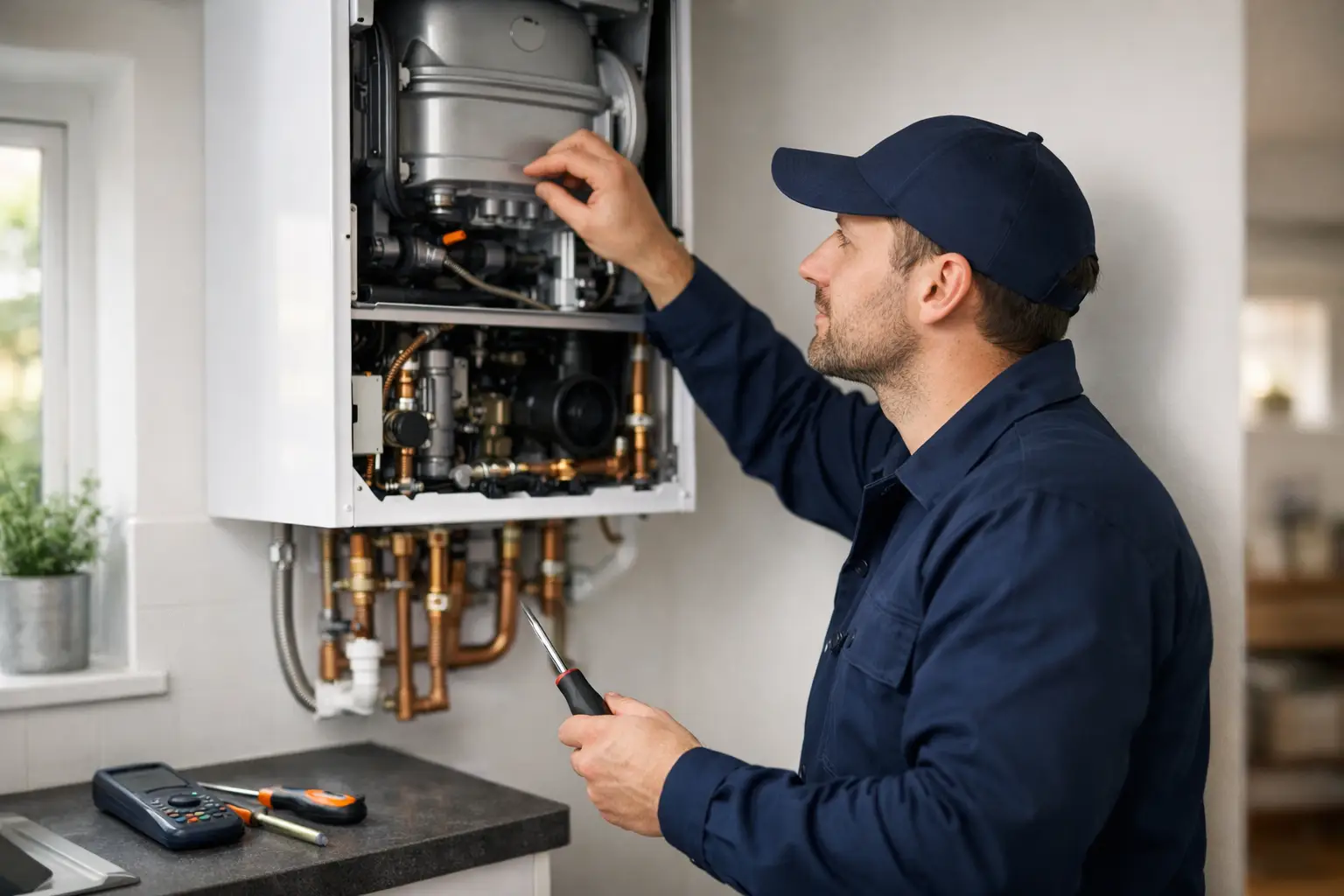
A boiler replacement is usually the right next step when your existing boiler is unreliable, costly to keep running or no longer suits your home. The best choice depends on your hot-water demand, current heating system and installation requirements. Get a fixed boiler quote online.
Quick answer
For a straightforward like-for-like boiler replacement, many UK households should budget roughly £2,000 to £4,500 including supply and installation. A move to a different boiler type, a new location, major heating-system changes or a back-boiler replacement can cost more.
The price alone should not decide it. A correctly sized boiler, suitable controls, a clear scope of work and an installation by a Gas Safe registered engineer matter just as much as the model on the wall.
When is boiler replacement worth considering?
A boiler that has failed is an obvious reason to look at replacement, particularly where parts are unavailable or the cost of putting it right is difficult to justify. But an urgent breakdown is not the only trigger. Homeowners and landlords often replace a boiler before winter when it has become unreliable, inefficient compared with modern condensing models, or unsuitable for the household’s changing needs.
For example, a growing family may find that an older combi boiler cannot comfortably supply two showers at once. A household with a cylinder may want to free up airing-cupboard space by considering a combi conversion. Equally, a conversion is not automatically the best route: homes with several bathrooms and frequent simultaneous hot-water use may be better served by retaining a cylinder with a system or regular boiler.
If the boiler is relatively young and a repair is modest and likely to provide a reliable outcome, replacement may not be necessary. Where reliability has become a recurring concern, it is sensible to compare the repair cost with the benefits and warranty of a new installation.
Boiler replacement costs: what affects the quote?
Online estimates are useful for initial budgeting, but a confirmed fixed quote needs accurate details about the property, existing boiler and required work. The starting point is usually lower when replacing a combi, system or regular boiler in the same position with a similar type and output.
Costs can increase where the job involves changing boiler type, relocating the boiler, fitting or altering a flue route, changing pipework, upgrading controls or making good a previous installation that does not meet current requirements. Access also matters. A loft installation, restricted parking, difficult flue access or work in a high-rise flat can affect labour time and materials.
Back-boiler replacement requires particular care because the old unit and fireplace arrangement may need to be removed or made safe, while a new boiler is installed elsewhere. This is generally a more involved project than a standard swap, so it should be assessed from clear property information and, where needed, a technical survey.
A good quotation should set out what is included rather than relying on a headline price. This may include the boiler, standard flue components, controls, installation labour, commissioning, registration where applicable and removal of the old boiler. It should also explain potential extras before work is agreed, rather than leaving customers to discover them on installation day.
Choosing between combi, system and regular boilers
The right boiler is determined by the property, not by a sales target. Each type has a clear role.
Combi boilers
A combi boiler provides heating and hot water from one compact unit, without a separate hot-water cylinder. It can be a practical option for smaller homes and flats, particularly where there is one bathroom and limited storage space. Hot water is supplied on demand, so the available flow rate is an important comparison point.
A combi can also suit some larger homes, but simultaneous demand needs careful thought. Running two showers while hot water is being used elsewhere can expose the limits of a combi if the incoming mains-water flow is poor or the chosen model is undersized.
System boilers
A system boiler works with an unvented or vented hot-water cylinder. It is often a strong fit for homes with more than one bathroom, where several people regularly use hot water at the same time. The cylinder stores hot water, so there is a finite amount available before it needs time to reheat.
This setup takes more space than a combi, but it can provide a more comfortable experience for busy households when the cylinder size and boiler output are matched correctly.
Regular boilers
Regular, or heat-only, boilers are commonly found in older heating systems and work with separate tanks and a cylinder. Replacing like for like can be the most proportionate option where the existing arrangement meets the home’s needs and conversion would add unnecessary disruption.
A regular boiler can also be appropriate where the system design makes it the sensible replacement. The decision should account for the condition and layout of the existing system, not simply the desire to install the newest-looking option.
Boiler size is about demand, not just house size
Boiler output is measured in kilowatts, but selecting it is not as simple as counting bedrooms. Heating demand is influenced by the home’s size, insulation, radiator arrangement and heat loss. For combi boilers, domestic hot-water performance is also central: a higher output may be needed for a stronger shower flow, even where the heating requirement is lower.
System and regular boilers are assessed alongside the cylinder. A large cylinder with a low-output boiler may take too long to recover after heavy use; an oversized boiler is not automatically more economical or more comfortable. Property details supplied during the quotation journey help narrow down suitable outputs and models.
What happens during installation?
Many straightforward replacements can be completed in one day, although this depends on access, the boiler location and the existing system. A boiler relocation, conversion, back-boiler replacement or work requiring significant alterations can take two or more days. A clear installation plan is more valuable than an unrealistic promise of a completion time.
Before the new boiler is handed over, the engineer should complete the required safety checks, commission the appliance in line with the manufacturer’s instructions and explain the controls. You should understand how to operate the heating and hot water, what documents you will receive and how to register or activate the manufacturer warranty where this is required.
For landlords, the same practical questions apply, with additional attention to arranging access and keeping tenants informed about hot-water downtime. Planning the installation around occupancy can avoid unnecessary disruption.
Warranties, payment and fixed quotations
Warranty lengths and terms vary by manufacturer, boiler model and installation conditions. Some warranties require registration within a set period and may depend on the appliance being installed and maintained in accordance with the manufacturer’s terms. Check the exact model warranty in your quote instead of assuming that every boiler from a brand carries the same cover.
Finance or monthly payment options can help spread the cost, but they are subject to status, eligibility, lender approval and the lender’s terms. They should be considered alongside the total amount payable, not as a substitute for checking whether the boiler and installation scope are right for the home.
Smart Adapt’s online process is designed to gather the details needed to recommend suitable options and provide a clear price. Enter your postcode first so service availability can be confirmed. If the property information suggests additional work or a survey is needed, that should be explained before an installation is accepted.
Frequently asked questions
How much does a new boiler replacement cost?
A straightforward replacement often falls between £2,000 and £4,500, but the final cost depends on the boiler selected and the work required. Conversions, relocations and back-boiler removals can be higher.
Can I replace a regular boiler with a combi boiler?
Yes, in many homes, but it is a conversion rather than a simple swap. The suitability of the mains-water supply, bathroom demand, cylinder removal and pipework changes all need consideration.
How long does a boiler replacement take?
A like-for-like replacement may take one day. More complex work can take longer, particularly if the boiler is moving location or the system type is changing.
Will I be without heating and hot water?
Usually, there will be a period without heating and hot water while the old boiler is removed and the new appliance is installed and commissioned. The expected downtime should be explained as part of the installation plan.
Do I need a survey before receiving a fixed price?
Not always. Accurate online property details may be enough for some standard installations. More complex properties or unusual requirements may need a survey or further technical assessment before the price and work scope are confirmed.
Which boiler type is best for a home with two bathrooms?
It depends on whether bathrooms are used at the same time, the incoming mains-water flow and available space. A system or regular boiler with a suitable cylinder is often worth comparing against a higher-output combi.
Who installs the replacement boiler?
A replacement boiler must be installed by a Gas Safe registered engineer. Confirmed installation arrangements, scope and timing should be set out before work begins.
A new boiler is a long-term household decision, so take the time to compare the options that genuinely fit your property rather than choosing solely on the lowest initial figure. Get a fixed boiler quote online.