






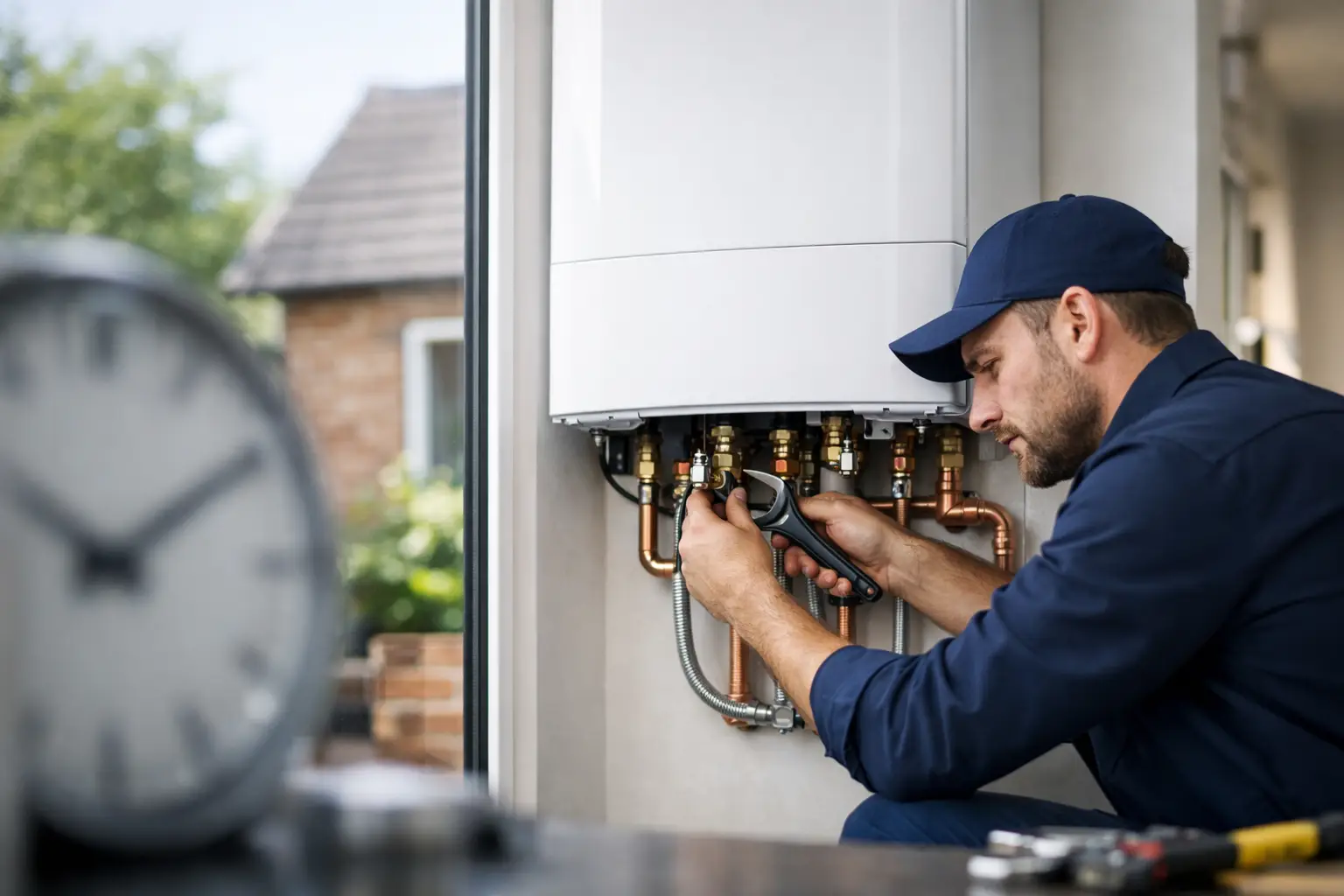
Most like-for-like boiler replacements take one working day. If you are moving the boiler, changing from a conventional system to a combi boiler, or upgrading pipework, boiler installation can take two to three days – occasionally longer for more complex homes.
Quick answer: A straightforward replacement is often completed in 4-8 hours. Allow one day in your diary, but ask about the expected timescale before accepting a quotation so you know whether any additional work is planned.
If your boiler is unreliable or has stopped working, get a fixed boiler quote online to compare suitable options and understand the likely installation work before booking.
How long does boiler installation take for each type of job?
The boiler itself is only one part of the work. Your installation time depends on the existing heating system, where the replacement boiler will go, whether the flue needs altering and the condition of the pipework.
| Type of installation | Typical installation time | What is involved |
|---|---|---|
| Like-for-like combi boiler replacement | 1 day | Removing and replacing a combi boiler in the same location |
| System or regular boiler replacement | 1 day | Replacing a similar boiler while retaining the existing system layout |
| Boiler moved to a new location | 1–2 days | Extending gas, water, heating and condensate pipework, plus creating a new flue route |
| Regular or system boiler converted to combi | 2–3 days | Removing tanks or cylinders where appropriate and altering the heating system |
| Larger or technically complex property | 2–3+ days | More extensive alterations, difficult access or additional heating-system work |
These are useful planning timescales, not promises. A proper quotation should reflect the property, chosen boiler and agreed scope of work rather than relying on a generic estimate.
A straightforward replacement: what happens in a day?
For a like-for-like replacement, the engineer will normally isolate the gas, electricity and water supplies, drain the relevant parts of the heating system and remove the old boiler. They will fit the new appliance, connect it to the system, carry out any agreed cleaning or protection work, then fill, test and commission it.
Commissioning matters. A Gas Safe registered engineer must check that the appliance and flue are working safely. They will also explain the controls, provide the relevant paperwork and register the installation where required. Manufacturer warranty terms vary by boiler and may depend on correct registration, servicing and installation conditions, so keep your documents somewhere safe.
There will usually be periods without heating and hot water while the work is underway. If the job is completed in one day, most households have both restored before the engineer leaves, subject to the system passing all safety and performance checks.
When boiler installation takes longer
A one-day replacement is common, but it is not the right assumption for every property. The following changes add time because they require more than fitting a new boiler in place of the old one.
Moving the boiler
Moving a boiler from a kitchen to a utility room, loft or airing cupboard can make better use of your home, but it requires new routes for gas, heating flow and return pipes, cold water, condensate drainage and the flue. Floors, walls and cupboards can also affect access. The work is often spread across one or two days.
It is worth discussing the practical trade-off. A new location may improve cupboard space or make servicing easier, but longer pipe runs and making good are not always included unless clearly stated in the quotation.
Converting to a combi boiler
A combi boiler provides hot water directly from the mains, so it does not need a separate hot-water cylinder or cold-water storage tank. Changing from a regular or system boiler can therefore involve removing existing components and reconfiguring pipework.
This often takes two to three days. The exact time depends on where the tanks and cylinder are located, the incoming mains-water flow and pressure, and whether the home is suitable for a combi in the first place. For homes with several bathrooms used at the same time, a system boiler with a cylinder may remain the more practical choice.
Updating older pipework or controls
Older systems sometimes need additional work to support a reliable new boiler. This could include replacing unsuitable sections of pipework, fitting a magnetic filter, upgrading controls, correcting the condensate pipe route or addressing poor system water quality.
A powerflush or chemical clean may be recommended where the system is contaminated. It can protect the new boiler, but it can add time. The right approach depends on the condition of the system, not simply its age.
Access, flues and unexpected findings
Loft installations, tight cupboards, difficult parking or restricted access can slow the job down. So can a flue that cannot be safely reused, concealed defects discovered after the old boiler is removed, or a problem with the existing gas supply.
A survey, clear photographs and accurate information at quotation stage reduce the risk of surprises. However, no installer can see every hidden pipe or wall condition before work begins. If extra work is needed, you should be told what has been found, why it matters and how it affects cost or timing before it proceeds.
How to prepare for boiler installation day
A little preparation helps the installation run smoothly. Clear the area around the boiler, boiler controls, cylinder or tanks if relevant, and the route from the entrance to the work area. Move valuables, empty the cupboard where the boiler is fitted and make sure pets are safely away from the work zone.
Let the installer know in advance about parking restrictions, controlled access, loft hatches, fragile flooring or any areas where you do not want shoes or equipment taken. If you work from home, plan for noise, brief power interruptions and periods without internet if your router is close to the electrical work area.
You do not need to understand the technical detail, but you should know where the stopcock is if possible and keep your chosen boiler and controls specification to hand. Before the engineer leaves, ask how to use the thermostat, how to repressurise the system if appropriate, and what to do if you spot a fault message.
What should be included in the installation timescale?
When comparing boiler quotations, look beyond the headline price and the stated number of days. A clear quote should explain whether it includes the boiler, flue components, controls, filter where specified, removal of the old boiler, commissioning, registration and disposal of waste.
It should also set out exclusions or potential extras. Examples can include relocating the boiler, scaffolding where necessary, extensive decorative making good, replacing damaged pipework, or work outside standard hours. Clear prices and straightforward installation start with defining the job properly.
Smart Adapt manages the quotation and installation journey for homeowners and landlords, from selecting a suitable boiler through to arranging installation by appropriately qualified engineers. A £250 initial deposit may apply, with the remaining balance paid after installation under the agreed terms. Finance options may also be available, subject to status and eligibility.
Can you stay at home during a boiler installation?
Yes. Most customers remain at home while a replacement boiler is fitted. You will need to provide access, and it is helpful to be available near the end of the appointment for the handover. The engineer may need to turn off water, power or gas temporarily, but they should explain this before doing so.
For landlords, arrange access with the tenant in advance and ensure the property has someone authorised to make decisions if questions arise. Do not leave a gas appliance installation to an unqualified person. Gas boiler work must be carried out by a Gas Safe registered engineer.
Frequently asked questions
Can a boiler be installed in half a day?
Some very simple replacements can be physically fitted quickly, but installation should not be rushed. Removal, connection, testing, safe commissioning and handover all take time. Plan for a full working day unless your installer confirms otherwise.
Will I have hot water overnight?
Usually, yes, when a like-for-like installation is completed in one day. For a two- or three-day conversion, the installer should explain when heating and hot water will be unavailable and whether there are practical ways to minimise disruption.
Can I use my new boiler straight away?
Yes, once the engineer has completed safety checks, commissioned the boiler and explained the controls. Follow the operating guidance provided and arrange servicing in line with the manufacturer’s terms.
What if my boiler has failed and I smell gas?
Do not attempt to repair it. Turn off the gas supply at the emergency control valve if it is safe to do so, open doors and windows, avoid electrical switches and naked flames, leave the property, then call the National Gas Emergency Service on 0800 111 999. For a boiler fault without a gas smell or immediate danger, arrange an assessment with a qualified engineer.
A well-planned replacement should feel manageable, not disruptive. Get a fixed boiler quote online to compare suitable boilers for your home, see what is included and take the next step towards fast, professional installation.